


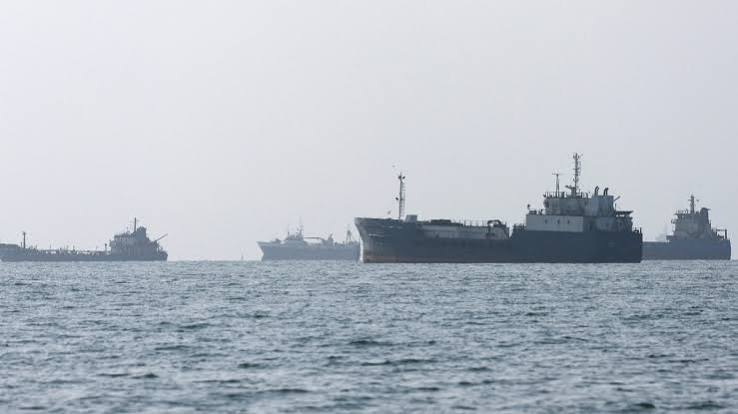
A European Union-led declaration backed by 60 countries has opposed any tolls, fees or other restrictions on legal shipping through the Strait of Hormuz, after Iran reportedly claimed control over the strategic waterway and demanded payment from vessels using it. The declaration places freedom of navigation at the centre of a growing dispute with direct consequences for energy supplies, transport costs and international trade.
The statement was issued on Monday with the support of all EU member states, Australia, Japan, the United Kingdom, Canada, Singapore and 33 other countries, according to Aaj Tak Business. It opposes measures that could obstruct commercial shipping through straits used for international navigation, including unlawful charges, discriminatory restrictions and requirements to obtain prior permission.
EU foreign policy chief Kaja Kallas said international shipping routes should remain open to everyone and should not become instruments for revenue collection or political pressure. In a post on X, formerly known as Twitter, she said 60 countries had joined the global “No Fee, No Toll” commitment and urged other countries to support it.
The declaration comes after Iranian officials reportedly asserted that Tehran controls the Strait of Hormuz and that vessels would have to pay to pass through the route. Mohammadreza Naqdi, an adviser to the commander of Iran’s Islamic Revolutionary Guard Corps, was quoted as saying that routes considered unlawful by Iran, including the southern route near the coast of Oman, could soon be closed. He reportedly said the strait would remain closed until Iran’s demands were met.
The Strait of Hormuz connects the Persian Gulf with the Gulf of Oman and the Arabian Sea, forming a key passage for oil, natural gas, food and other goods. The source report said the route handles about 20% of the world’s oil requirements. Any sustained disruption can therefore affect energy availability, shipping costs and supply chains well beyond the Gulf, including transport and industrial systems in energy-importing countries.
Shipping movement through the strait has already fallen sharply, according to the report. Before the reported start of the US-Iran conflict, around 125 large commercial vessels crossed the route each day. Shipping data cited by Aaj Tak Business showed that only seven oil and gas vessels were recorded passing through the route on 6 October.
The declaration does not, by itself, resolve the operational dispute over access to the waterway. Its immediate significance is diplomatic: the participating countries have jointly rejected tolls or conditions that they believe could interfere with lawful international navigation. The EU and supporting governments are expected to continue pressing for open passage through the strategic shipping route.

