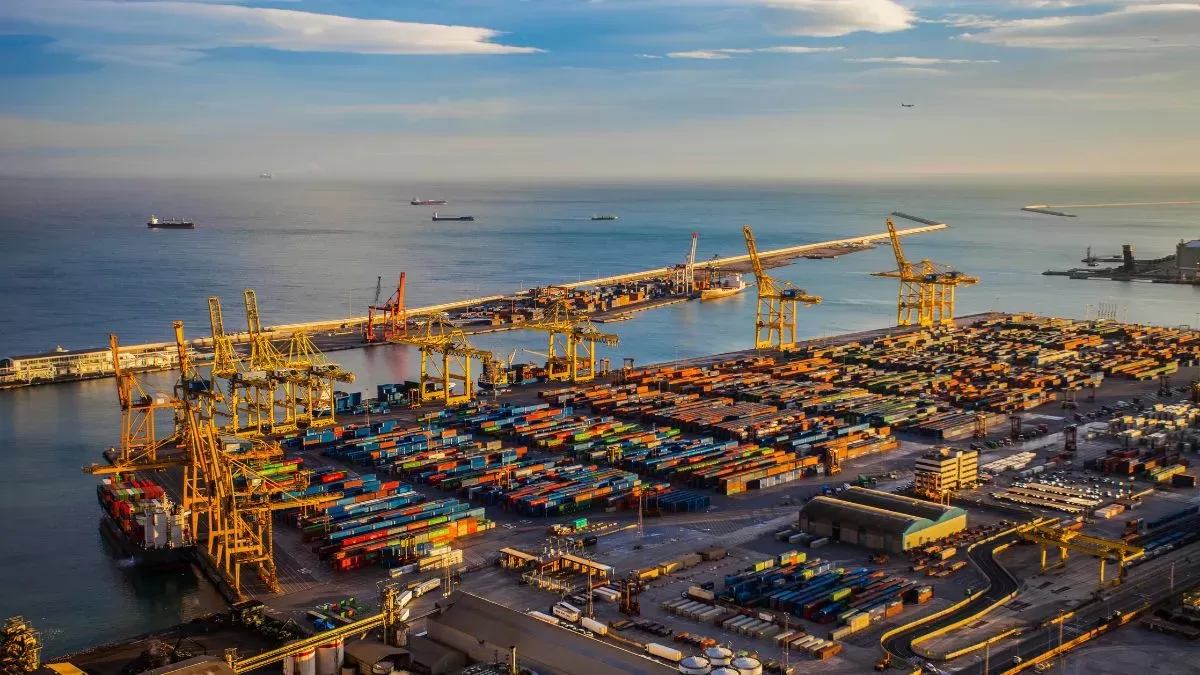
Gujarat Port Concessions Face A Crucial Renewal Test
Gujarat’s private-port framework is approaching a crucial policy test as the state weighs how existing concessions should continue beyond their initial 30-year terms. The issue matters well beyond port operators: decisions on renewal could influence billions of rupees in future infrastructure spending, cargo capacity, coastal development and the competitiveness of one of India’s most important maritime gateways.
The four concessions under close attention cover Mundra, Pipavav, Hazira and Dahej, developed under Gujarat’s private-port model that took shape in the late 1990s. The first concession at Pipavav is due to expire in September 2028, followed by Mundra in February 2031. The Hazira and Dahej arrangements run until 2035.The immediate uncertainty is less about whether Gujarat needs additional port capacity and more about how future rights will be structured. Officials have indicated that the policy framework still needs to be finalised, while industry sources suggest that any extension could be linked to investment commitments rather than being granted automatically. The terms and duration of any possible renewal have not been publicly settled.That distinction is important for public infrastructure. Long-term port projects require large upfront investment and years of planning, construction and commissioning. A shorter remaining concession period can make major upgrades harder to justify because operators have less time to recover capital expenditure. An earlier industry disclosure had similarly identified clarity over Gujarat’s port policy as a key factor in planning future investment at Pipavav.
The scale of planned expansion makes the policy decision more consequential. Mundra currently has an approved capacity of about 225 million tonnes a year, while environmental and coastal approvals have cleared an expansion that would take the planned capacity to 514 million tonnes. Pipavav has also obtained regulatory clearance for a major expansion and upgrade programme.For Gujarat, the larger question is how this capacity growth fits with coastal resilience, land use, freight connectivity and environmental safeguards. The state’s port network already handles a substantial share of India’s maritime cargo, while official state information shows that port development has historically been closely linked with industrial and supporting infrastructure.A transparent renewal framework could therefore become as important as the extensions themselves. Clear investment benchmarks, environmental obligations, public accountability and safeguards for coastal communities would help ensure that additional port capacity translates into wider economic value rather than simply expanding cargo-handling infrastructure.
The next milestone is the final policy structure governing Gujarat port concessions. Until that framework is made public, investment decisions and the future shape of the state’s coastal infrastructure will remain closely watched.