


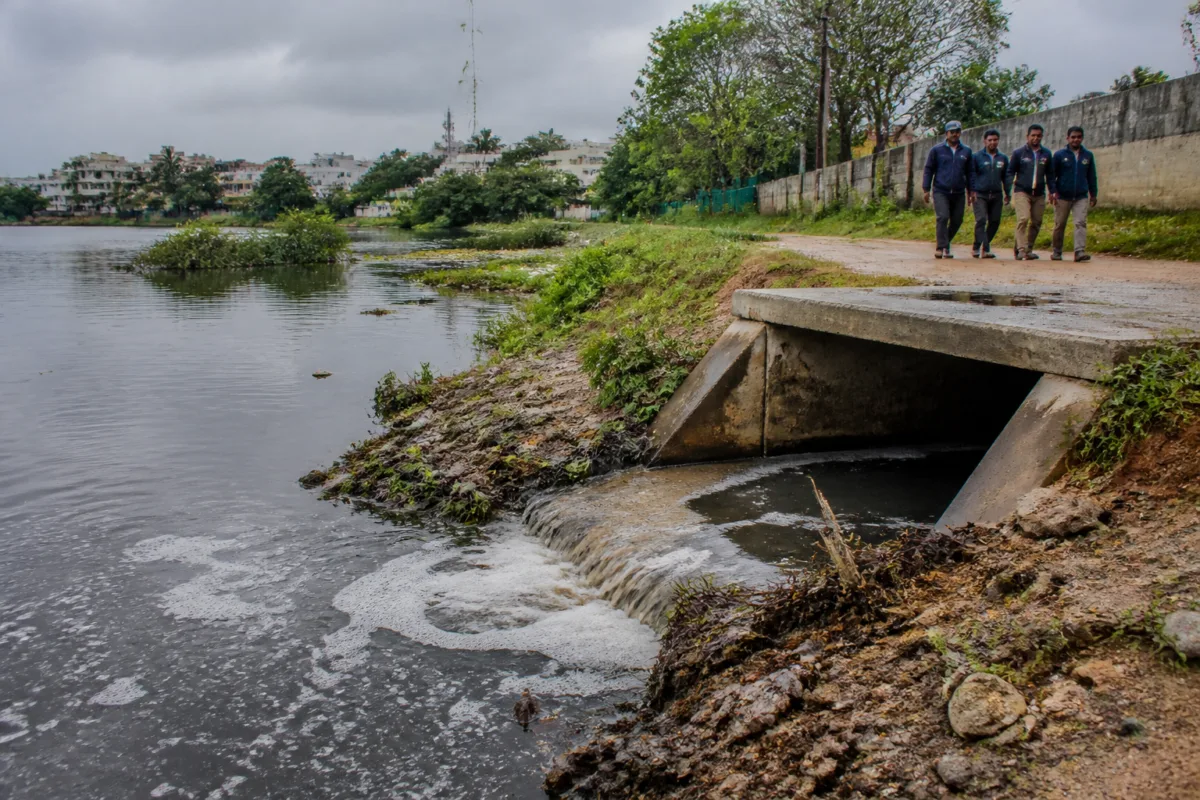
Gandhinagar Hosakere Lake in Bengaluru’s Kengeri area has been polluted by sewage and chemical-mixed water entering through a stormwater drain, according to a report by Prajavani. The contamination has continued despite lake development work costing about ₹9 crore in 2022, while residents say the foul odour is affecting people who visit the lake for walks.
The report said large quantities of chemical-mixed sewage reached the lake through the stormwater drain. Sewage from Visvesvaraya Layout and nearby residential areas is also reportedly entering the lake along with rainwater. Residents said the inflow has become a recurring problem and that the lake surroundings are now difficult to use.
Kadarpaa, a local resident and president of the Valagerahalli Residents’ Federation, said water containing chemicals from vehicle cleaning during the Dasara period had entered the lake along with sewage from surrounding neighbourhoods. He said the lake had begun to emit a strong stench, forcing citizens who came for walking to cover their noses while moving around the premises.
The pollution has raised a separate concern about a sewage pipeline installed through the middle section of the lake. Resident Srinivas said a rise in water flow or damage to the pipeline could allow sewage to enter the lake and could also result in the lake losing water. He linked the potential loss of lake water to a possible decline in groundwater levels.
According to Prajavani’s report, the lake was developed at a cost of approximately ₹9 crore in 2022. Residents have attributed the continued contamination to what they described as improper construction and inadequate maintenance. The report said sewage is mixing with water in the stormwater drain before reaching the lake, allowing polluted inflows to continue despite the earlier development expenditure.
The issue places attention on the functioning of the drainage network around the lake and on the separation of sewage from rainwater flows. The reported entry of sewage through a stormwater drain also means that pollution can continue during ordinary flows, while heavier water movement could create additional pressure on the pipeline installed through the lake.
Chandrashekar, an assistant executive engineer with the Bengaluru Water Supply and Sewerage Board, told Prajavani that steps would be taken soon to resolve the problem. The report did not specify the proposed intervention, a completion timeline, or whether the pipeline and drain would undergo an inspection. No details were provided on the volume of sewage entering the lake or on water-quality testing.
The next official action will determine whether the sewage inflow is stopped at the drainage network, whether the pipeline through the lake is secured, and how the lake will be restored after the contamination is addressed.

