


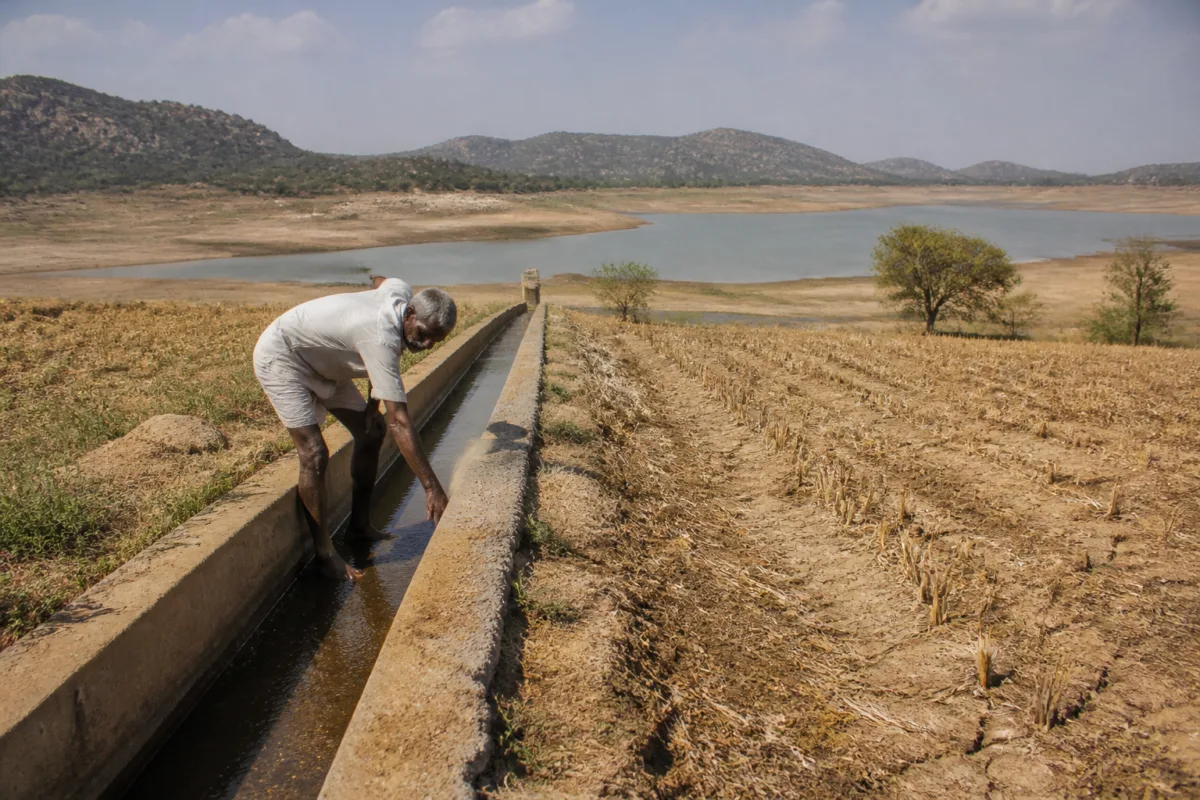
Karnataka is considering discouraging water-intensive summer crops such as paddy and cotton in early 2027 as the state confronts depleted reservoirs, falling groundwater levels and concerns over rising electricity demand from irrigation pump sets.
The proposed advisory would target crops that consume large quantities of water rather than impose a blanket ban on summer cultivation, according to government sources cited by the Times of India. Farmers in irrigated areas are also being encouraged to reconsider summer cultivation and adopt water-conservation measures.
The energy, agriculture and water resources departments jointly proposed the move after the failure of the Southwest monsoon and uncertainty over the ongoing Northeast monsoon. Officials said the state must conserve reservoir stocks and prevent additional pressure on groundwater and the electricity grid.
“While the depletion of reservoir storage is the primary concern, record electricity consumption by irrigation pump sets and a falling groundwater table have also necessitated a rethink,” a senior energy department official was quoted as saying. “We cannot afford to put further pressure on already stressed water and energy resources.”
Karnataka’s energy department has warned that electricity demand could reach 22,000 MW next summer, amid concerns over the possible impact of El Niño. Demand crossed 20,000 MW for the first time in September, with the government meeting the requirement through purchases from the open market and avoiding disruptions to consumers and farmers.
Officials said summer temperatures could push up household use of air conditioners and other cooling appliances. If irrigation pump sets also operate extensively, the combined demand could place further pressure on the state’s power system.
The water resources department has separately warned that extensive summer cultivation could affect drinking water supplies. The state’s major reservoirs together held 297 tmcft of water, compared with about 425 tmcft during the corresponding period last year. The available storage must last until the Southwest monsoon in 2027, according to the report.
The government is expected to continue supporting perennial crops such as pomegranate and horticultural produce, including vegetables, fruits and flowers. The agriculture department’s approach is intended to distinguish between water-intensive crops and produce needed for daily consumption.
Agriculture minister PM Narendraswamy said farmers and the government would need to adapt to the crisis. “This is not the time to discuss who is right or wrong,” he said, adding that farmers traditionally cultivate two or three crops a year but that limited canal and groundwater availability could make it difficult to get through the current period.
The proposed advisory has not been described as a formal prohibition. The government’s next steps will depend on water availability, the monsoon situation and consultations across the agriculture, energy and water resources departments.

