


India’s September food inflation figures reveal a pressure point that is easy to miss in a single headline number: the rise in household costs was significantly sharper in rural India than in urban centres. Retail inflation based on the Consumer Price Index rose to 5.54% in September 2026, up 71 basis points from the previous month, while consumer food inflation reached 7.74%. Rural retail inflation stood at 6.08%, compared with 4.88% in urban areas. For food alone, the gap was also visible: rural food inflation was 8.06%, against 7.18% in urban centres.
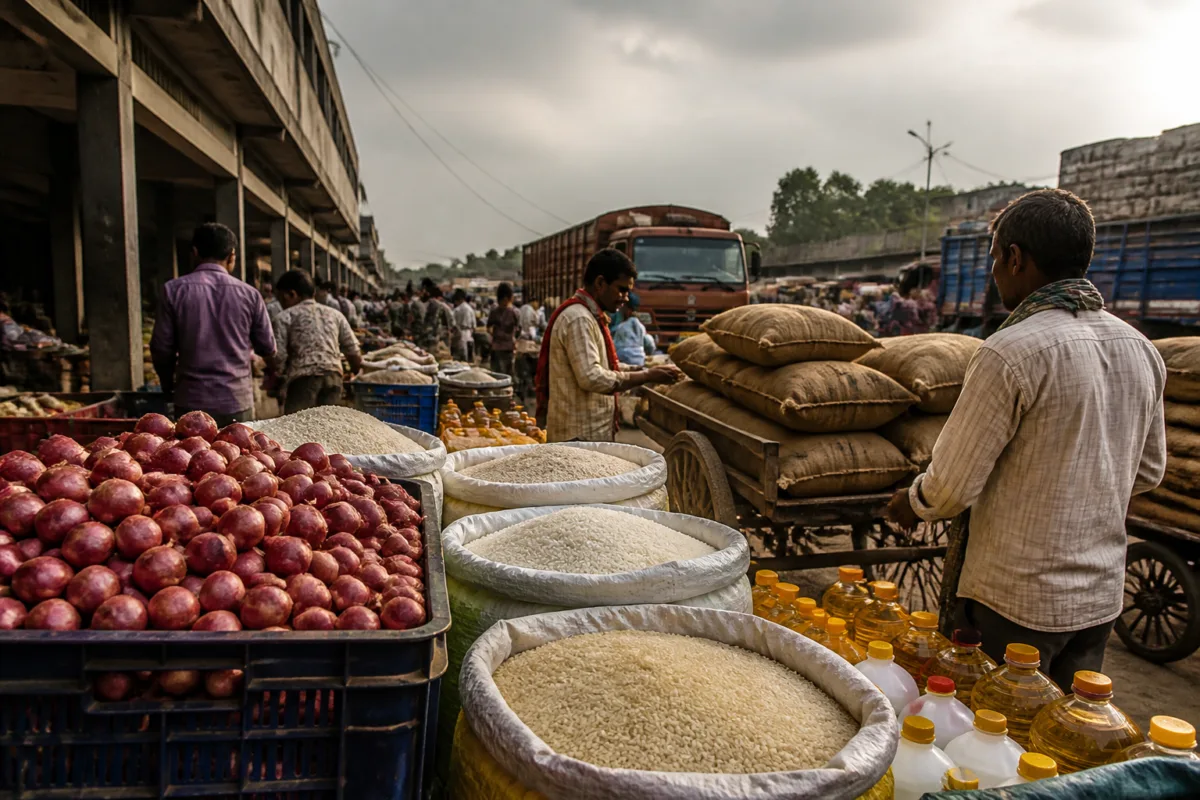
The distinction matters because food prices are not only a macroeconomic indicator. They show how agricultural production, transport, wholesale markets, storage, seasonal availability and household purchasing power interact. The latest figures, cited in the October Monthly Economic Review, suggest that the immediate pressure is concentrated in frequently purchased staples rather than in a narrow set of discretionary goods. Onion prices rose 108% year on year, while sugar increased 30%, jaggery 23%, refined oil 15%, groundnut oil 14% and rice 8%.
This pattern connects household budgets to the physical and institutional organisation of India’s food system. The price rise in onions, for example, was linked in the review to falling stocks from the previous rabi crop and an approximately one-month delay in arrivals from the new kharif crop. That is a supply calendar problem, but it becomes a consumer affordability problem when available stocks decline before the next crop reaches markets.
The onion episode also shows why retail inflation cannot be understood only at the point of sale. A city household may encounter the price through a neighbourhood retailer, but the pressure may have accumulated much earlier through production cycles, storage decisions, transport movement and wholesale availability. The longer the gap between the depletion of old stocks and the arrival of new supplies, the greater the possibility of price volatility.
Sugar presents a different but related chain of pressures. The review attributed higher sugar prices to lower cane production, excess rainfall and red rot disease affecting the crop. It also pointed to stronger demand before the festive season and tighter global sugar supply as possible sources of pressure. These factors operate at different scales: crop damage is local or regional, while international supply conditions affect the wider market. Their combined effect is eventually transmitted to household consumption.
Rice prices increased 8%, with the review linking the rise to growing international demand for Indian rice. This is an important signal about the relationship between domestic consumption and external markets. When demand from overseas buyers increases, the availability and pricing of supplies serving Indian consumers can come under pressure. The supplied review does not establish the extent to which exports altered domestic availability, but it identifies international demand as one factor behind the increase.
The rural-urban difference adds another layer to the story. Rural retail inflation was 1.20 percentage points higher than urban retail inflation in September, while rural food inflation was 0.88 percentage points higher. The figures do not by themselves establish a single cause for this gap. However, they show that rural households experienced a stronger increase in the cost of living during the period in which essential food items recorded some of the largest price increases.
The review’s explanation that food items are used more heavily in rural areas points to the importance of consumption patterns and household budgets. If a larger share of spending is directed towards food, increases in staples can have a more immediate effect on living costs. The same price rise can therefore produce different levels of pressure depending on what households buy, how often they buy it and how much room remains in their budgets after essential expenses.
The urban picture is different, but it is not insulated. Urban consumers recorded lower overall retail and food inflation than rural consumers, yet food inflation in urban centres still reached 7.18%. Cities depend on continuous inflows of agricultural produce from rural production zones. Their apparent advantage during a particular month may reflect access to more diversified supply channels, larger wholesale markets or different consumption patterns, but the supplied material does not quantify the contribution of each factor.
Wholesale price data indicate that the pressure was not confined to retail markets. Wholesale inflation rose from 9.92% in August to 11.39% in September. Wholesale inflation in the fuel and power category reached 25.85%, while manufactured-product inflation rose to 9.76%. These figures point to a broader cost environment in which food prices are moving alongside other input and production pressures.
The connection between wholesale and retail prices is not automatic or uniform. A rise in wholesale costs may be absorbed at one stage of the chain, passed on to retailers or reflected in consumer prices after a delay. The September numbers nevertheless show that households were facing rising prices at the same time that upstream costs were also under pressure. For businesses involved in food processing, distribution and retail, that can complicate inventory and pricing decisions; for consumers, it can make the price movement of everyday goods harder to predict.
Global conditions add to the uncertainty. The review stated that the global food price index was 5.8% higher than a year earlier in September. This does not mean that domestic prices are determined by global movements alone. India’s food markets remain shaped by domestic crops, local arrivals, public policy and distribution networks. But the global increase indicates that domestic supply pressures are occurring in an environment where food costs are already elevated internationally.
The policy landscape visible in the supplied material is primarily one of monitoring through inflation indicators and economic review. The figures bring together the Consumer Price Index, consumer food inflation, rural and urban price trends, wholesale inflation and global food-price movements. They also identify crop-specific causes, including delayed onion arrivals, lower cane production, rainfall and crop disease. However, the material does not specify any new government intervention, procurement decision, import measure, export restriction, subsidy or distribution programme linked to the September increase.
That absence is significant for interpreting what the evidence does and does not show. The data establish that prices rose, that rural inflation was higher than urban inflation and that several staple commodities recorded sizeable year-on-year increases. They identify supply-side and demand-side pressures cited by the review. They do not establish whether the increases will persist, how quickly prices may moderate when new arrivals improve, or which policy response, if any, will be adopted.
The immediate urban question is how resilient the food-supply system is when crop calendars, weather, disease, seasonal demand and international markets move in the same direction. Cities are often discussed as places of consumption, while farms and rural markets are treated as separate production spaces. The September data show the limits of that separation. Urban affordability depends partly on conditions outside city boundaries, and rural inflation can affect both household welfare and the cost of supplying urban markets.
The numbers also show why a single national inflation figure can conceal uneven exposure. A 5.54% retail inflation rate describes the overall movement, but it does not capture the stronger burden recorded by rural households or the particular price increases in onions, sugar, edible oils and rice. For households, frequently purchased essentials can shape the perception and experience of inflation more directly than a broad average.
What the evidence confirms is a food-price shock with a pronounced rural disadvantage, alongside higher wholesale and global food-price pressures. What remains uncertain is how long the supply disruptions will last and whether the delayed onion arrivals, crop-related sugar pressures and international rice demand will ease or intensify. The next important indicators will be subsequent crop arrivals, food-price readings and wholesale-cost movements, because they will show whether September represented a temporary seasonal squeeze or a wider continuation of supply-chain stress.

