


The Delhi–Meerut Namo Bharat corridor is set to receive around 60% of its electricity requirement from a solar plant planned in Uttar Pradesh’s Jalaun district, with the project targeted for completion by the end of 2028. Electricity generated at the plant will be supplied through the grid to NCRTC receiving substations in Ghaziabad and Delhi before being distributed across the corridor.
The project has been approved and will be developed by NCRIL NCRTC Renewables Limited. According to the report, the plant is expected to be completed in two and a half years. NCRTC chief public relations officer Puneet Vats said the plant would be completed by the end of 2028, after which solar power would begin to be used for the corridor.
The planned arrangement will initially support electricity requirements at the corridor’s depots, stations and other infrastructure. Power generated in Jalaun will not be physically transmitted through a dedicated line directly to each operating facility. Instead, it will enter the grid and be supplied to NCRTC’s receiving substations in Delhi and Ghaziabad, from where it will be distributed to the Namo Bharat corridor.
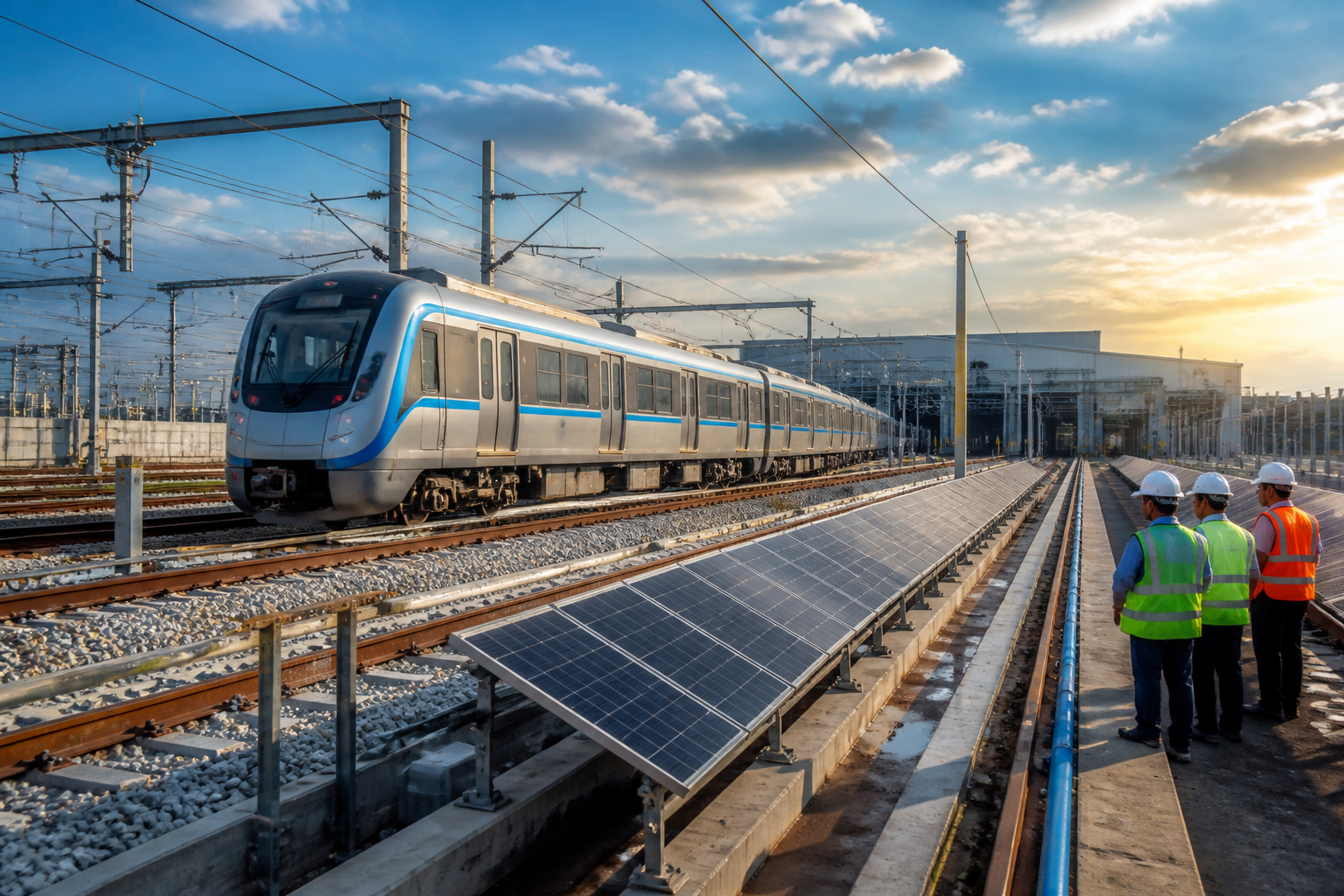
NCRTC has also started a pilot project to test solar generation on railway infrastructure. Solar panels have been installed on a pit-wheel track at the Namo Bharat depot in Duhai. The installation covers about 70 metres of track and consists of 28 solar panels, each with a capacity of 550 watt-peak. The combined installed capacity is 15.4 kilowatt-peak, with estimated annual generation of about 17,500 kilowatt-hours.
The pilot is part of NCRTC’s Solar on Track initiative. The panels have been placed on the track at the Duhai depot, making the project distinct from conventional rooftop installations at stations and other buildings. The supplied report does not state whether the pilot will be extended across other sections of the corridor or provide a separate timeline for wider deployment.
Rooftop solar plants are already operational at 10 stations on the Namo Bharat and Meerut Metro sections of the corridor. These stations are Sahibabad, Ghaziabad, Guldhar, Duhai, Duhai Depot, Muradnagar, Modinagar North, Modinagar South, Shatabdi Nagar and Meerut South. Solar plants are also being installed at six additional stations, although their names and commissioning dates were not specified in the report.
NCRTC is separately preparing to use solar power for operating Namo Bharat trains in the future, according to sources cited in the report. The plan is still under development and may take time to implement. The report does not provide details of the proposed traction-power arrangement, the share of train operations that could be covered or the financial cost of the solar plant.
The Delhi–Meerut corridor is planned to include stations from Sarai Kale Khan in Delhi through New Ashok Nagar, Anand Vihar, Sahibabad, Ghaziabad, Guldhar, Duhai, Duhai Depot, Muradnagar, Modinagar South, Modinagar North, Meerut South, Shatabdi Nagar, Begumpul, Modipuram and Modipuram Depot. The next stated milestone is completion of the Jalaun solar plant by the end of 2028, followed by the start of solar-power use on the corridor.
