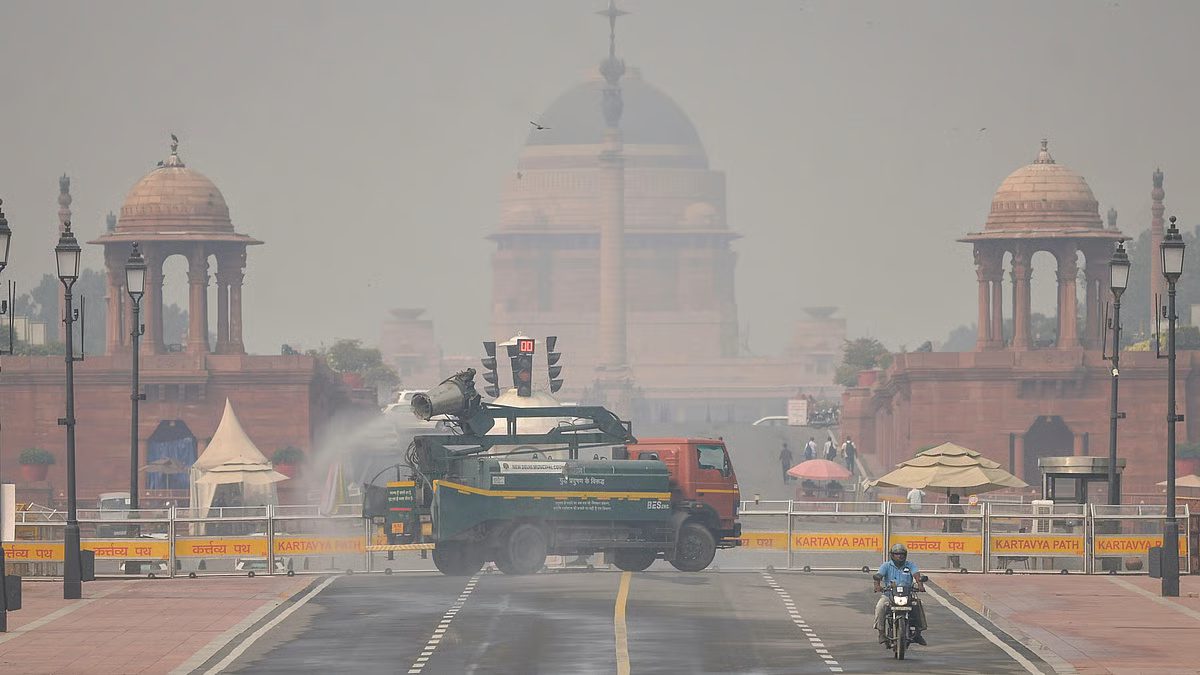
Delhi is facing an early-season spike in extreme temperatures alongside deteriorating air quality, prompting authorities to reintroduce pollution control measures under Stage 1 of the Graded Response Action Plan (GRAP). The dual stress of heat and airborne dust highlights the growing challenge of managing climate-linked risks in one of India’s most densely populated urban regions. The Delhi heatwave has pushed temperatures beyond 40°C, marking the highest levels recorded so far this season and significantly above seasonal norms. Weather stations across the capital have reported consistent warming over recent days, with meteorological conditions—clear skies and the absence of western disturbances—accelerating the rise. In several parts of the city, temperatures have crossed 41°C, intensifying discomfort for residents and increasing energy demand for cooling.
At the same time, air quality has slipped into the lower end of the ‘poor’ category, driven largely by elevated dust concentrations. Coarse particulate matter (PM10), typically associated with road dust, construction activity and dry conditions, has risen sharply, prompting the Commission for Air Quality Management to reinstate GRAP Stage 1 measures across the National Capital Region. These measures focus on preventive action rather than emergency restrictions. Civic agencies have been directed to intensify mechanical road sweeping, water sprinkling and monitoring of dust-generating activities. Public transport services are also expected to be strengthened to discourage reliance on private vehicles, while enforcement against waste burning and industrial emissions is being tightened. Urban climate experts say the overlap between a Delhi heatwave and declining air quality is becoming increasingly common. Rising temperatures dry out soil and increase dust resuspension, while stagnant atmospheric conditions limit pollutant dispersion. This creates a feedback loop where heat and pollution amplify each other’s impact, particularly in cities with high construction activity and traffic density.
The implications extend beyond environmental metrics. Prolonged heatwaves place pressure on public health systems, particularly affecting outdoor workers, the elderly and low-income communities with limited access to cooling. At the same time, poor air quality exacerbates respiratory conditions, compounding health risks during peak summer months. Forecasts indicate that the Delhi heatwave is likely to persist, with temperatures expected to remain in the 40–42°C range in the coming days. While some localised thunderstorm activity may offer brief relief, significant rainfall is not anticipated in the short term. Air quality is also expected to fluctuate between moderate and poor levels, depending on wind patterns and dust activity. For urban planners, the situation underscores the need for long-term strategies that address both heat mitigation and air quality management. Expanding urban green cover, regulating construction dust, improving public transport and promoting climate-responsive building design are increasingly seen as essential interventions.
As Delhi navigates another cycle of extreme weather and pollution, the effectiveness of short-term measures like GRAP will depend on their integration with broader efforts to build climate resilience into the city’s infrastructure and governance systems.