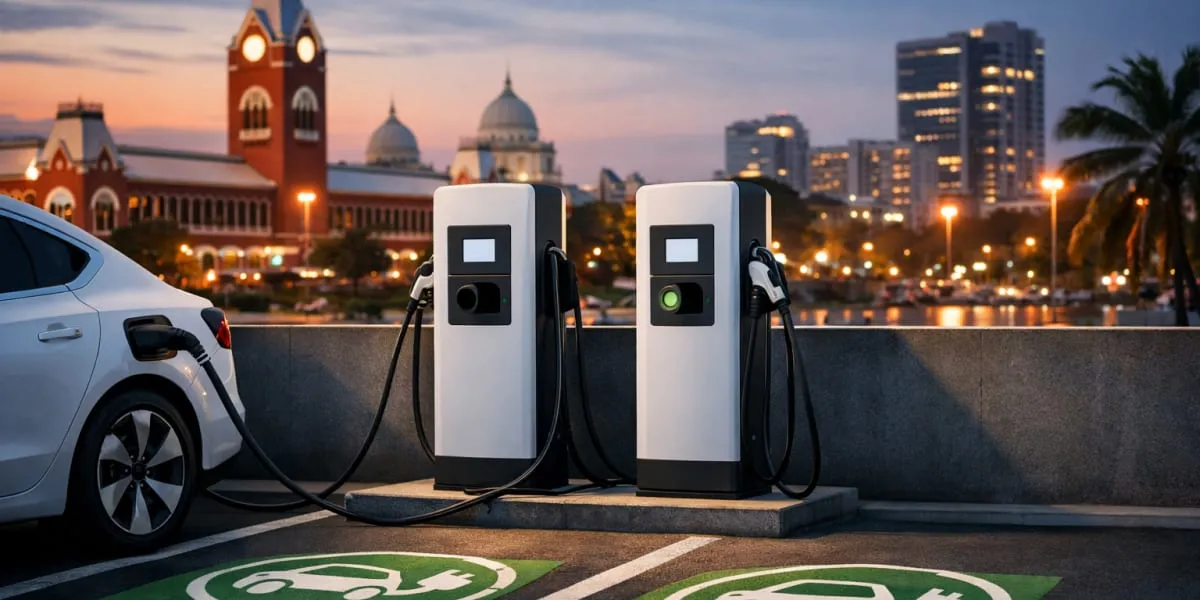
Chennai is integrating electric mobility into its suburban rail ecosystem with the rollout of EV battery swapping stations across 21 railway locations, a move that could reshape last-mile connectivity for one of India’s busiest urban transit networks. The initiative links public transport infrastructure with cleaner mobility systems at a time when Indian cities are searching for scalable solutions to congestion, emissions and unreliable charging access.
The facilities, introduced across key suburban railway stations including Chennai Central, Chennai Egmore and Velachery, are designed to allow electric vehicle users to exchange depleted batteries for fully charged units within minutes. The network is expected to primarily support two-wheelers and small commercial vehicles, segments that dominate urban mobility and delivery operations in Indian metros. Urban mobility specialists say battery swapping can reduce pressure on conventional charging infrastructure, particularly in dense cities where space constraints and long charging durations remain barriers to electric vehicle adoption. By placing the service inside suburban railway premises, authorities are attempting to create integrated mobility corridors where commuters can combine rail travel with cleaner first- and last-mile transport options.
The Chennai suburban rail network handles more than a million passengers daily, making it one of the city’s most critical public transport systems. Transport planners believe locating EV battery swapping points at railway stations could improve accessibility for gig workers, students and daily commuters who rely on electric scooters for short-distance travel between residential areas, workplaces and transit hubs.Officials involved in the project indicated that the railway administration has allocated station space while private operators will manage installation, operations and maintenance under long-term contracts. The model reduces upfront public expenditure while enabling the rail network to generate recurring non-fare revenue through licensing arrangements.The expansion also reflects a broader transition underway in Chennai, where electric vehicle registrations have accelerated over the past few years, led largely by non-transport two-wheelers. Industry observers note that while EV adoption is rising steadily, the absence of widespread and reliable charging infrastructure continues to slow usage beyond affluent urban clusters. Battery swapping has emerged as an alternative particularly suited to high-density cities because it minimises waiting time and reduces the need for dedicated parking-based charging bays.
However, experts caution that long-term success will depend on battery standardisation, interoperability between operators, pricing transparency and safety oversight.From an urban sustainability perspective, integrating EV battery swapping with mass transit systems may help reduce dependence on fossil fuel-powered short trips that contribute disproportionately to air pollution and traffic congestion. The initiative also signals a shift in how transport assets are being repurposed in Indian cities not merely as transit points, but as multi-functional mobility infrastructure supporting cleaner and lower-carbon urban growth.Authorities are now assessing additional suburban locations for expansion, indicating that transport-linked EV services may become a more permanent feature of Chennai’s evolving mobility landscape.