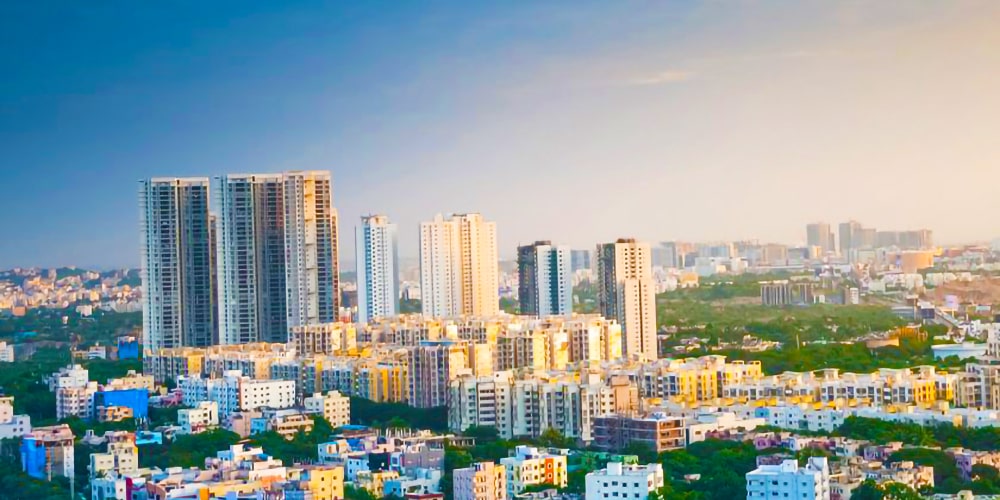
Chennai Residential Growth Raises Infrastructure Questions
A new large-scale housing development along Chennai’s Outer Ring Road is set to intensify the city’s westward residential expansion, underlining how peripheral urban corridors are increasingly shaping the metropolitan housing market. The forty-one-acre township project, announced this week near the fast-growing suburban belt, reflects rising demand for integrated communities linked to transport and employment hubs across the Chennai region.
The project, branded as a mixed residential township, proposes more than 4,000 apartments distributed across high-rise towers alongside recreational, educational and sports infrastructure. Urban planners say such developments are becoming common across Chennai’s emerging growth corridors as land scarcity and rising prices within the city core push developers towards outer suburban zones. The Chennai residential project arrives at a time when the Outer Ring Road corridor is witnessing rapid transformation from a logistics and industrial stretch into a mixed-use urban cluster. Improved road connectivity, proximity to manufacturing hubs, and expanding metro-linked mobility networks have increased residential interest in areas once considered peripheral.
Industry analysts note that integrated townships are increasingly marketed as self-contained urban ecosystems, with schools, sports infrastructure and leisure facilities embedded within gated developments. While these projects may reduce commuting needs for some residents, planners caution that large-scale housing clusters also place pressure on civic infrastructure, groundwater resources and waste management systems if local authorities fail to expand public services in parallel.The township includes large open spaces, sports facilities and a private educational institution within the premises. Urban development experts say the inclusion of green areas and community infrastructure aligns with changing buyer preferences after the pandemic, especially among families seeking recreation and work-life balance closer to home. However, environmental specialists argue that the quality, accessibility and ecological value of such green spaces remain critical questions in rapidly urbanising districts.
The Chennai residential project also reflects the broader shift towards vertical housing formats in India’s major metropolitan regions. High-rise developments are increasingly replacing low-density layouts as developers seek to optimise land use in urban expansion zones. Experts believe this model can support more efficient urban growth when integrated with public transport, sewage systems and climate-resilient planning practices.At the same time, mobility remains a key concern along the Outer Ring Road belt. Residents in several suburban stretches have repeatedly flagged gaps in pedestrian infrastructure, public transport access and stormwater drainage. Urban researchers say future growth in these corridors will depend not only on housing supply but also on whether civic infrastructure keeps pace with population density.The project is expected to be completed in phases over the coming years, adding substantial inventory to Chennai’s housing market. As large residential communities continue to reshape the metropolitan edge, planners say the long-term success of these developments will depend on how effectively they integrate with public infrastructure, environmental safeguards and inclusive urban planning frameworks.