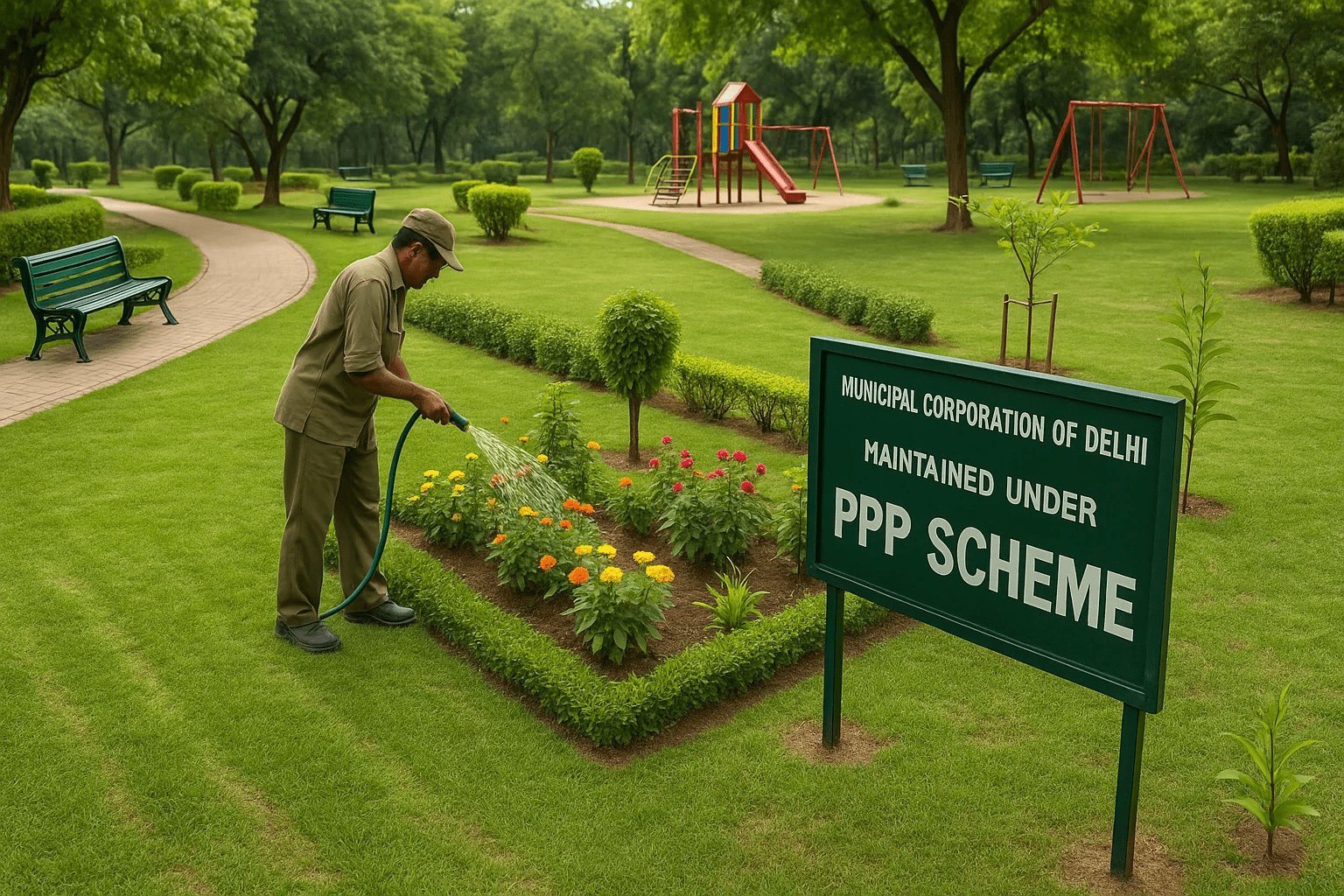
Delhi Boosts Park Maintenance Through Resident Funding
Delhi’s municipal authorities have revived a decentralised funding model to address a persistent shortage of gardening staff across public parks, offering financial support to resident groups to manage green spaces locally. The renewed park maintenance scheme is aimed at improving upkeep in neighbourhood parks while easing pressure on an overstretched civic workforce. Under the initiative, Resident Welfare Associations (RWAs) will receive a fixed allocation per acre to hire gardeners and maintain parks within their jurisdictions. The approach reflects a shift towards shared responsibility in urban green management, where civic agencies partner with communities to sustain public assets more effectively.
The move comes as the capital grapples with a widening gap between available manpower and the scale of its green infrastructure. With over 15,000 parks spread across thousands of acres, officials acknowledge that existing staffing levels fall short of recommended benchmarks. Current guidelines suggest a significantly higher ratio of gardeners to land area than what is currently deployed, leading to visible deterioration in several neighbourhood parks. Urban planners say the park maintenance scheme could offer a practical, if partial, solution by enabling hyper-local management. Community-led maintenance has the potential to improve accountability and responsiveness, particularly in smaller parks where residents directly experience the impact of neglect. However, its effectiveness will depend on consistent monitoring and equitable participation across different neighbourhoods. The scheme also integrates sustainability elements by supplying compost derived from municipal green waste processing facilities. This aligns with broader circular economy practices, where organic waste is repurposed to support urban landscaping. Experts note that such measures can reduce reliance on chemical fertilisers while improving soil health in city parks.
Despite its potential, the initiative raises questions about long-term institutional responsibility. Some urban policy analysts caution that delegating maintenance to RWAs should not substitute for strengthening municipal capacity. Wealthier neighbourhoods with organised resident bodies may benefit more, while less-resourced areas could struggle to participate, potentially widening disparities in access to well-maintained green spaces. On-ground feedback from several wards indicates the scale of the challenge. In some areas, a handful of gardeners are responsible for maintaining dozens of parks, resulting in overgrown vegetation, damaged infrastructure, and declining usability. These conditions not only affect aesthetics but also reduce the environmental benefits that urban green spaces provide, including temperature regulation and air quality improvement. The introduction of zonal monitoring mechanisms and performance verification processes is intended to ensure accountability in fund utilisation. Still, governance experts emphasise that transparency and regular audits will be essential to prevent inconsistencies in implementation.
As cities increasingly recognise the role of urban greenery in climate resilience, Delhi’s experiment with a participatory park maintenance scheme highlights the need for innovative governance models. Its success will likely depend on balancing community involvement with strong institutional support, ensuring that all residents—regardless of location—can access functional and well-maintained public spaces.