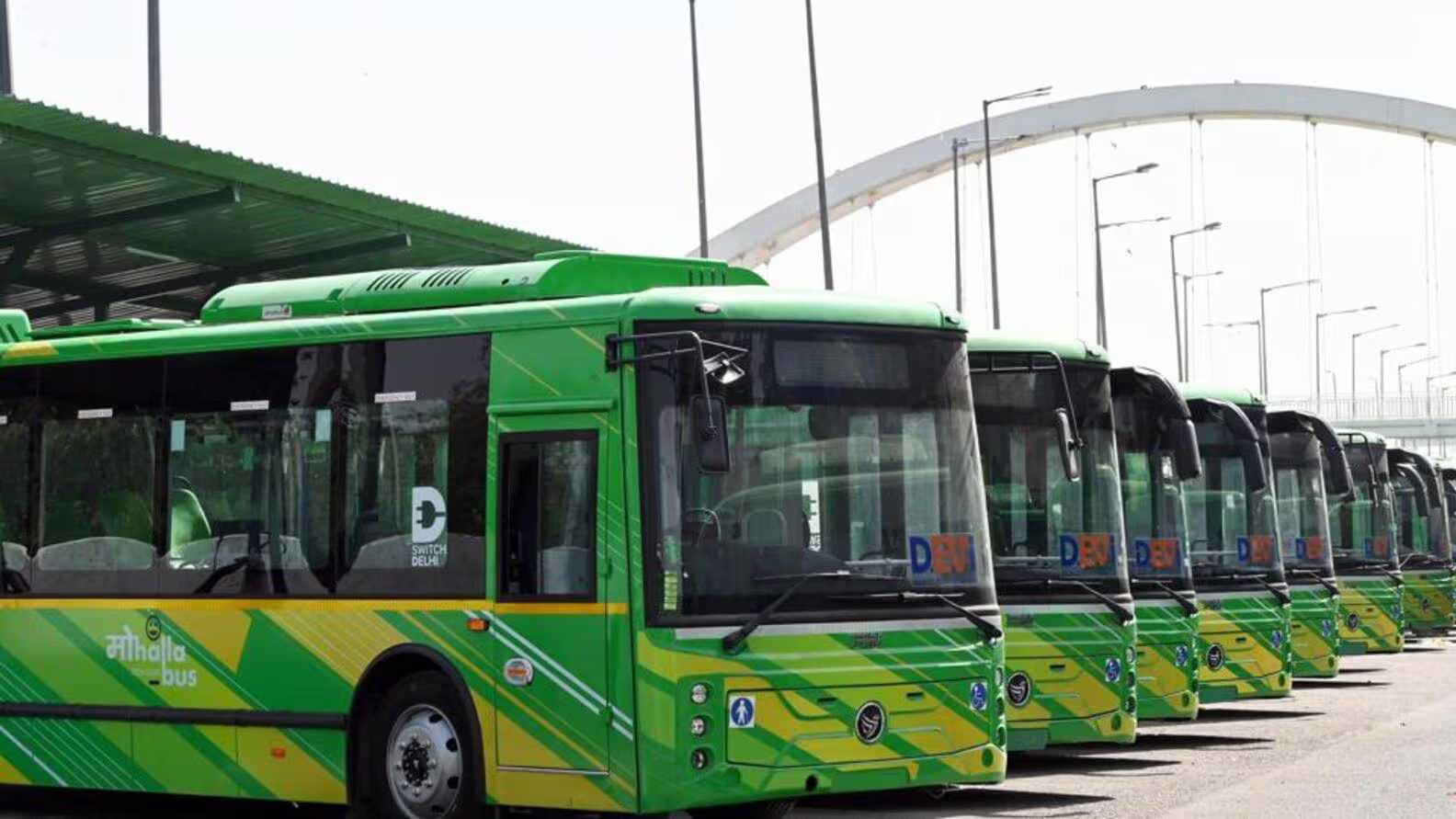
Delhi has expanded its public transport network with the addition of 200 battery-powered buses and the rollout of an interstate service linking the capital to Rohtak, signalling a continued push towards cleaner urban mobility. The latest phase of the Delhi electric bus programme reflects an effort to address rising commuter demand while tackling persistent air quality concerns across the National Capital Region. The new buses are being integrated into the city’s existing fleet as part of a long-term transition away from fossil fuel-based transport. Urban mobility experts note that electrification is central to reducing emissions from one of the largest sources of urban pollution—road transport. With the Delhi electric bus network growing steadily, the city is positioning itself as a key test case for large-scale adoption of zero-emission public transport in India.
Alongside fleet expansion, authorities have introduced a cross-border electric bus route connecting Delhi with Haryana’s Rohtak, passing through key suburban and peri-urban nodes. This extension highlights a shift in planning from intra-city connectivity to regional integration, acknowledging that daily travel patterns increasingly extend beyond administrative boundaries. Transport analysts suggest such routes could help reduce dependence on private vehicles, particularly for intercity commuters. Infrastructure upgrades form a parallel component of this expansion. A new bus terminal in Madanpur Khadar and an administrative facility at an eastern depot have been brought into operation to support fleet management and service efficiency. These investments are expected to ease operational bottlenecks, though experts emphasise the need for adequate charging infrastructure and grid capacity to sustain long-term electrification goals. While the environmental benefits of electric buses are widely acknowledged, challenges remain around cost, maintenance, and service reliability.
Industry observers point out that upfront investment in electric fleets is significantly higher than conventional systems, requiring sustained financial planning. At the same time, ensuring consistent service frequency and last-mile connectivity will be critical to encouraging widespread adoption among commuters. From a social perspective, the shift towards electric mobility has implications for accessibility and comfort. Electric buses are typically quieter and produce less vibration, improving the travel experience, especially for elderly passengers and those with mobility constraints. However, urban planners caution that these benefits must be complemented by inclusive route planning and affordable fare structures to ensure equitable access. The expansion also aligns with broader national and global efforts to decarbonise urban transport systems. As cities face increasing climate pressures, investments in low-emission mobility are being viewed not just as environmental measures but as essential infrastructure for sustainable growth.
Delhi’s latest move underscores an evolving approach to public transport—one that combines technological transition with regional connectivity. The effectiveness of this strategy will depend on how well infrastructure, policy, and commuter needs are aligned in the years ahead, particularly as the city scales up its ambitions for a fully modernised, low-emission transport network.