


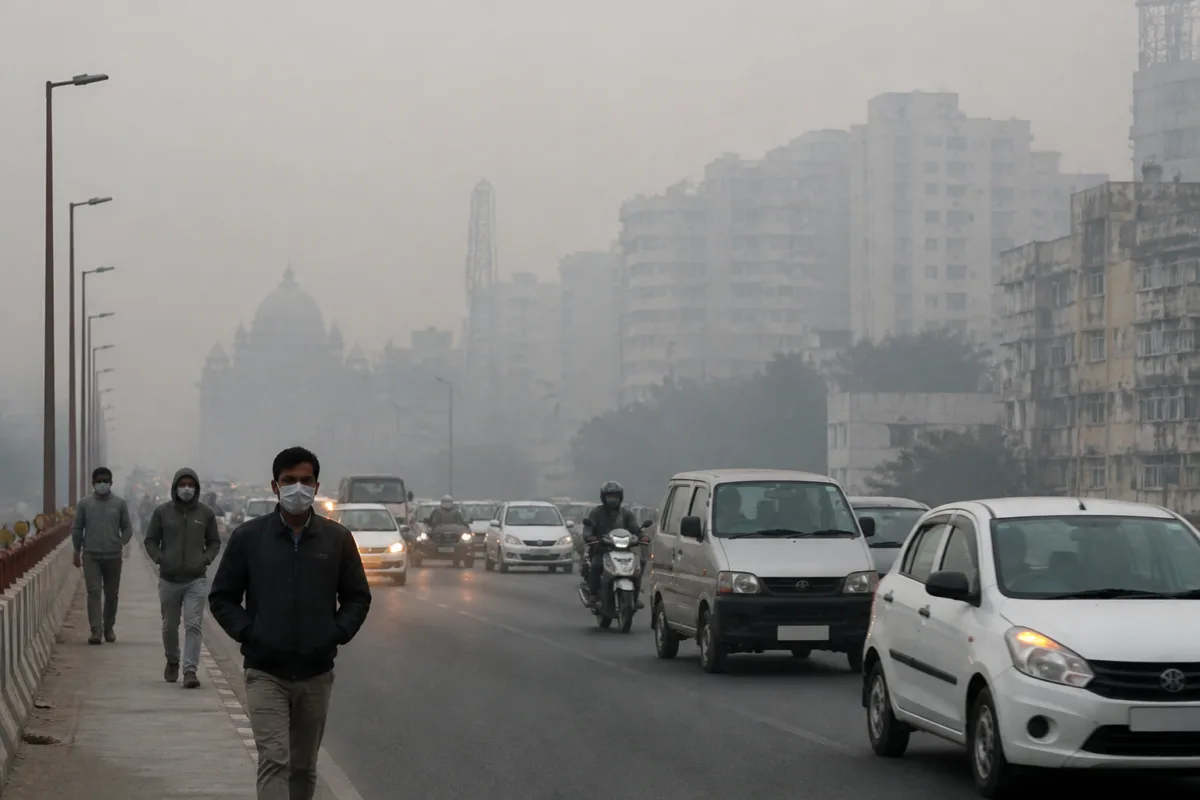
Delhi’s average air quality index (AQI) reached 376 on Diwali, the highest level reported in the capital since 2021, after extensive fireworks left the city under a dense layer of smoke. The Central Pollution Control Board data cited in the report placed the air quality in the very poor category, with several monitoring stations recording severe pollution.
The citywide AQI remained at 371 by 10 am the following day, indicating that pollution levels had not eased significantly overnight. Visibility across several parts of Delhi was affected by the smoky conditions, according to the report.
Data from 51 monitoring stations showed that 14 stations recorded air quality in the severe category, while the remaining stations reported very poor air quality. Delhi Technological University recorded the highest AQI among the stations, at 439.
The CPCB data showed that the Diwali AQI of 376 was higher than the level recorded during the festival in each of the previous four years cited in the report. In 2021, Delhi recorded an AQI of 382 during Diwali, while the latest reading was described as the highest since that year. The report identified this year’s festival as the most polluted Diwali in the five-year comparison.
The increase followed widespread fireworks across Delhi on Sunday. The report attributed the sharp rise in pollution primarily to firecracker emissions and noted that air quality commonly worsens in the capital around Diwali, which is celebrated in October or November. The impact is shaped by the timing of the festival and the accumulation of pollutants over the city.
Delhi’s AQI readings reflect conditions across a large and densely populated urban area, where monitoring stations can record varying levels depending on local activity and surroundings. The difference between the highest station-level reading of 439 at DTU and the citywide average of 376 shows the uneven intensity of pollution across neighbourhoods.
The monitoring data also places the latest episode within a recurring seasonal pattern rather than an isolated reading. Each year, pollution levels in Delhi rise substantially around Diwali, according to the report. The latest figures, however, indicate that the post-festival deterioration has been particularly pronounced compared with the previous four years in the cited period.
The report did not provide a detailed breakdown of pollution sources beyond the reference to widespread fireworks, nor did it state how long the elevated readings would continue. The immediate indicators available were the citywide AQI of 371 at 10 am the next day and the classification of 14 stations as severe. Further monitoring will determine whether air quality improves after the festival or remains at very poor and severe levels.

