


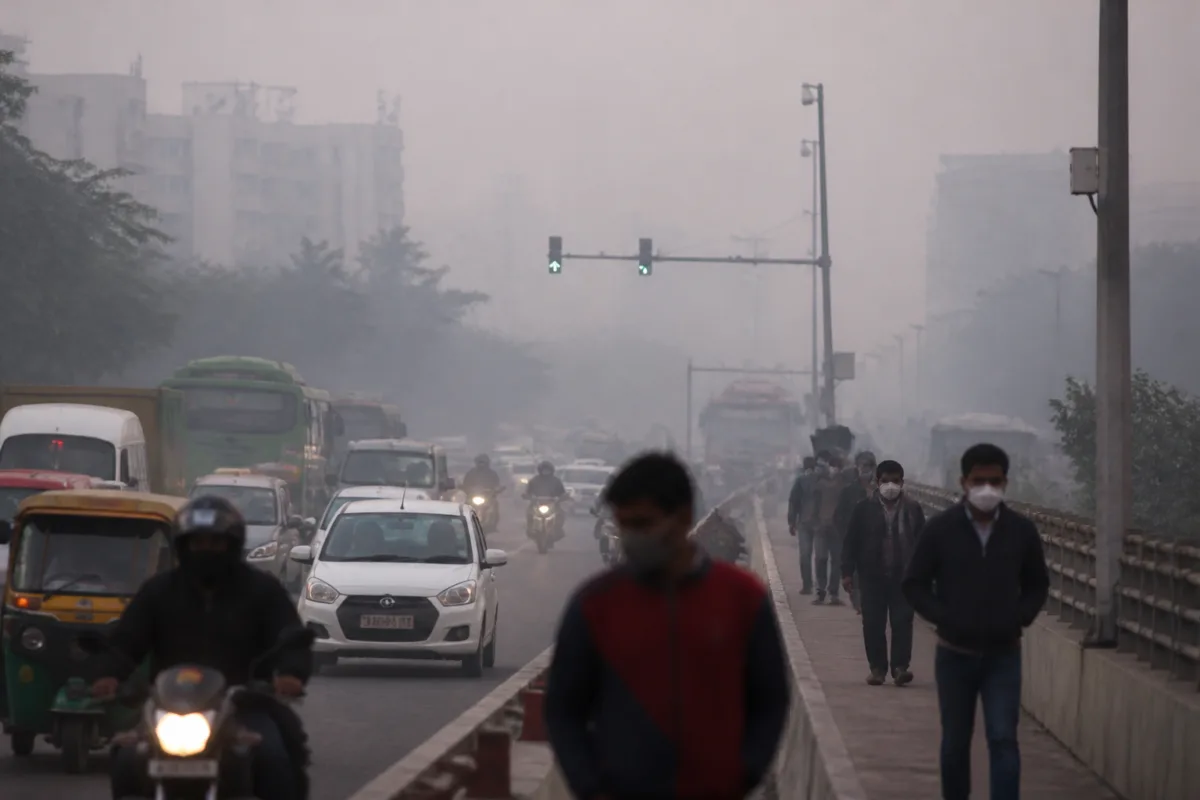
Delhi air pollution worsened after Diwali, with the national capital recording an average Air Quality Index (AQI) of 376 on the festival day and 371 at 10 am the following morning, according to figures cited in a Live Hindustan report based on PTI. Several areas recorded AQI readings above 400 after celebrations, as dense smog and fog covered the city.
The average AQI of 376 on Diwali was reported to be Delhi’s highest for the festival in five years. The next morning’s reading of 371 was also described as the highest Diwali-after reading recorded since 2021. Delhi’s air quality on the festival day was categorised as “very poor”, while pollution levels were expected to remain extremely poor over the following days.
The deterioration followed Diwali celebrations across the National Capital Region. The report said that dense haze covered several parts of the city on Monday, with pollution levels rising after firecracker use. The Central Pollution Control Board’s AQI scale categorises readings between 301 and 400 as “very poor”, a range associated with a risk of respiratory illness on prolonged exposure, although the supplied report did not provide area-wise health advisories.
Ratna Singh, identified in the report as the legal head of the Cockroach Janta Party, responded to Delhi’s air quality in a post on X. Singh said she was in Lucknow and was concerned about returning to Delhi. She criticised the continued use of firecrackers despite restrictions and said people often invoked tradition and prestige while neglecting discipline.
“People have repeatedly shown that they do not want to use their minds,” Singh said in the post, as quoted by Live Hindustan. She referred to the court’s permission for green firecrackers and alleged that shops continued to sell other types of firecrackers. She also criticised people for continuing to burst crackers until they had spent their money, followed by complaints about pollution through the winter.
Singh’s comments also drew attention to residents who have fewer ways to protect themselves from polluted air. She specifically mentioned children, animals, older people and people living on the streets, saying many could not afford N95 masks or air purifiers. “They have no other option but to breathe this poisonous air,” she said in the post.
The report did not provide details of enforcement action, the number of firecracker-related violations, or a separate official response from Delhi’s pollution-control authorities. It also did not establish how much of the recorded pollution was attributable to firecrackers as opposed to other sources and weather conditions. The immediate official outlook cited in the report was that Delhi’s air would remain extremely poor for the next few days.

