


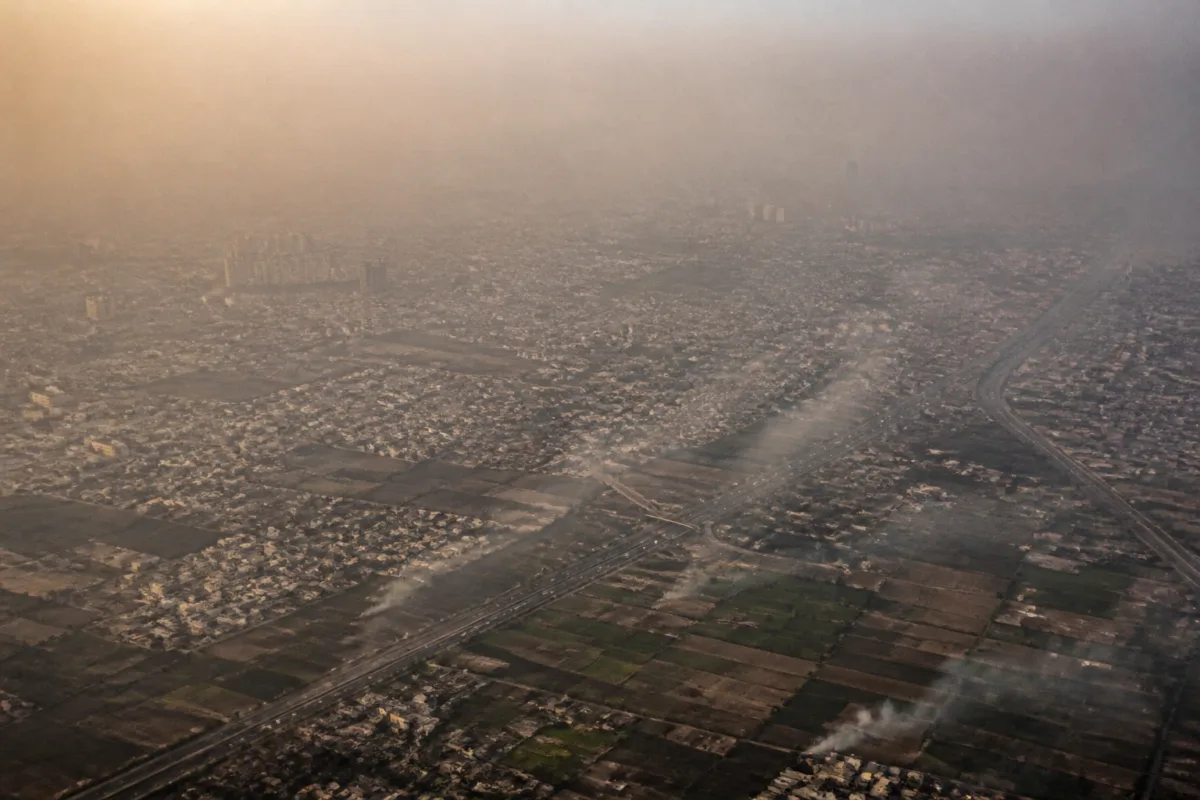
Delhi’s air quality reached an Air Quality Index (AQI) of 376 on Diwali, as NASA satellite imagery showed a thick layer of haze spreading across the Indo-Gangetic plains and several northern states. The reading was the highest recorded in the capital on Diwali since 2021, when the AQI reached 382, according to data cited from the Central Pollution Control Board (CPCB).
The satellite images released by NASA show haze extending from Pakistan across northern India towards the eastern parts of the country. The affected areas identified in the report include Delhi, Uttar Pradesh, Haryana, Punjab, Rajasthan and nearby regions.
The imagery was captured by the Moderate Resolution Imaging Spectroradiometer (MODIS) and shared through NASA’s Fire Information for Resource Management System (FIRMS). It shows a broad grey layer over the plains rather than pollution confined to a single city, highlighting the regional spread of the episode.
The images also contain red markers indicating fire hotspots across agricultural areas in northern India. According to the report, these hotspots are linked to the burning of agricultural waste left after harvesting crops. Crop-residue burning is identified as one of the contributors to seasonal air pollution in the region.
The report also links the deterioration in air quality after Diwali celebrations to firecracker use, including instances in which fireworks were burst beyond permitted hours. The combination of festival-related emissions, agricultural fires and the region-wide haze has left several parts of North India under heavy pollution, according to the supplied report.
For Delhi residents, the CPCB reading places the city’s air in the ‘very poor’ category. The AQI scale is used to communicate the likely severity of pollution and its health implications, although the supplied report does not provide a detailed breakdown of pollutant concentrations or city-level emergency measures.
The satellite view is significant because it places Delhi’s pollution within a wider airshed shared by multiple states and neighbouring areas. The haze visible across the plains indicates that air-quality conditions in the capital cannot be understood only through activity within Delhi’s municipal boundaries. However, the supplied report does not quantify the contribution of each source to the recorded AQI.
The latest reading also underscores the recurring nature of severe Diwali-period pollution in the capital. The comparison with the 2021 Diwali AQI provides a recent benchmark, although the report does not provide readings for every intervening year or explain the meteorological conditions associated with the latest episode.
NASA’s FIRMS imagery and the CPCB reading offer two different measures of the episode: satellite observations show the geographic spread of haze and fire hotspots, while the CPCB data records air quality in Delhi. Further official updates would be needed to establish how conditions change across the region and what measures authorities plan to take next.

