


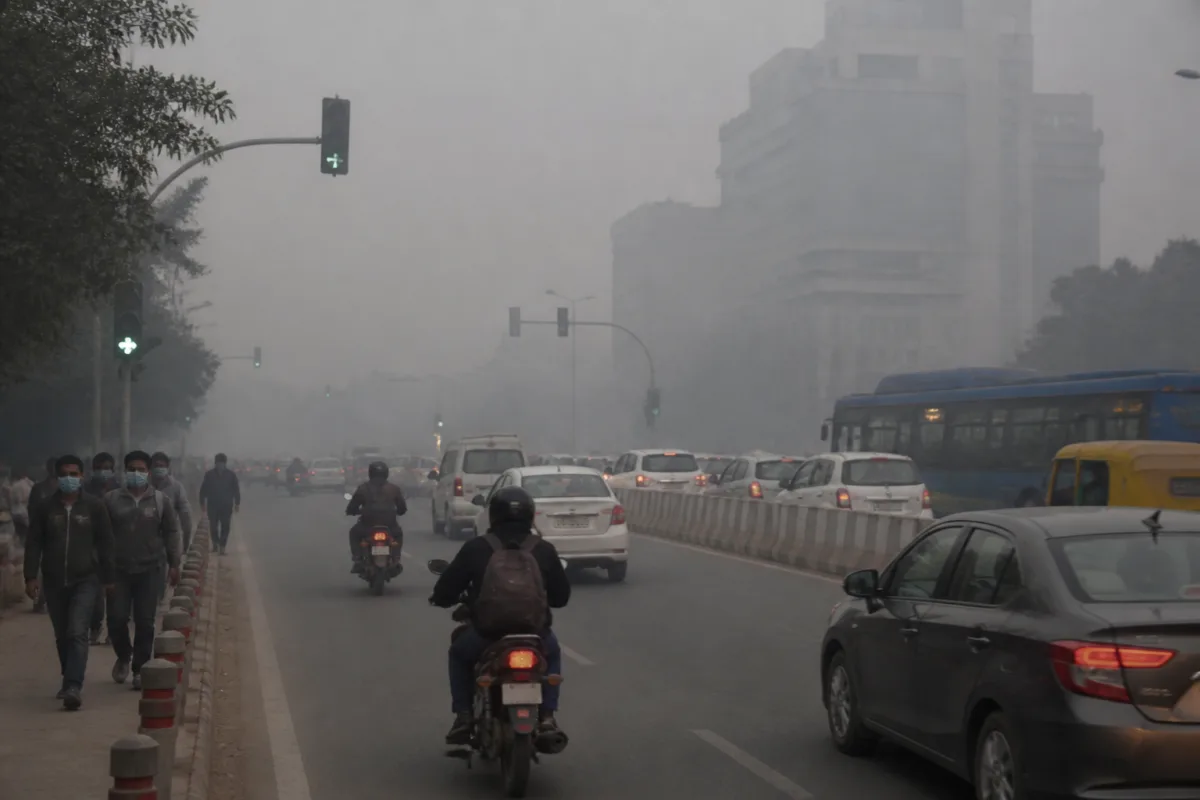
The Delhi pollution issue has been removed from the revised agenda of the Parliamentary Standing Committee on Home Affairs meeting scheduled for November 17, prompting an objection from Congress MP Ajay Maken as the National Capital Region continues to face severe air-quality concerns.
According to a report cited by Live Hindustan and attributed to PTI-Bhasha, the committee had initially planned to hear the Ministry of Home Affairs and relevant agencies before discussing pollution in the NCR. The issue was included in an agenda circulated among committee members on November 5, but it was later dropped from the revised agenda.
Maken has written to committee chairman Radha Mohan Das Agarwal opposing the removal and calling for urgent action on the region’s pollution problem. He has argued that the issue should be treated as a public health emergency, given its effect on residents across Delhi and adjoining parts of the NCR.
Agarwal said he was not aware of Maken’s letter when asked about the matter, according to the report. He also said he did not publicly discuss issues connected with committee meetings. No reason for removing the pollution item from the revised agenda was provided in the reported comments.
The dispute has drawn attention to how responsibility for NCR air pollution is divided among multiple institutions, including central ministries, pollution-control authorities and agencies in Delhi and neighbouring states. The committee’s proposed discussion was expected to include the role of the Home Ministry and other agencies in addressing the problem.
Maken also raised concerns about how the Central Pollution Control Board’s air-quality index displays extremely high pollution levels. He said the index is capped at 500, meaning that readings above that level may continue to be displayed as 500 rather than showing the full calculated value.
He referred to CPCB’s calculation system and said a monitoring station’s reading is capped at 500 when the 24-hour PM2.5 concentration exceeds 380 micrograms per cubic metre or the 24-hour PM10 concentration exceeds 510 micrograms per cubic metre. According to the figures cited in the report, a PM2.5 level of 600 micrograms per cubic metre would produce an index of about 669.2 under the calculation formula, although the displayed index would remain 500.
The issue is significant because the index display affects how residents interpret the severity of air pollution and how authorities communicate risks. A capped number can indicate that pollution has reached the highest displayed category, but it does not show how far concentrations may have moved beyond that threshold.
Maken said immediate attention was needed for public safety, compliance with applicable rules and coordination among the agencies responsible for managing the NCR’s air-quality crisis. The next reported development is the November 17 meeting, whose revised agenda currently does not include the pollution issue.

