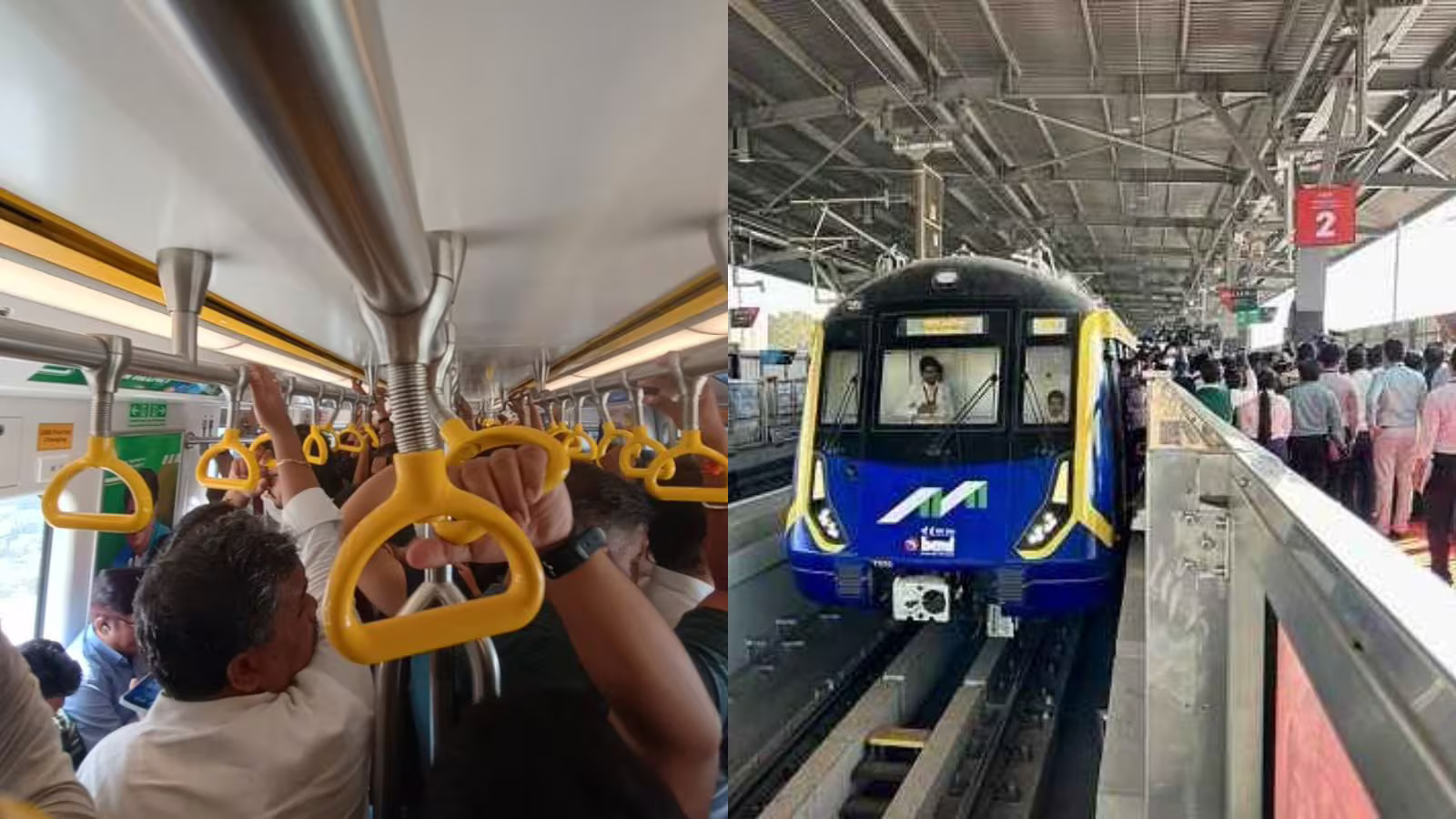
Rising passenger volumes on Mumbai’s recently expanded metro corridor have triggered concerns over commuter comfort, with overcrowding emerging as a key issue during peak hours. The situation has drawn attention to the challenges of balancing rapid ridership growth with service frequency, particularly on routes connecting fast-growing suburban zones.
The Mumbai metro overcrowding issue has become more visible on the northern stretch of the Red Line, where passenger demand has surged following new operational linkages. Commuters report tightly packed coaches during rush hours, with limited space for boarding at intermediate stations. The pressure is especially pronounced near interchange points, where passenger inflow significantly exceeds available capacity. Transport analysts note that such patterns are typical in newly operational corridors, where latent demand quickly translates into high ridership. As connectivity improves, more commuters shift from road-based travel or suburban rail, increasing dependence on metro services. However, without corresponding adjustments in train frequency, crowding can escalate rapidly, undermining the system’s appeal as a reliable and comfortable alternative.
The Mumbai metro overcrowding trend also highlights broader planning considerations in urban mobility. Metro systems are designed not only to move large volumes of people but also to offer predictable travel times and safer commuting conditions. When trains operate at longer intervals during peak demand, even small gaps in service can lead to platform congestion and overfilled coaches. Urban mobility experts emphasise that increasing frequency is one of the most effective ways to manage such demand spikes. Shorter headways can distribute passenger loads more evenly, reduce waiting times, and improve overall commuter experience. However, operational constraints such as signalling systems, rolling stock availability, and maintenance cycles must be carefully managed to sustain higher frequency services.
From a sustainability perspective, efficient metro operations are critical to reducing reliance on private vehicles and lowering urban emissions. Overcrowding, if left unaddressed, risks discouraging ridership and pushing commuters back towards less efficient modes of transport. Ensuring adequate capacity is therefore essential to achieving long-term climate and mobility goals. Civic transport authorities are expected to review operational data and adjust schedules in response to evolving demand patterns. Experts suggest that real-time monitoring, dynamic scheduling, and phased capacity enhancements could help address the Mumbai metro overcrowding challenge more effectively.
As Mumbai continues to expand its metro network, the focus is likely to shift from infrastructure creation to service optimisation. The current situation underscores the importance of aligning capacity planning with commuter behaviour, ensuring that the system remains both efficient and accessible as ridership continues to grow across the metropolitan region.
Dahisar Mira Road Metro Draws Criticism Over Heavy Crowding