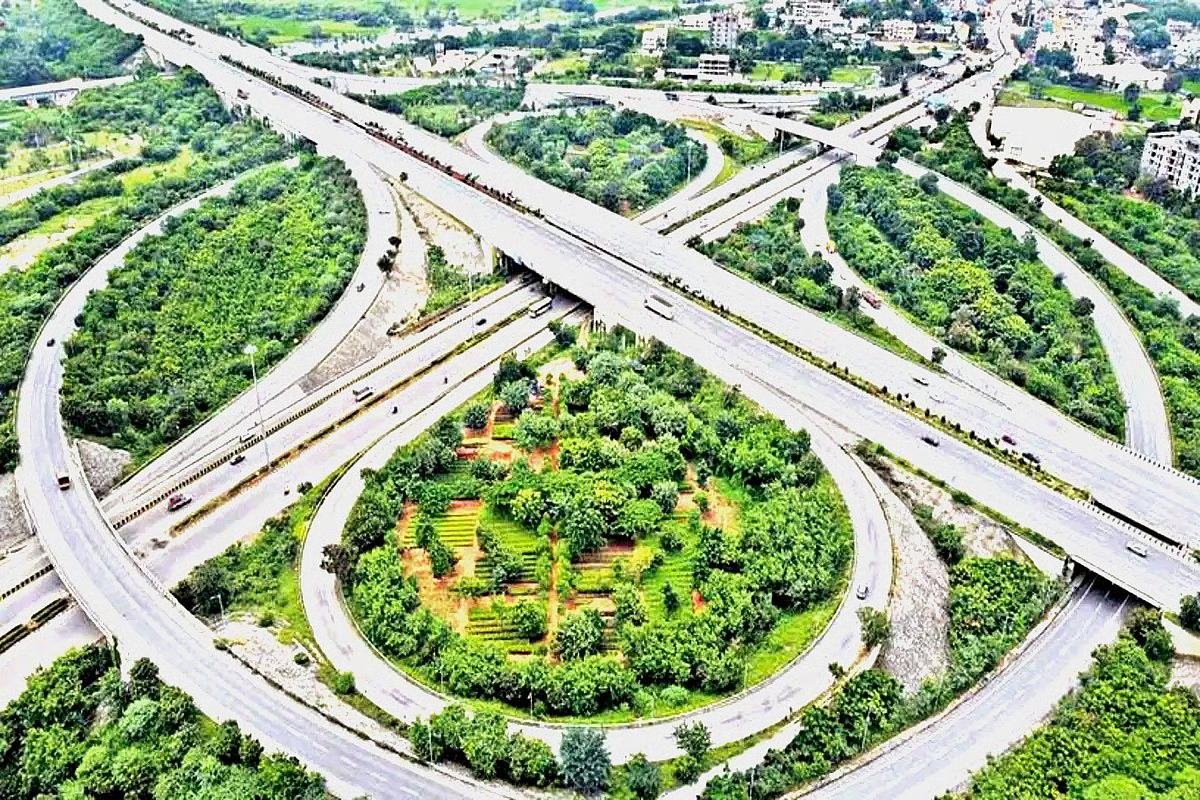
A major river-crossing project under the second phase of Prayagraj’s ring road is moving into a critical construction stage, with authorities preparing to begin superstructure work on a six-lane bridge designed to enhance regional connectivity. The project, spanning the Ganga, is expected to play a pivotal role in easing congestion and supporting urban expansion across the city’s peripheral zones.
At the centre of the development is a long-span structure incorporating a cable-supported section that is set to become one of the most prominent engineering features in the region. The bridge, extending over three kilometres, will include a substantial cable-stayed segment, reflecting a shift towards more advanced structural designs in urban infrastructure projects. Officials indicate that foundation work is nearing completion, with the majority of support pillars already in place. The next phase will involve assembling pre-cast segments and installing the bridge deck, marking a visible transition from groundwork to vertical construction. Fabrication of structural components is currently underway at a nearby site, enabling a streamlined construction timeline in the coming months.
Urban infrastructure experts note that such large-scale bridge projects are increasingly central to managing traffic flows in rapidly growing cities. By diverting through-traffic away from dense urban cores, ring road systems can reduce travel time, lower vehicular emissions, and improve overall mobility efficiency. In cities like Prayagraj, where expansion is spreading beyond traditional centres, these corridors also unlock new development zones. The inclusion of a cable-supported design is expected to improve load distribution and reduce the number of intermediate supports required in the river, minimising ecological disruption. Experts suggest that such engineering approaches, when executed carefully, can balance infrastructure growth with environmental considerations, particularly in sensitive riverine landscapes.
Alongside the new construction, authorities are also undertaking upgrades to existing transport infrastructure. A historic bridge over the Yamuna is set to receive permanent illumination, improving visibility and safety for commuters during night-time travel. This intervention responds to long-standing concerns over inadequate lighting and reflects a broader effort to modernise legacy assets without compromising their structural integrity. Meanwhile, local representatives have raised concerns about persistent congestion on another key crossing in the region, where road capacity exceeds that of the bridge structure. Proposals for an additional parallel bridge are being discussed as a potential solution to address this mismatch and ensure smoother traffic flow.
Taken together, these developments highlight a multi-layered approach to urban infrastructure planning in Prayagraj, combining new construction with upgrades to existing networks. As the city continues to grow, the success of the Prayagraj ring road bridge project will depend not only on timely execution but also on its integration into a wider mobility strategy that prioritises efficiency, resilience, and sustainable urban expansion.
Prayagraj Ring Road Bridge Project Enters Key Phase