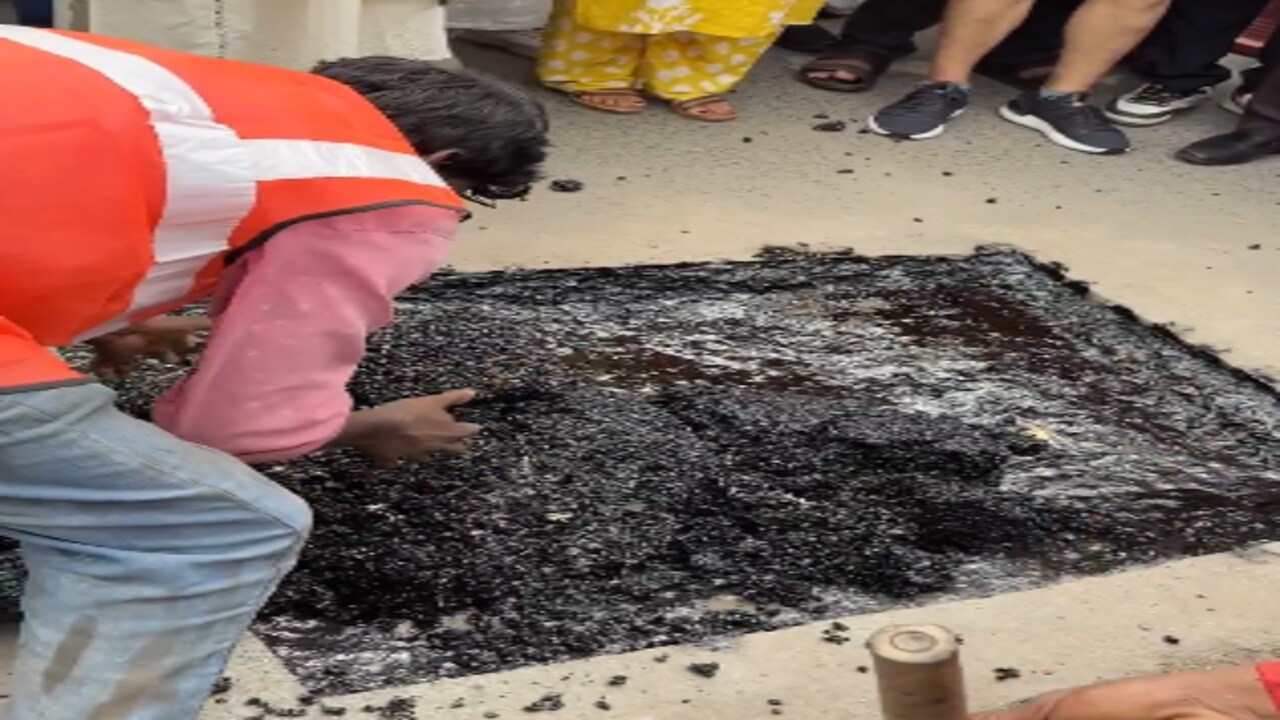
Delhi’s civic administration is evaluating a new set of road repair technologies aimed at addressing one of the city’s most persistent urban challenges potholes. The move signals a shift towards more durable, resource-efficient solutions as authorities prepare for the monsoon season, when road damage typically worsens and disrupts daily mobility. At the centre of this transition are three pothole repair technologies developed by the country’s leading road research institution. These include a ready-to-use repair mix made from industrial waste, a rejuvenation additive designed to extend the life of existing road surfaces, and a cold-mix surfacing method that reduces energy consumption during repairs. Together, these innovations reflect a broader push to modernise maintenance practices while reducing environmental impact.
Urban planners note that conventional road repair methods rely heavily on freshly sourced materials and energy-intensive processes. In contrast, newer pothole repair technologies prioritise reuse and efficiency. One of the materials under consideration uses processed steel slag a byproduct of the metallurgical industry to fill potholes quickly without requiring extensive preparation. This not only speeds up repairs but also diverts industrial waste from landfills, aligning with circular economy principles. Another approach focuses on extending the life cycle of existing roads. By incorporating a small quantity of rejuvenating agents into resurfacing layers, engineers can recover a higher proportion of aged materials already present on-site. This reduces the need for new aggregates and bitumen, both of which carry economic and environmental costs. Industry experts say such methods could significantly lower maintenance budgets for cities managing extensive road networks.
A third technique being assessed involves cold-mix surfacing, where road materials are applied at lower temperatures compared to traditional hot-mix processes. This reduces fuel consumption and greenhouse gas emissions during construction, offering a cleaner alternative for large-scale maintenance work. With urban centres under increasing pressure to cut emissions, such shifts in infrastructure practices are becoming more relevant. The urgency of adopting improved pothole repair technologies is underscored by rising road safety concerns. Data from transport authorities indicates a steady increase in fatalities linked to road defects, particularly in states with dense traffic and expanding infrastructure. For cities like Delhi, where millions rely on road transport daily, poor road conditions translate into both safety risks and economic inefficiencies.
Beyond immediate repairs, experts argue that long-term resilience will depend on integrating sustainable materials into road construction itself. Emerging alternatives such as bio-based binders derived from agricultural residue are being explored as partial substitutes for petroleum-based bitumen. Such innovations could help reduce import dependence while addressing environmental issues like crop residue burning. As Delhi moves towards piloting these solutions, the outcome could influence how other Indian cities approach road maintenance. If implemented effectively, the next phase of urban infrastructure may prioritise not just durability, but also sustainability, cost efficiency, and public safety.