


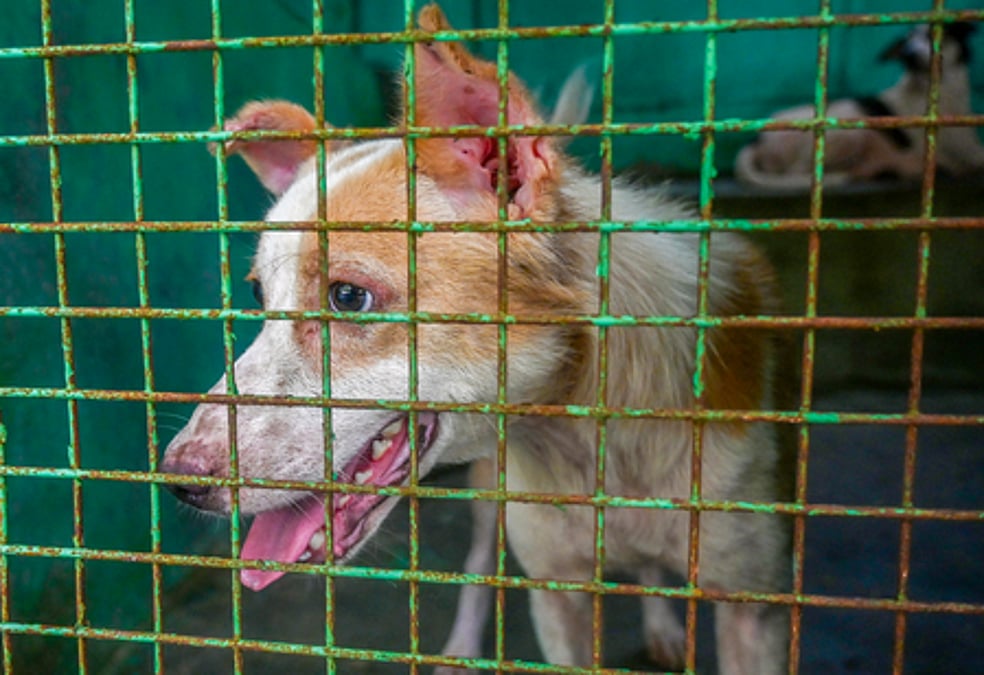
Residents across several southern suburbs of Chennai are raising concerns over a growing stray dog population, pointing to increased safety risks and gaps in urban animal management systems. The issue has become more visible in rapidly developing neighbourhoods, where expanding residential zones intersect with limited civic infrastructure.
Local communities report frequent encounters with packs of stray dogs, particularly during early morning and late evening hours. While such challenges are not new to Indian cities, the current situation highlights the scale and complexity of Chennai stray dog management, especially in areas experiencing rapid urban growth.Urban planners note that the rise in stray animal populations is often linked to unregulated waste disposal and the availability of food sources. Open garbage points and inadequate waste segregation create environments where stray animals can thrive. In Chennai’s expanding suburbs, where infrastructure development sometimes lags behind population growth, these conditions are more pronounced.The issue also reflects broader gaps in coordinated urban governance.Animal birth control (ABC) programmes, vaccination drives, and shelter management are key components of Chennai stray dog management, but their effectiveness depends on consistent implementation and coverage.Residents argue that sporadic interventions have not been sufficient to address the scale of the problem.From a public health perspective, unmanaged stray populations can raise concerns related to bites, infections, and general safety, particularly for children and elderly residents.
At the same time, animal welfare experts emphasise that humane and scientifically backed approaches—such as sterilisation and vaccination—are essential to managing populations without causing harm.There is also a spatial dimension to the issue. As Chennai expands outward, peri-urban areas often lack the infrastructure and regulatory oversight found in central zones. This creates uneven service delivery, where waste management, street lighting, and animal control measures are not uniformly implemented. Addressing these disparities is critical for improving overall urban liveability.Environmental factors further complicate the situation. Changes in land use, reduction in natural habitats, and increased human activity alter the ecosystem in which urban animals exist. Effective management strategies must therefore consider both ecological balance and human safety.Experts suggest that long-term solutions require integrated planning. Strengthening waste management systems, scaling up sterilisation programmes, and improving community awareness are key steps.Collaboration between municipal bodies, animal welfare organisations, and local communities can also enhance outcomes.For residents, the issue is as much about daily safety as it is about the quality of urban life.Ensuring safe, well-managed neighbourhoods is central to inclusive city development, particularly in areas undergoing rapid transformation.
As Chennai continues to grow, the challenge of managing stray animal populations will require sustained attention and coordinated action. The focus ahead will be on creating systems that balance humane treatment with public safety, while addressing the underlying urban factors contributing to the issue.
Also Read:Karnataka Green Energy Corridor Faces Delays And Extension
