


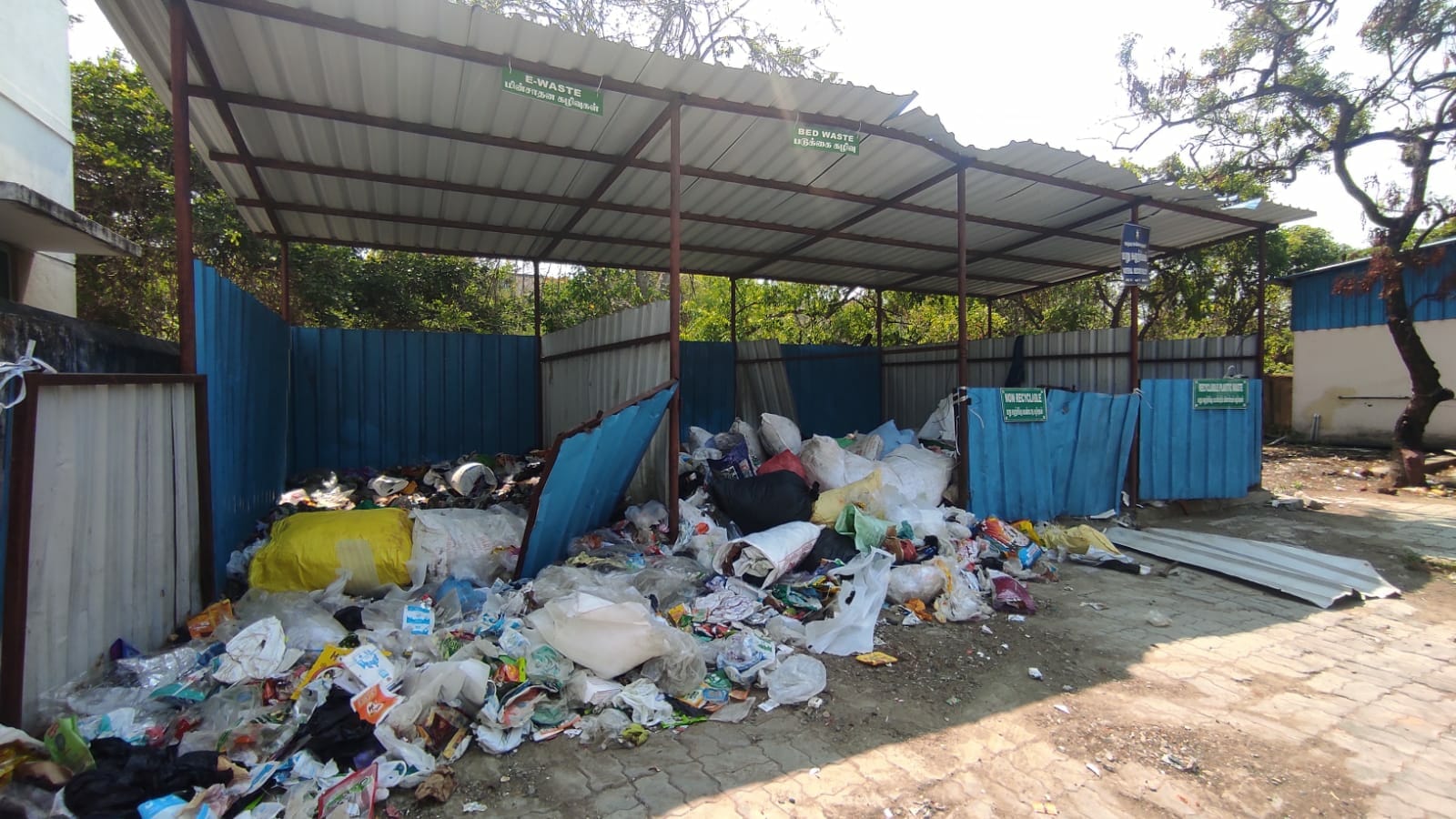
A waste segregation facility set up in Chennai’s Valasaravakkam area has triggered concerns among residents after occupying a significant portion of a key roadway, intensifying congestion and raising questions about urban planning trade-offs. The development reflects the growing challenge cities face in balancing essential civic infrastructure with already constrained public spaces.
The facility, part of efforts to strengthen decentralised waste management, is intended to improve segregation and reduce landfill dependency. However, its location along a busy stretch has effectively narrowed the usable road width, creating bottlenecks for both vehicles and pedestrians. The situation has brought the issue of Chennai waste segregation infrastructure into focus, particularly how such facilities are integrated into dense urban environments.Residents report increased traffic delays and safety concerns, especially during peak hours when the reduced carriageway struggles to accommodate two-way movement. Public transport vehicles and emergency services are among those affected, highlighting how even small spatial disruptions can have cascading impacts on mobility systems.Urban planners note that while decentralised waste processing is critical for sustainable city management, siting such infrastructure requires careful spatial planning. The current challenges linked to Chennai waste segregation infrastructure point to gaps in aligning environmental priorities with mobility and safety considerations. In high-density areas, land constraints often force civic utilities into shared public spaces, intensifying conflicts between competing urban needs.The issue also underscores broader governance challenges.
Waste management infrastructure is essential for improving environmental outcomes, yet its implementation often faces resistance when it affects local accessibility or quality of life.Experts suggest that early-stage community consultation and transparent planning processes can help mitigate such conflicts.From a sustainability perspective, decentralised segregation units play a vital role in reducing waste transportation distances and improving recycling efficiency.They are a key component of circular economy strategies that aim to minimise landfill use and recover resources.However, their long-term success depends on being integrated into the urban fabric without compromising other critical functions.There are also safety implications. Reduced road width can increase the risk of accidents, particularly in areas with mixed traffic and limited pedestrian infrastructure.Ensuring clear demarcation of movement zones and maintaining adequate road capacity are essential to prevent such risks.The situation in Valasaravakkam reflects a larger pattern across rapidly growing cities, where infrastructure expansion often outpaces coordinated planning. As urban areas densify, the demand for both mobility and essential services such as waste management continues to rise, requiring more innovative and space-efficient solutions.Looking ahead, city authorities may need to reassess site planning, explore alternative locations, or redesign the facility layout to minimise its impact on road usage.
Integrating waste management infrastructure into dedicated zones or multi-use urban designs could offer a more balanced approach.As Chennai advances its sustainability agenda, the challenge will be to ensure that environmental infrastructure supports, rather than disrupts, the broader goals of safe, efficient, and inclusive urban living.
Also Read:Chennai Stray Dog Management Faces Suburban Challenges
