


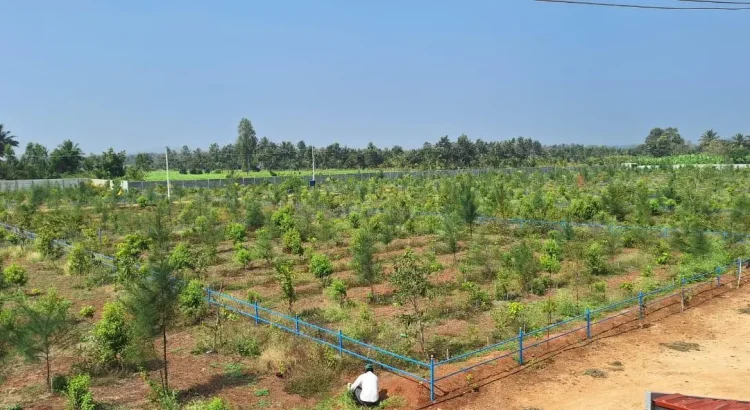
The future of soil health and sustainable agriculture emerged as a major theme at a public gathering in Bengaluru, where concerns were raised over the long-term ecological impact of excessive chemical fertiliser use on India’s farming systems and food security.The discussions, held at Art of Living Foundation, come amid increasing national attention on regenerative agriculture, climate-resilient farming practices, and the environmental pressures affecting India’s rural landscapes.
Agricultural experts say prolonged dependence on synthetic fertilisers has contributed to declining soil fertility, biodiversity loss, and reduced natural nutrient regeneration in several farming regions.Environmental researchers note that soil degradation is no longer solely an agricultural issue but a wider economic and urban sustainability concern. Metropolitan centres such as Bengaluru rely heavily on surrounding agricultural belts for food supply, making soil resilience critical to long-term food stability, water conservation, and public health.The Bengaluru sustainability discussions also reflect broader efforts to encourage natural farming methods, reduced chemical dependency, and more ecologically balanced cultivation systems. Experts argue that improving soil quality through crop rotation, compost-based nutrients, water-efficient farming, and organic inputs can strengthen agricultural resilience against climate variability and declining groundwater availability.However, agricultural economists caution that transitioning away from conventional fertiliser-intensive systems presents practical challenges for farmers already coping with fluctuating market prices, unpredictable rainfall, and rising cultivation costs.
They stress that policy support, scientific training, and stable procurement systems will be essential to ensuring that sustainability goals do not create additional financial strain for small cultivators.The issue has gained urgency as climate change increasingly affects farming productivity across India. Erratic monsoon patterns, soil erosion, and water stress are placing pressure on agricultural regions that support rapidly growing urban populations.Sustainability planners warn that degraded soils absorb less water, reduce crop resilience, and contribute to broader ecological instability.Urban development specialists further point out that conversations around sustainable agriculture are becoming closely linked with urban environmental planning. Expanding cities generate growing food demand while simultaneously reducing agricultural land through infrastructure and real estate expansion. Protecting soil ecosystems is therefore viewed as part of a larger strategy for regional environmental resilience.The Bengaluru event also highlighted rising interest in connecting agricultural sustainability with consumer awareness and urban food systems. Researchers increasingly advocate for stronger support for local food networks, low-impact farming, and reduced chemical load in agricultural supply chains.For policymakers and environmental stakeholders, the debate signals a broader shift toward recognising soil as a critical natural resource rather than merely a production medium.
Experts argue that future agricultural growth will depend not only on yield expansion but also on restoring ecological balance within farming systems.As India navigates the twin pressures of food security and climate adaptation, the discussions in Bengaluru underscore how soil conservation may become central to both environmental policy and long-term urban resilience planning.
Also Read:Bengaluru Residents Raise Alarm Over Clogged Drains

