


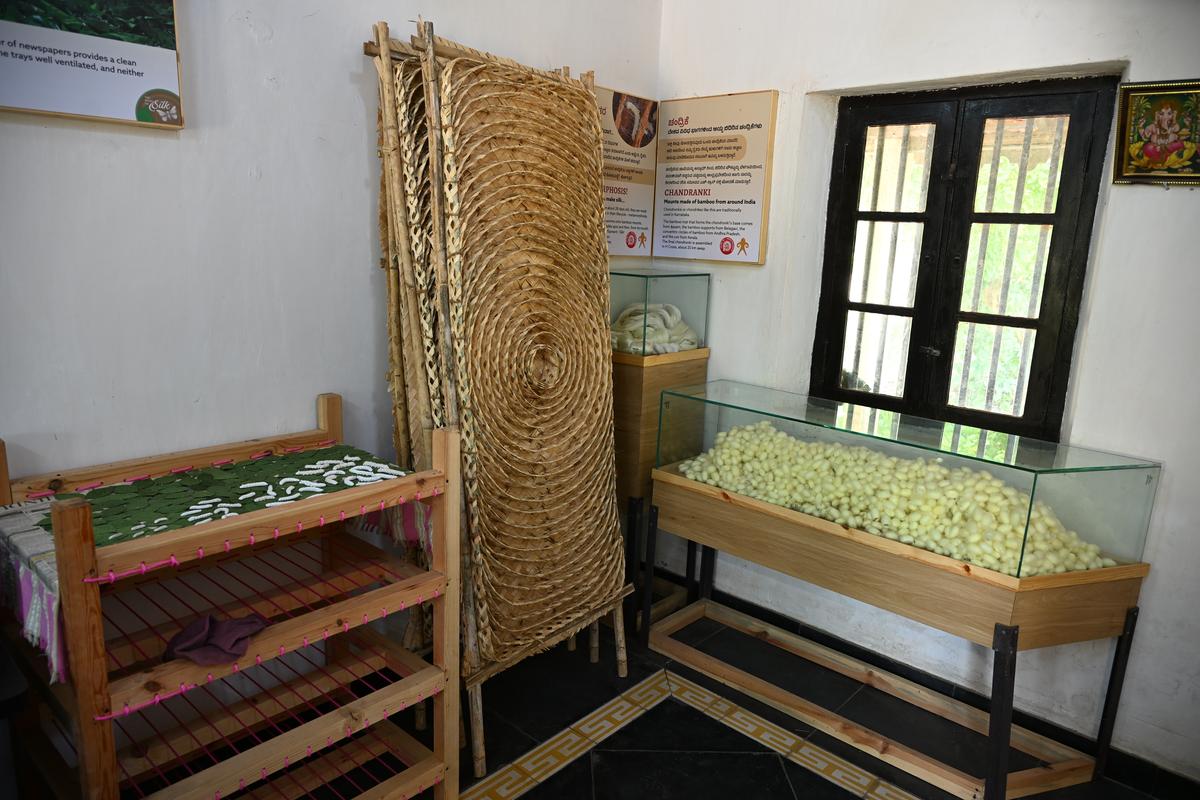
A heritage railway station in Bengaluru has been reimagined as a cultural space celebrating the city’s historic association with silk, offering a renewed lens on how urban spaces can support traditional economies. The initiative brings together artisans, designers, and visitors in a setting that blends infrastructure heritage with contemporary cultural engagement.
The event, centred on silk as both craft and commerce, highlights Bengaluru’s long-standing role in India’s textile landscape. By hosting exhibitions and interactive showcases within a restored transit space, organisers aim to reconnect urban audiences with artisanal practices that often remain disconnected from mainstream retail environments.Urban development experts view such adaptive reuse of heritage infrastructure as a strategic approach to preserving cultural assets while activating underutilised spaces.Railway stations, once central to the movement of goods and people, are increasingly being repositioned as community hubs that can host markets, exhibitions, and public events. This not only extends the life of historic structures but also integrates them into the city’s evolving economic fabric.For the silk sector, the initiative provides a platform for visibility and direct engagement with consumers. Small-scale artisans and weavers, who often face challenges in accessing urban markets, benefit from opportunities to showcase their work without relying solely on intermediaries.
This model can support more equitable value distribution within the supply chain, strengthening livelihoods tied to traditional crafts.The event also reflects a broader shift in how cities approach cultural economies. As Bengaluru expands as a technology and services hub, there is growing recognition of the need to sustain and integrate legacy industries into urban growth narratives.Cultural programming in public spaces can help bridge this gap, ensuring that economic diversification does not come at the cost of eroding heritage-based livelihoods.From a sustainability perspective, promoting handcrafted textiles aligns with slower, more resource-conscious consumption patterns.Compared to mass-produced fashion, artisanal silk production often involves lower mechanisation and supports localised supply chains. However, experts note that scaling such models requires careful balancing of demand, fair pricing, and environmental considerations within production processes.The use of a railway station as a cultural venue also raises questions about long-term planning. While temporary events can generate interest and footfall, sustained impact depends on consistent programming, infrastructure maintenance, and integration with broader urban policies on heritage conservation and public space utilisation.
As Bengaluru continues to evolve, initiatives that merge culture, commerce, and infrastructure offer a pathway to more inclusive urban development. By embedding traditional industries within the city’s public spaces, such efforts can contribute to a more balanced and resilient urban economy, where heritage and modernity coexist productively.
Also Read:Bengaluru Garbage App Targets Urban Waste Hotspots
