


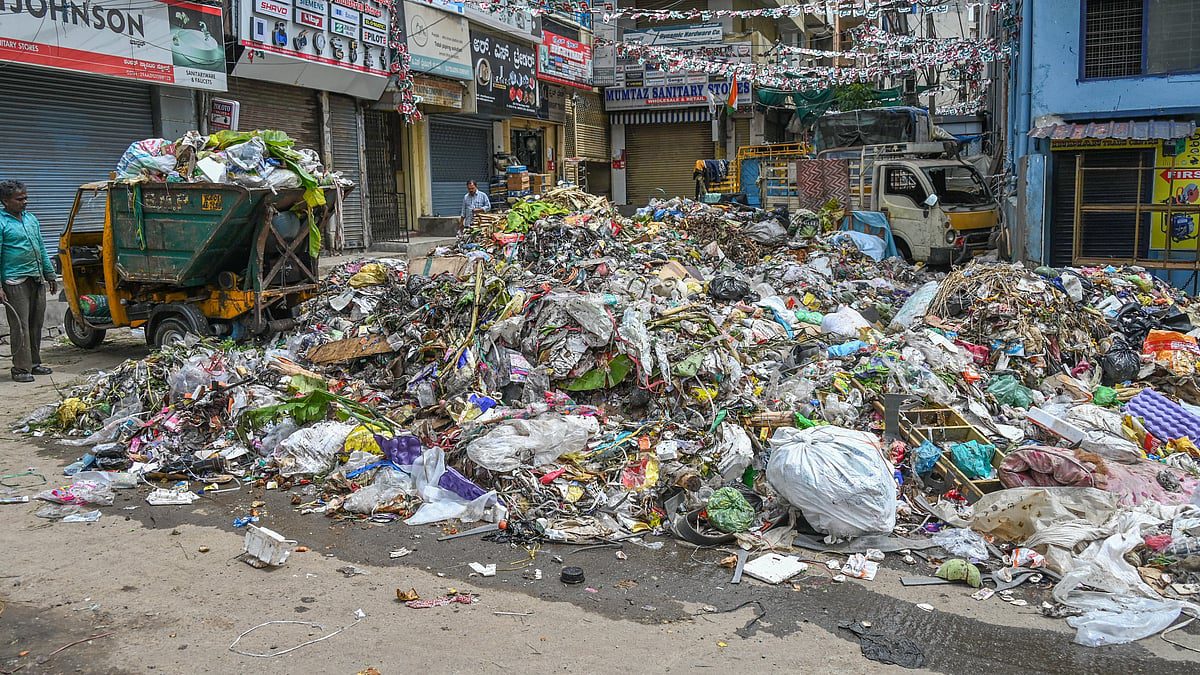
Bengaluru is turning to digital tools to address persistent garbage dumping hotspots, introducing an app-based system designed to identify, monitor, and respond to waste accumulation across the city. The initiative aims to improve accountability and streamline civic responses in a metropolis where rapid growth has outpaced traditional waste management systems.
The platform enables authorities to map so-called “black spots”—areas where garbage is frequently dumped—and track complaints in real time. By integrating citizen inputs with municipal data, officials expect faster response times and more targeted deployment of sanitation resources. Urban governance experts note that such data-driven approaches can help cities shift from reactive clean-up operations to more preventive waste management strategies.For Bengaluru, where waste segregation and collection remain uneven across neighbourhoods, the move reflects an effort to plug operational gaps.Informal dumping not only affects public health and urban aesthetics but also contributes to environmental degradation through soil and water contamination. Identifying recurring hotspots can help authorities address underlying causes, such as inadequate collection frequency or lack of infrastructure.However, the effectiveness of digital interventions depends on consistent ground-level execution. Civic analysts point out that technology alone cannot resolve systemic challenges unless supported by adequate manpower, logistics, and behavioural change among residents.
Without regular collection services and strict enforcement, black spots may reappear despite improved monitoring.The initiative also highlights the growing role of citizen participation in urban management.By allowing residents to report issues directly, the system encourages shared responsibility for maintaining public spaces. Experts suggest that such engagement can improve transparency and build trust between citizens and local authorities, provided responses are timely and visible.From a sustainability perspective, better waste tracking can support broader goals such as increased recycling and reduced landfill dependency. Efficient identification of waste patterns may enable cities to optimise segregation efforts and reduce the volume of untreated waste entering disposal sites. This aligns with long-term objectives of creating circular waste systems and lowering environmental impact.Yet, challenges remain around inclusivity. Not all residents may have access to or familiarity with digital platforms, potentially limiting participation from certain communities. Ensuring alternative reporting mechanisms and on-ground outreach will be essential to make the system equitable.
As Bengaluru experiments with app-driven solutions to manage waste, the initiative signals a shift towards smarter urban governance. Its success will depend on integrating technology with infrastructure upgrades and sustained civic engagement, ensuring that cleaner public spaces become a permanent feature rather than a periodic intervention.
Also Read:Bengaluru Water Crisis Fuels Tanker Demand Surge
