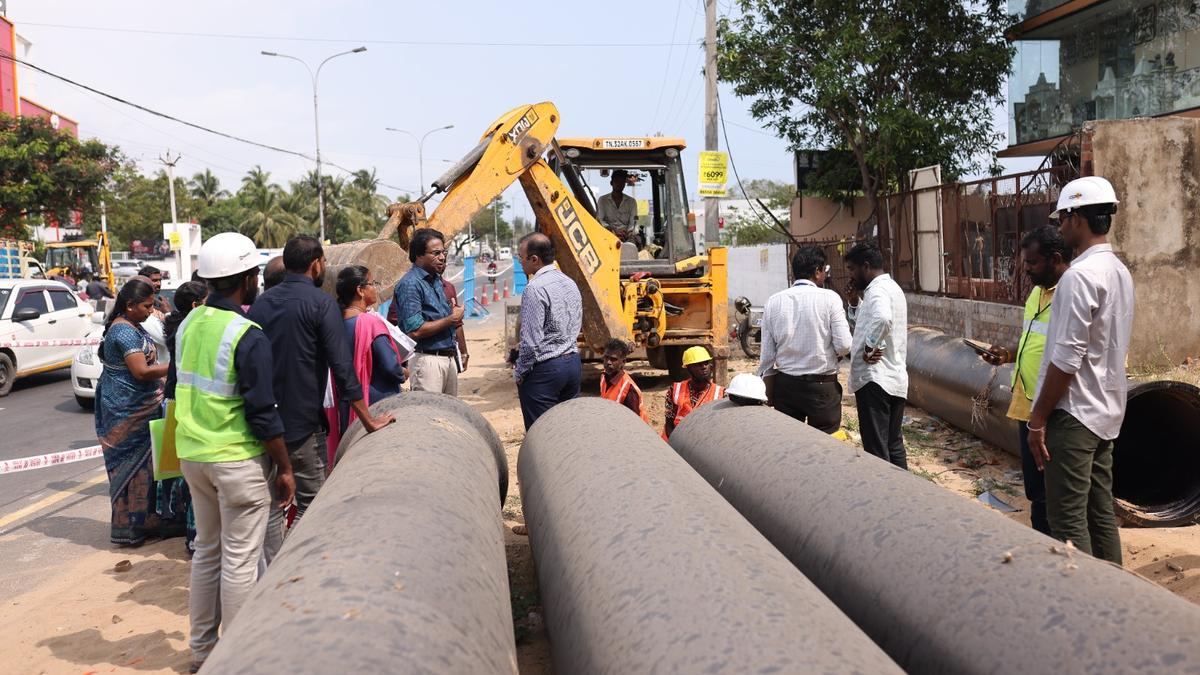
Chennai Pipeline Work Raises Civic Service Concerns
Chennai’s civic infrastructure network will face temporary strain on May 13 as sewer interconnection works linked to metro rail construction are expected to disrupt wastewater services across several densely populated neighbourhoods in the Teynampet zone. The planned suspension highlights the growing challenge of balancing rapid urban transport expansion with ageing underground utility systems in India’s major metros.
The city’s water and wastewater utility authority has scheduled a 12-hour shutdown of sewage pumping operations in parts of south and central Chennai to facilitate underground sewer pipeline integration work along Ramakrishna Mutt Road in Mandaveli. The interruption is expected to affect localities including Alwarpet, Nandanam, Mylapore and Santhome areas characterised by mixed residential, institutional and commercial land use. Officials indicated that pumping stations serving Mandavelipakkam and Seethammal Colony would remain non-operational from morning until late evening during the engineering exercise. Residents have been advised to report sewage overflow or drainage-related emergencies through dedicated helpline channels.
The development comes as Chennai continues to expand large-scale transport infrastructure under multiple metro rail corridors, many of which pass through highly built-up urban districts with ageing civic utility networks beneath narrow roadways. Urban planners say such interconnection works are becoming increasingly common as transport upgrades intersect with decades-old water, sewer and stormwater systems that were never designed for present-day population density.Experts tracking urban infrastructure note that temporary sewage disruptions often reveal the hidden complexity of retrofitting essential services in mature cities. Unlike greenfield developments, older neighbourhoods require utilities to be upgraded while residents continue to occupy and use the surrounding urban environment. In coastal cities like Chennai, delays or operational lapses in sewer management can also create public health and environmental risks, particularly during humid weather conditions and pre-monsoon months. The sewer network work also underscores a broader governance challenge confronting Indian metropolitan regions the need for integrated planning between transport agencies, utility providers and local administrations. Infrastructure specialists argue that coordinated excavation schedules, digital underground utility mapping and decentralised wastewater systems could reduce repeated civic disruptions in high-density corridors.
Residents in affected neighbourhoods have increasingly raised concerns in recent years over recurring road cuts, traffic congestion and temporary utility interruptions linked to overlapping infrastructure projects. While many acknowledge the long-term benefits of metro connectivity and sewer modernisation, civic groups continue to call for stronger communication protocols and faster restoration timelines to minimise disruption for households, elderly residents and small businesses. Urban development analysts say Chennai’s future infrastructure resilience will depend not only on expanding transport systems, but also on how effectively the city modernises foundational networks such as drainage, wastewater treatment and flood mitigation. As climate pressures and urban density intensify, reliable underground infrastructure is becoming as critical to economic productivity and public health as visible mobility projects above ground.