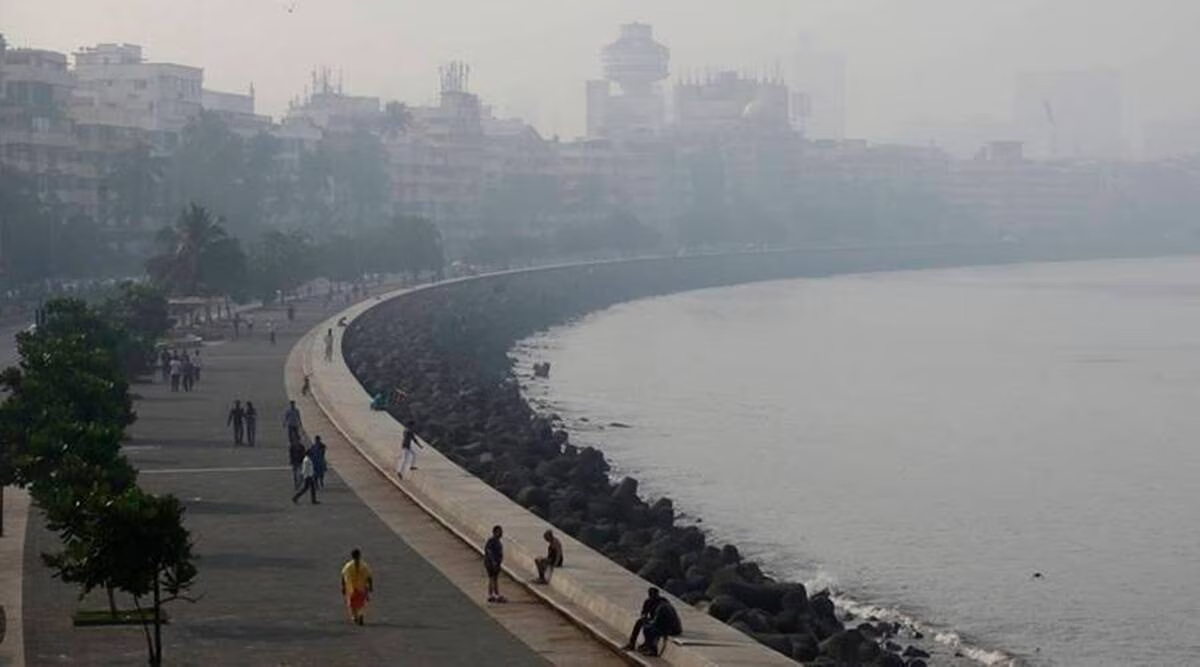
Mumbai witnessed another day of oppressive heat and humidity on Monday as temperatures across several neighbourhoods climbed well above seasonal averages, intensifying concerns around urban heat stress, public health and climate resilience in India’s financial capital. The India Meteorological Department issued a yellow alert for isolated hot and humid conditions, signalling continued discomfort across the metropolitan region as pre-monsoon weather patterns grow increasingly erratic. While South Mumbai’s Colaba observatory recorded a daytime high of 35.4 degrees Celsius, suburban stations registered even sharper spikes. Santacruz touched 35.8 degrees Celsius, while automatic weather monitoring systems in densely built-up neighbourhoods reported substantially higher temperatures. Ram Mandir emerged among the hottest locations at nearly 40 degrees Celsius, followed by Vikhroli, Bandra and Dahisar, underscoring the uneven distribution of heat across the city’s expanding urban landscape.
Urban planners and climate experts say the rising frequency of prolonged hot and humid conditions is exposing vulnerabilities in Mumbai’s infrastructure and housing systems. Highly concretised neighbourhoods, shrinking tree cover and increasing vehicular emissions are contributing to the formation of localised urban heat islands, particularly in eastern and western suburban corridors where population density continues to rise rapidly. The current weather pattern has also highlighted the growing gap between official observatory readings and ground-level heat exposure experienced by residents in crowded residential clusters, informal settlements and transport hubs. Commuters travelling through railway stations, bus depots and traffic intersections during peak afternoon hours faced heightened thermal discomfort, with elevated humidity levels limiting the body’s ability to cool naturally. Public health specialists warn that persistent Mumbai heat stress could disproportionately affect outdoor workers, elderly citizens, children and low-income households with limited access to cooling infrastructure. Construction workers, delivery personnel and street vendors remain among the most exposed groups during prolonged heat spells. Experts increasingly argue that Indian cities must move beyond seasonal advisories and adopt long-term heat adaptation strategies integrated into urban planning and public infrastructure.
The situation comes at a time when Mumbai is simultaneously dealing with rising energy demand linked to air-conditioning use, increasing pressure on water resources and concerns over climate-linked weather variability ahead of the monsoon season. Environmental researchers note that humid coastal cities like Mumbai face a compounded risk because high moisture levels significantly increase the perceived temperature experienced by residents. Civic authorities have urged residents to minimise direct exposure during afternoon hours, remain hydrated and monitor symptoms linked to heat exhaustion. However, urban climate analysts say long-term mitigation will require deeper investment in shaded pedestrian infrastructure, reflective building materials, urban forestry and climate-sensitive zoning regulations.
With summer conditions intensifying earlier and lasting longer each year, Mumbai’s recurring heat stress is increasingly being viewed not as a temporary weather event, but as a structural urban challenge tied directly to climate resilience, public health preparedness and sustainable city planning.