


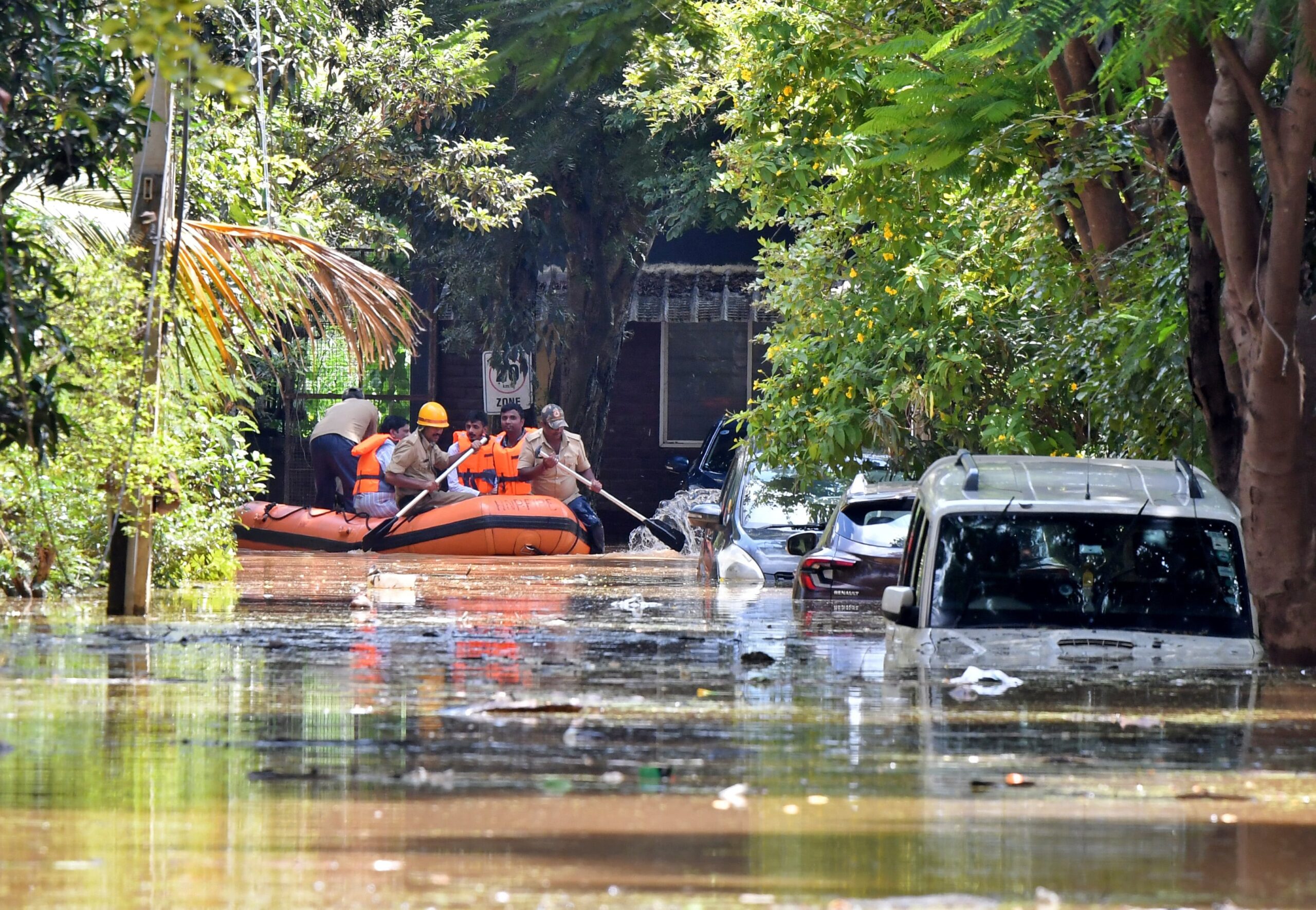
A bout of intense rainfall in Bengaluru has once again exposed the city’s fragile urban systems, with widespread waterlogging, traffic paralysis, and disrupted daily life raising concerns about whether such events are becoming the norm. The latest downpour, while not unprecedented, has intensified scrutiny over Bengaluru rain flooding and the city’s preparedness for increasingly erratic weather patterns.
Commuters across key corridors reported severe delays as inundated roads slowed vehicular movement and affected public transport reliability. Low-lying areas and newly developed neighbourhoods were particularly vulnerable, reflecting long-standing issues related to drainage capacity and unplanned urban expansion. For a city that has witnessed rapid growth over the past decade, the recurrence of such disruptions points to deeper structural challenges.Climate experts suggest that episodes of Bengaluru rain flooding are likely to become more frequent as rainfall patterns shift due to climate change.Short-duration, high-intensity showers are placing immense pressure on stormwater systems that were not designed for such extremes. This evolving risk profile requires cities to move beyond reactive measures and adopt climate-resilient infrastructure planning.Urban planners argue that the problem is not solely meteorological. The transformation of natural landscapes—particularly the loss of interconnected lakes and wetlands—has reduced the city’s capacity to absorb excess rainwater.
Encroachments on stormwater drains and construction over natural floodplains have further compounded the issue, turning heavy rainfall into a recurring urban crisis.The economic cost of these disruptions is significant. Delays in commuting, interruptions to business operations, and damage to infrastructure collectively impact productivity in one of India’s leading economic hubs.Informal sector workers and daily wage earners are often the most affected, as even short-term disruptions can translate into lost income.There are also implications for public health and safety. Stagnant water increases the risk of waterborne diseases, while flooded roads pose hazards for both pedestrians and motorists. Experts emphasise the need for integrated urban management systems that combine drainage upgrades, real-time monitoring, and emergency response mechanisms.Policy responses have so far focused on desilting drains, expanding stormwater networks, and investing in road infrastructure. However, specialists argue that these measures must be complemented by long-term strategies such as restoring water bodies, enforcing land-use regulations, and integrating blue-green infrastructure into city planning.
Without such systemic interventions, the cycle of disruption is likely to persist.As Bengaluru rain flooding continues to challenge the city’s resilience, the latest episode serves as a warning rather than an anomaly. The path forward will depend on whether urban governance can shift from short-term fixes to comprehensive, climate-responsive planning that safeguards both infrastructure and citizens in an era of increasing weather uncertainty.
Also Read:Bengaluru Satellite Township Project Approved For Urban Expansion

