


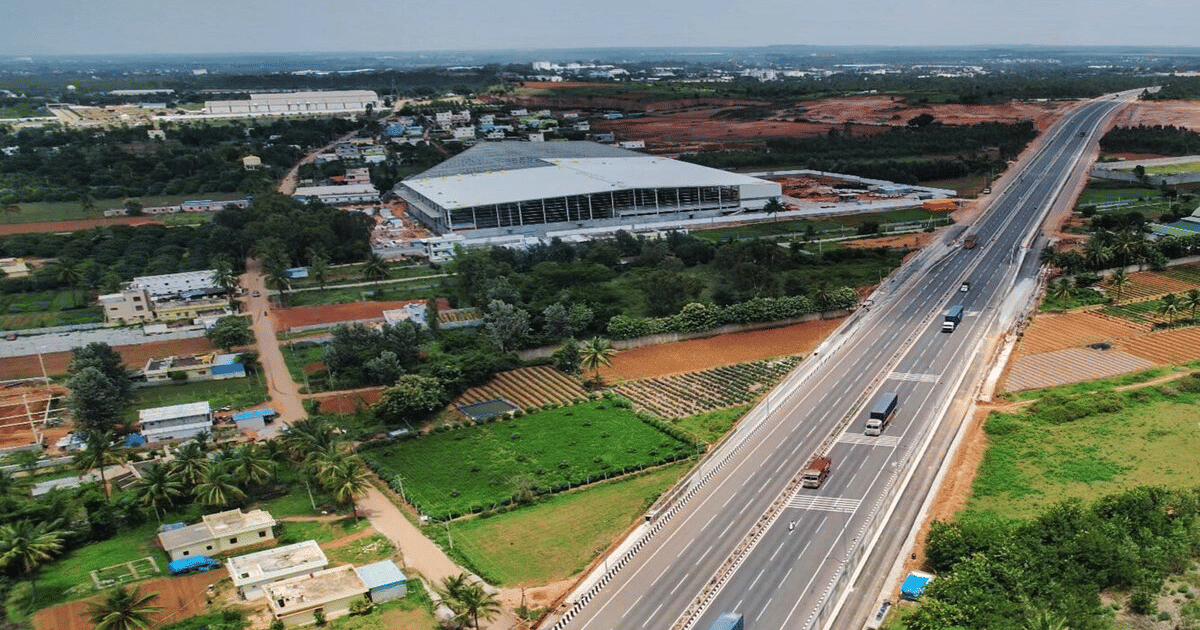
The Karnataka government has cleared a large-scale Bengaluru satellite township project in the city’s southern periphery, signalling a renewed push to decentralise growth and ease pressure on the core urban region. The proposed development, backed by a multi-thousand-crore investment, is expected to reshape land use patterns while influencing housing, mobility, and infrastructure planning across the metropolitan area.
Planned as an integrated urban extension, the Bengaluru satellite township aims to combine residential, commercial, and civic infrastructure within a single framework.Officials indicate that such projects are designed to reduce congestion in central zones by redistributing population and economic activity to peripheral areas. This approach aligns with broader urban planning strategies that seek to create self-sustained clusters rather than expanding city limits in an unstructured manner.Urban development experts suggest that satellite townships, if executed effectively, can improve liveability by offering planned housing, better road networks, and access to essential services.However, the success of the Bengaluru satellite township will depend heavily on connectivity. Seamless integration with public transport systems, including metro extensions and bus corridors, will be critical to ensure that residents are not overly dependent on private vehicles.The project also raises important questions about environmental sustainability.Bengaluru’s outskirts include ecologically sensitive zones, and large-scale construction could impact water bodies, green cover, and groundwater resources
. Climate specialists emphasise the need for environmentally responsible planning, including preservation of natural drainage systems, incorporation of green spaces, and adoption of low-impact construction practices.From an economic perspective, the township is likely to stimulate real estate activity and generate employment in construction and allied sectors. It may also attract businesses seeking planned infrastructure and proximity to the city without the constraints of central urban density.However, analysts caution that unchecked real estate expansion can lead to speculative development if not aligned with actual demand and long-term planning goals.Social inclusion remains another critical factor. Ensuring that housing within the township caters to diverse income groups will be essential to prevent socio-spatial segregation. Experts advocate for a mix of affordable and mid-income housing, along with access to public amenities such as schools, healthcare, and open spaces, to create balanced communities.For Bengaluru, which continues to grapple with traffic congestion, infrastructure deficits, and rising population pressures, the move represents both an opportunity and a challenge. While decentralised growth can alleviate strain on the urban core, it requires coordinated governance, robust infrastructure investment, and strong regulatory oversight.
As the Bengaluru satellite township moves from approval to implementation, its long-term impact will depend on how well it integrates sustainability, connectivity, and inclusivity into its design. The project could serve as a model for future urban expansion—or highlight the risks of rapid, large-scale development without adequate planning safeguards.
Also Read:Bengaluru Airport Passenger Traffic Growth Driven By International Travel

