


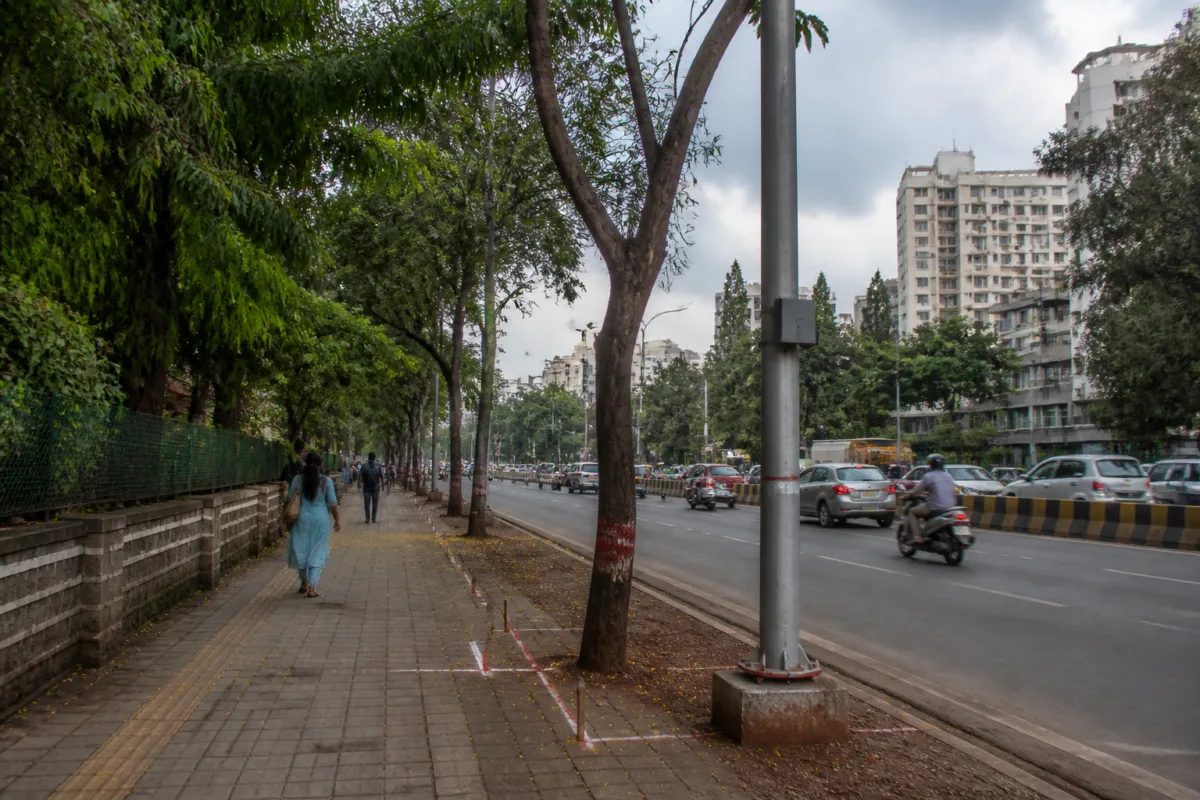
Pune’s High-Capacity Mass Transit Route (HCMTR) plan along Senapati Bapat Road has triggered concern among residents over possible tree felling, footpath removal and demolition of buildings, while the Pune Municipal Corporation has said no building is at risk under the current design.
The proposed route is planned from University Chowk through Senapati Bapat Road, where the civic body is preparing designs for ramps, exits and other structures required for the project. Residents said markings made at several locations raised fears that mature trees, footpaths, homes and other permanent structures could be affected.
According to residents quoted by Loksatta, officials involved in the preliminary design told them that trees, footpaths and buildings falling within the construction areas might have to be removed. Residents then examined the marked locations and raised concerns about the possible loss of green space and the impact on the surrounding built environment.
Ashwin Panmanglur, a resident and infrastructure expert, said the project should be planned for at least the next 25 years and that the current planning approach appeared to rely on designs prepared in the 1990s. He said the works could place nearby hills and the local ecosystem around Senapati Bapat Road under pressure. He also called for the PMC to explain the project design clearly and consult residents before proceeding.
Residents have proposed shifting some of the required construction to adjacent open land instead of removing trees and affecting existing public infrastructure. Santosh Salke said several trees in the marked areas, including tamarind, bakul and ashoka trees, were between 40 and 50 years old. He said the project could be redesigned in a way that avoids the demolition of footpaths and buildings.
The PMC has sought to limit the immediate concern about building demolition. Dinkar Gojre, the civic body’s chief engineer for projects, said consultants had been appointed for the route and that the corridor on Senapati Bapat Road would be 24 metres wide, with pillars located in the middle. He said this arrangement would not endanger any building.
Gojre added that if development-plan markings had been made at certain locations, the designs would be examined by expert consultants before further action was taken. His statement indicates that the markings do not, by themselves, establish that buildings or trees will be removed.
The dispute highlights the implementation challenge facing large urban transport projects: preliminary alignments can generate immediate uncertainty for residents before final designs, land requirements and construction plans are publicly explained. In this case, the PMC’s clarification addresses the risk to buildings, but the supplied report does not establish the final number of trees, footpaths or other properties that may be affected.
The next step is for the appointed consultants and PMC officials to review the designs and determine whether changes are required before construction-related action is taken along Senapati Bapat Road.

