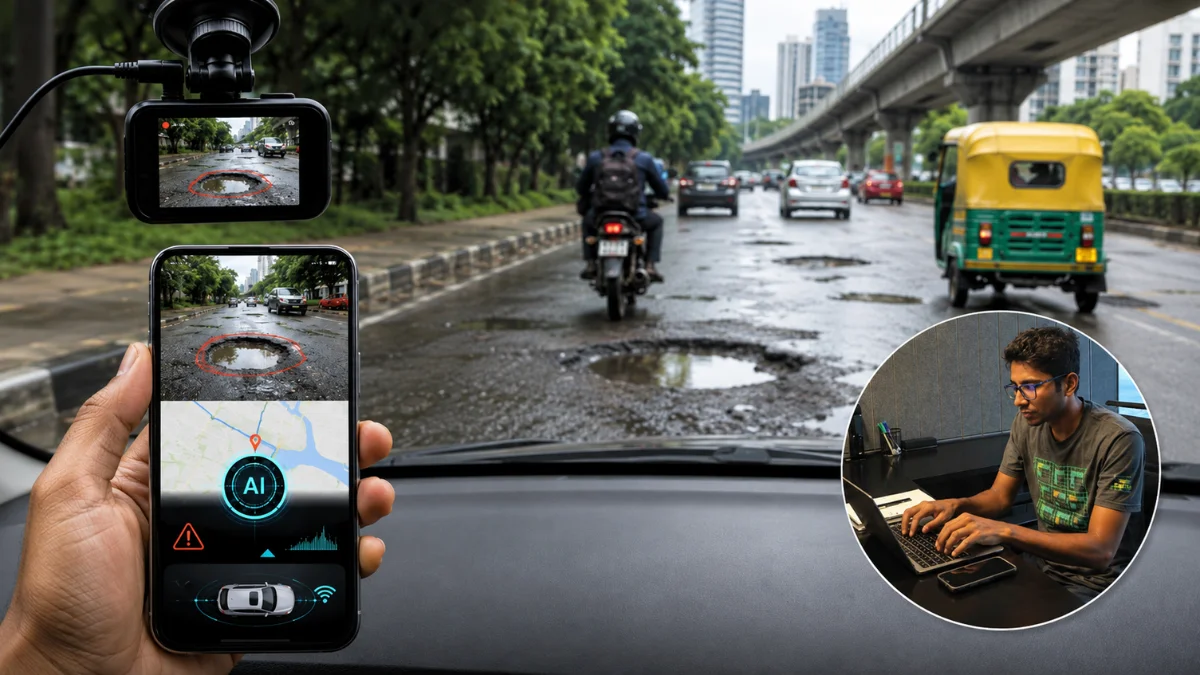
A new AI-powered civic technology tool is attempting to make pothole reporting faster and more accountable by identifying damaged roads and directing complaints towards the authority responsible for repairs. Developed by a Bengaluru-based technology professional, the tool highlights how low-cost digital systems could help cities turn scattered citizen complaints into more structured road-maintenance data.
The application, called Pothole Detector, was developed using artificial intelligence and is designed to identify potholes and report them to municipal authorities. Its system also attempts to determine which civic agency or authority is responsible for the affected road, addressing one of the recurring problems in urban grievance systems: sending complaints to the wrong department. That distinction matters in Bengaluru, where road ownership and maintenance responsibilities can be distributed across multiple agencies. A damaged stretch may fall under different authorities depending on its location and classification. For residents, identifying the correct agency can become an additional barrier before a repair request even reaches the department responsible for action. The technology could help create a more systematic record of road defects if reports are consistently collected, location-tagged and routed to the appropriate authority. Such information could eventually support maintenance teams in identifying recurring problem spots rather than relying entirely on periodic inspections or individual complaints. However, detection is only the first step. An AI system can identify or report a road defect, but it cannot by itself ensure that the pothole is repaired properly or that the underlying pavement failure is addressed.
Bengaluru’s recurring road damage is often connected to drainage problems, water infiltration, utility work and pavement quality. Without fixing those causes, digital reporting could simply produce a larger list of defects. There is nevertheless a wider urban-planning opportunity. Aggregated pothole data could help authorities map deterioration across neighbourhoods, prioritise repairs and identify corridors where repeated failures justify comprehensive resurfacing. It could also provide a measurable way to track how quickly complaints move from detection to inspection and finally to repair. Citizen participation is particularly important for large cities where civic agencies cannot continuously inspect every kilometre of road.A simple reporting mechanism can extend the city’s monitoring network, provided residents receive clear feedback and authorities maintain transparent response systems. The technology also reflects a broader shift towards using AI for routine urban management rather than limiting it to high-profile applications. Road-condition monitoring, drainage mapping, waste tracking and infrastructure inspections are areas where relatively simple digital tools can potentially improve public-service delivery. For Bengaluru, the real test will be what happens after a pothole is detected.
If civic agencies can connect citizen-generated information with reliable repair schedules, quality checks and publicly visible outcomes, such tools could strengthen accountability.The initiative therefore points to a useful model for smart-city technology: not replacing civic institutions, but giving residents and maintenance teams better information to act on. Its success will ultimately depend on whether better data translates into safer, longer-lasting roads.