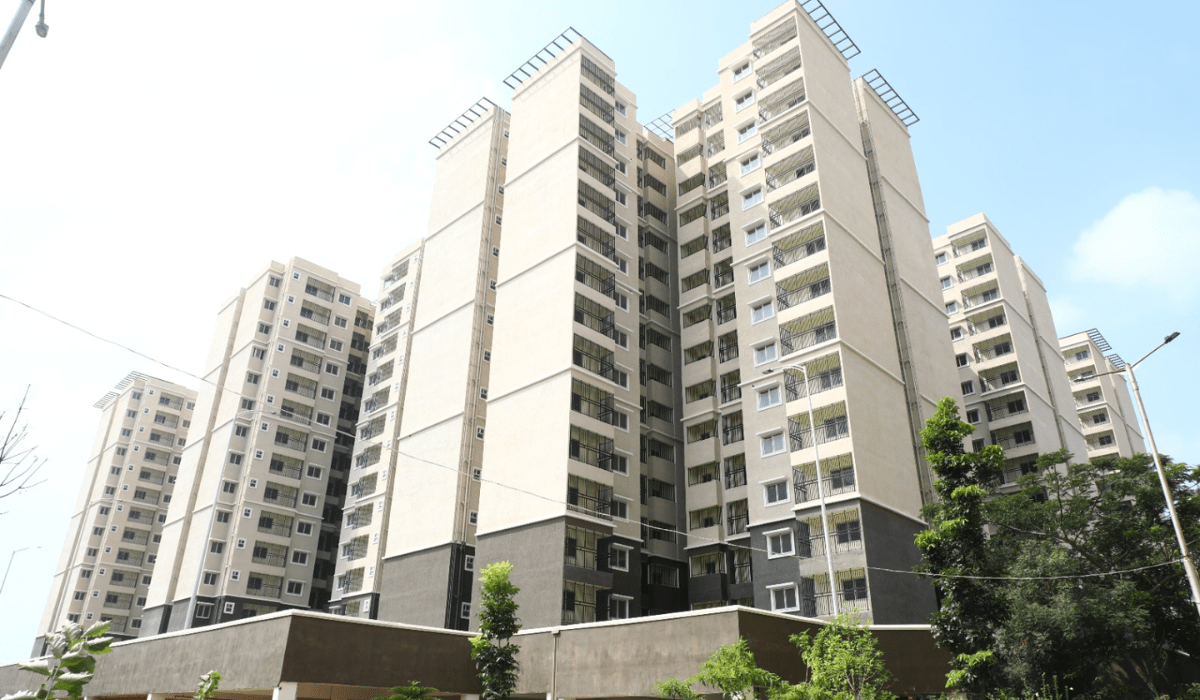
A new residential development planned on three acres in North Bengaluru is set to bring an investment of around Rs 80 crore, adding to the city’s expanding housing pipeline. The project reflects continued real-estate activity in the northern corridor, where airport connectivity and new commercial infrastructure are reshaping demand, but also highlights the need to align housing growth with transport, water and civic services.
The project is being developed by Concorde Group and is planned as a residential development with an estimated built-up area of around 3 lakh sq ft. The company expects construction to progress as approvals and other statutory requirements are completed.North Bengaluru has become one of the city’s most closely watched development corridors, supported by Kempegowda International Airport, the growing business ecosystem around Devanahalli and improved regional connectivity. New residential supply is following this shift in economic activity, with developers seeking land closer to emerging employment and infrastructure clusters. The three-acre project is relatively compact compared with large peripheral developments, but its location makes the surrounding infrastructure particularly relevant. Residential construction increases demand for roads, public transport, water supply, sewage networks, electricity and waste management. Where these systems lag behind construction, new housing can add pressure to existing neighbourhoods rather than creating a well-integrated urban extension. The northern corridor also faces the challenge of balancing development with ecological considerations. Bengaluru’s peripheral areas contain agricultural land, lakes, stormwater channels and patches of natural vegetation that can become fragmented as construction expands. Protecting drainage paths and incorporating rainwater management into new projects can reduce the risk of flooding while improving long-term water resilience.
The investment also reflects the continued strength of Bengaluru’s residential market. Housing demand is increasingly influenced by employment accessibility, travel times and proximity to major infrastructure rather than by traditional central-city locations alone. For buyers, however, the value of a peripheral home depends not just on the building but on the quality of the surrounding urban ecosystem.Public transport will be particularly important as employment and housing spread northwards. If residents remain heavily dependent on private vehicles, growth could increase pressure on major corridors leading towards central Bengaluru. Better integration between residential projects and mass transit can help contain that impact. For the real-estate sector, North Bengaluru’s expansion creates opportunities to develop more compact, connected neighbourhoods rather than isolated housing enclaves. Mixed-use planning, walkable streets and access to everyday services can reduce unnecessary travel and improve liveability. The Rs 80 crore project therefore forms part of a much larger transformation underway in northern Bengaluru. Its long-term contribution will depend not only on the amount invested or floor space created, but on whether new housing is supported by resilient infrastructure, accessible mobility and responsible land-use planning.
As development continues around the airport corridor, coordinating private construction with public infrastructure will be critical to ensuring that North Bengaluru’s growth remains economically productive without creating avoidable pressure on its natural and civic systems.