


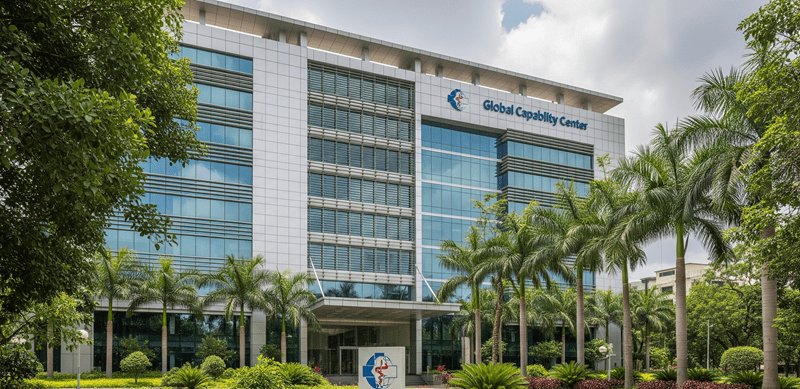
Bengaluru’s position as India’s leading Global Capability Centre (GCC) hub is entering a new phase as hiring strategies begin to extend beyond the city’s traditional clusters. The shift signals a gradual recalibration of the city’s economic model, with companies exploring talent pools outside core urban zones while maintaining Bengaluru as a central anchor for operations.
For decades, Bengaluru has concentrated a significant share of GCC activity, driven by its deep talent base, established infrastructure and global connectivity. However, rising operational costs, traffic congestion and pressure on housing and civic systems have prompted firms to rethink expansion strategies. As a result, hiring linked to Bengaluru-based operations is increasingly being distributed across other parts of the state.Urban economists suggest that this evolving Bengaluru GCC hiring pattern reflects both necessity and opportunity. While the city remains critical for leadership roles, innovation and high-value functions, routine and scalable operations are gradually moving to emerging locations. This hybrid model allows companies to optimise costs without fully disengaging from Bengaluru’s ecosystem.The implications for the city are complex. On one hand, the dispersion of hiring could ease some of Bengaluru’s chronic urban challenges, including infrastructure strain and rising living costs. A slower pace of inward migration linked to job creation may help stabilise housing demand and reduce pressure on transport networks.On the other hand, the shift raises questions about the future concentration of economic activity. Bengaluru’s growth has been closely tied to its ability to attract talent and investment at scale.
A redistribution of hiring, if not balanced carefully, could influence the pace at which the city expands its economic base.Industry observers note that the transition is not a decline but a structural evolution. Bengaluru continues to hold a competitive advantage in research, development and advanced services, areas that require high levels of expertise and collaboration. The expansion of GCC hiring beyond the city is therefore seen as a complementary strategy rather than a replacement.From a planning perspective, the trend underscores the need for Bengaluru to focus on quality rather than quantity of growth.Investments in public transport, affordable housing and sustainable infrastructure will be key to maintaining its attractiveness as a global business destination. Strengthening these areas can ensure that the city remains competitive even as some operational functions move outward.The shift also aligns with broader sustainability considerations. Reducing excessive concentration of jobs in a single city can help lower commute distances, ease congestion and contribute to more balanced regional development. For Bengaluru, this could translate into improved liveability if managed effectively.At the same time, workforce dynamics are evolving. Professionals may increasingly have the option to work from locations outside the city while remaining connected to Bengaluru-based firms. This flexibility could reshape how the city functions as an employment hub, with a more distributed yet interconnected talent network.
As Bengaluru adapts to this changing landscape, the focus will be on reinforcing its strengths while addressing long-standing urban challenges. The evolution of Bengaluru GCC hiring highlights how even established economic centres must continuously recalibrate to sustain growth in an increasingly dynamic environment.
Also Read:Bengaluru cardiac hub planned for west zone expansion
