


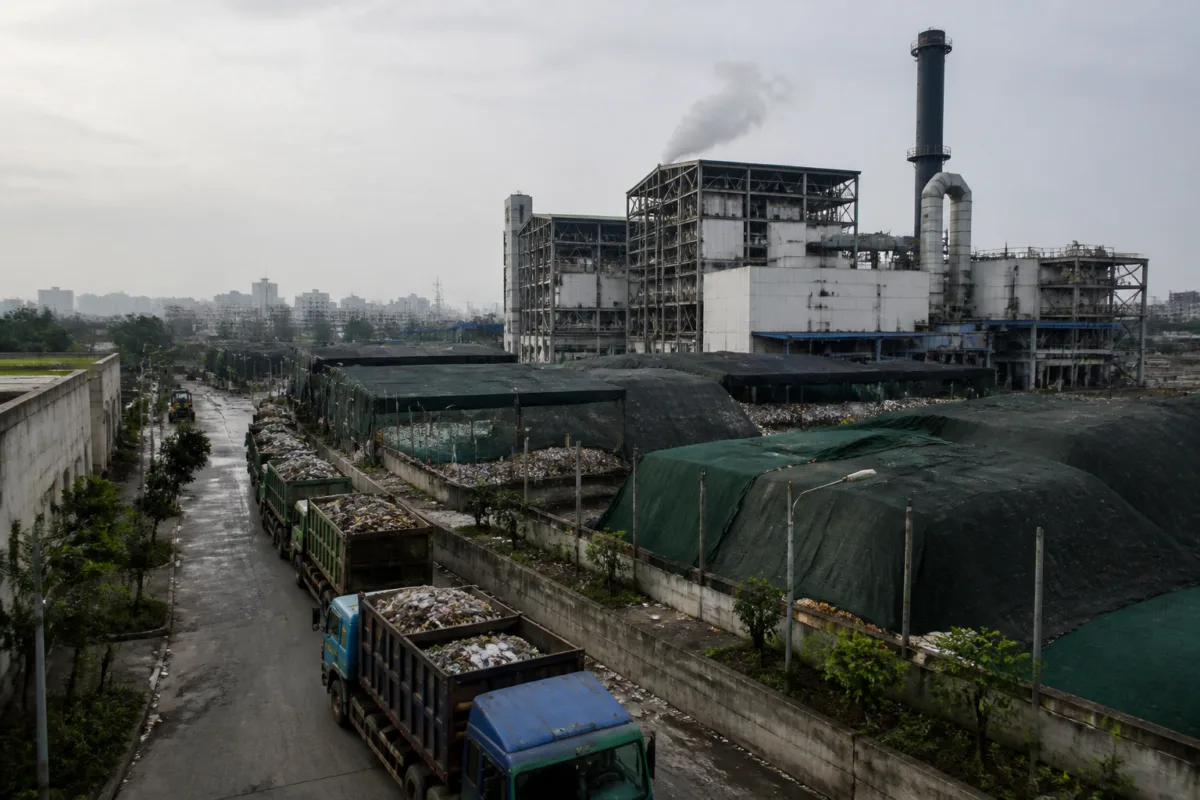
Ahmedabad’s waste-to-energy plant at Gyaspur is reportedly processing 1,000 tonnes of municipal waste a day and supplying electricity to the state grid, but the plant’s actual generation figures require clarification before the project’s energy and environmental benefits can be measured reliably.
A report by Nav Gujarat Samay said the plant, located near Pirana, is operating under a public-private partnership and has been generating electricity by incinerating municipal solid waste. The report attributed the operational information to official sources in the Ahmedabad Municipal Corporation’s solid waste department.
The report said the facility processes around 1,000 tonnes of waste daily. The waste is burned to produce steam, which is then used to operate turbines. It stated that the plant generates 15 megawatts of electricity per hour and described its daily average output as 360 megawatts. These units are not interchangeable: a continuous 15-megawatt output over 24 hours would amount to 360 megawatt-hours of energy, not 360 megawatts of capacity. The plant’s installed capacity, operating load, actual daily generation and electricity purchase records therefore need to be established through primary documents.
The distinction matters because waste-to-energy projects are assessed through several separate measures. Installed capacity indicates the maximum power a facility can produce at a given time. Electricity generated over a day or year is measured in megawatt-hours or units. A plant may also operate below its rated capacity because of maintenance, waste quality, moisture content, supply interruptions or other operational constraints. Without these figures, the scale of the project’s contribution to Ahmedabad’s electricity system cannot be independently understood.
The facility was reportedly commissioned in November 2024. According to the report, the project followed visits by municipal officials to a private waste-to-energy facility in Delhi during 2023-24 and an invitation to the company to establish a plant near Pirana. The municipal corporation provided land, while the private company financed and built the facility, the report said.
The project is linked to a longstanding urban waste problem at Pirana, where large volumes of municipal waste have accumulated over several years. The report said the waste dump generated methane and other gases, contributing to greenhouse-gas emissions, odour and air pollution in surrounding areas. It described Pirana as one of Ahmedabad’s most pollution-affected locations.
Processing a portion of the city’s residual waste through an incineration facility may reduce the quantity sent to the dump, but the environmental outcome depends on how the waste is segregated, what material is burned and how emissions and ash are managed. The supplied report does not provide emissions-monitoring data, the plant’s pollution-control results, ash-disposal arrangements or the composition of the waste entering the facility. Those details are important for assessing whether the project is reducing environmental harm or transferring part of the waste problem into air emissions and residual ash.
The report also described the plant as using treated sewage water rather than fresh water for its steam-generation process. It said the facility uses about 3 million litres of treated water daily under a municipal recycling and reuse policy, reducing dependence on potable or fresh water. The arrangement reportedly generates annual revenue of around Rs 50 lakh for the municipal corporation.
This water-reuse component connects the project to a wider municipal infrastructure question. Thermal power generation can require substantial quantities of water, particularly where steam is produced and condensed. Using treated sewage instead of fresh water can reduce competition between industrial demand and civic or ecological needs, provided the treated water meets the required quality standards and the plant’s discharge and cooling systems are properly monitored. The report does not provide the applicable water-quality parameters or independent performance records.
The project’s financial structure is also central to its public value. The municipal corporation reportedly receives no direct financial benefit from the sale of electricity, which is purchased at rates determined by the state government. The civic benefit, according to the report, lies in the disposal of 1,000 tonnes of waste each day, the reuse of treated sewage and the reduction in the quantity of coal that would otherwise be needed to produce a comparable amount of electricity.
The report estimated that producing the stated daily electricity output could save about 360 metric tonnes of coal. That estimate must be tested against the corrected energy figure, the plant’s actual generation data and the emissions intensity of the electricity it displaces. It also does not, by itself, establish the project’s full climate impact. A complete assessment would need to account for waste transport, incineration emissions, methane avoided at the dump, ash handling and the proportion of the city’s waste that could have been recycled or composted instead.
The facility has reportedly created employment for about 250 people. The report did not specify whether this figure includes direct plant staff, contract workers, waste-handling personnel or associated service providers. Employment numbers and labour conditions would help clarify the project’s local economic contribution, particularly for workers involved in municipal waste collection, sorting and processing.
The plant’s public-private partnership model also deserves scrutiny because municipal land and private capital have been combined to deliver a civic service. In such arrangements, the public value depends on the concession terms, service obligations, electricity tariff, waste-supply commitments, environmental safeguards, performance guarantees and allocation of operating risks. The supplied report describes the arrangement as a genuine PPP because the corporation provided land and the company built the plant at its own cost, but it does not include the project agreement or details of the financial and operational obligations of each party.
That information is significant for Ahmedabad because PPP labels do not, by themselves, show how risk and value are distributed. A project may be privately financed but still depend on guaranteed municipal waste supply, land concessions, public infrastructure, tariff support or long-term contractual commitments. The relevant documents would include the concession agreement, power purchase agreement, environmental clearances, emissions reports, waste acceptance records and audited generation data.
The report’s account highlights the potential of integrated municipal infrastructure: waste disposal, electricity generation, treated-water reuse and employment are being addressed through one facility. It also shows why such projects require transparent measurement. The same plant must be evaluated as a waste-management service, an electricity generator, a water consumer, an emissions source and a public-private contract.
At present, the supplied report establishes that Ahmedabad’s Gyaspur waste-to-energy facility is reportedly operational, processes around 1,000 tonnes of waste daily and uses treated sewage water. It does not adequately establish the plant’s precise electricity capacity or daily energy production because of the conflicting MW and daily-output descriptions. Confirmation from the Ahmedabad Municipal Corporation, the plant operator, the state electricity purchaser and relevant environmental authorities is needed before the reported 360 figure can be published as a verified generation statistic.

