


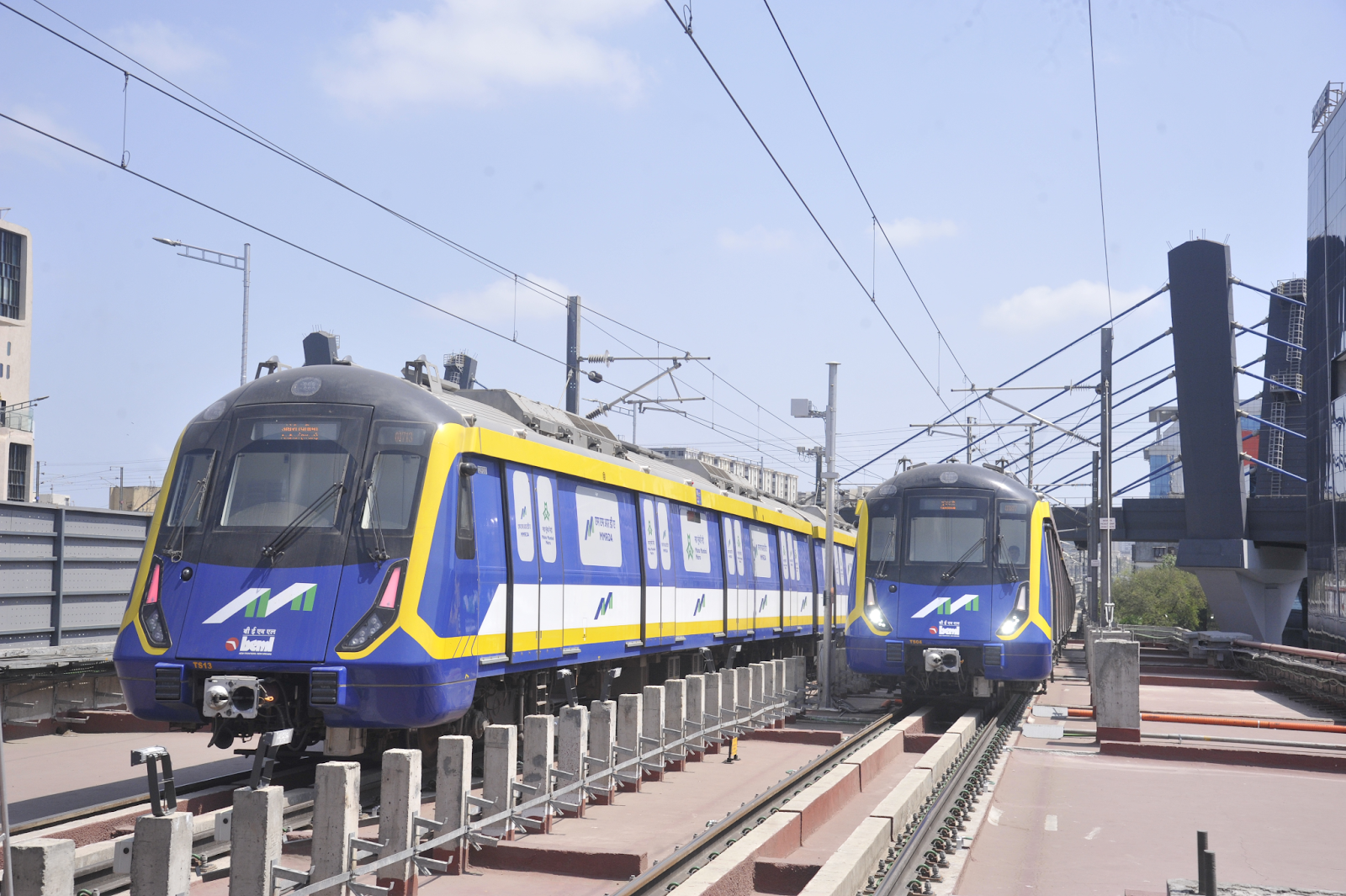
Mumbai Metro expansion project is on the brink of transforming the city’s transportation landscape, with the majority of the 374km metro network set to be operational by 2027. The project, which spans the entire Mumbai Metropolitan Region (MMR), promises to provide an eco-friendly, efficient, and sustainable solution to the city’s traffic congestion and pollution woes.
The first major milestone in this expansion is the completion of Metro 3, which will connect Colaba to Cuff Parade. Expected to be fully operational by mid-2025, Metro 3 will significantly reduce travel time in South Mumbai, offering a cleaner and faster alternative to the heavily congested roads in this region. In addition to Metro 3, Metro 4A, a key stretch that links Kasarvadavali to Gaimukh, is expected to be ready by the end of 2025. This will be followed by the completion of Metro 4, connecting Kasarvadavali to Cadbury Junction. The completion of these vital stretches will provide seamless connectivity between suburban and central Mumbai, alleviating the city’s chronic traffic problems. Another crucial component of the expansion is Metro 7A, which will link Dahisar to Mira Road. This stretch is also expected to be operational by the end of 2025. The inclusion of Metro 7A will provide greater mobility options for residents in Mumbai’s western suburbs, easing the pressure on local roads and ensuring a more sustainable transportation option. The expansion doesn’t stop there. The second phase of Metro 2B, running between DN Nagar and Mandale, is slated for completion by October 2026. The operationalisation of this stretch will provide much-needed relief to commuters in the western suburbs, reducing travel time and offering an energy-efficient alternative to road transport.
Currently, Metro 3 is 95% complete, with security trials already underway. The ongoing progress in Metro 4, which is 79% complete, is another positive sign, with the first phase between Kasarvadavali and Cadbury Junction expected to be up and running by the end of 2025. The remaining sections of Metro 4, connecting to Gandhi Nagar, will be completed by December 2026. While the metro’s expansion will revolutionise Mumbai’s public transport, it will also play a crucial role in reducing the city’s carbon footprint. As the metro system expands, it will provide a sustainable and cleaner alternative to the numerous cars and buses that currently clog the city’s roads, contributing to improved air quality and reducing noise pollution. Furthermore, the metro’s eco-friendly design aligns with the city’s long-term sustainability goals. It will serve as a zero-carbon transportation option, supporting Mumbai’s push to create more eco-friendly, equitable, and gender-neutral urban spaces. With special attention to making stations accessible to people with disabilities, the metro is designed to be inclusive and cater to all commuters.
Metro 9, which will connect Andheri to the International Airport, is also progressing steadily, with 55% of its construction complete. This metro line is expected to be operational by December 2026, providing enhanced connectivity for passengers traveling to and from the airport, and offering an alternative to the crowded roads that currently serve the airport. One of the key challenges faced by the project is the need to balance the growing demand for urban transportation with the preservation of residential areas. In areas where elevated metro lines intersect with dense communities, the authorities have opted to construct underground sections to avoid disruption and ensure minimal impact on local residents. For instance, the stretch between Bhiwandi and Kalyan will be fully underground to prevent displacement and mitigate the environmental impact. The development of the metro network has been hailed by experts as a critical move towards creating a more sustainable and resilient city. By offering a more efficient, low-carbon alternative to road transport, the metro system is helping reduce the environmental burden of Mumbai’s rapid urbanisation.
As Mumbai’s metro expansion nears its final stages, the city stands on the brink of a new era of connectivity, mobility, and sustainability. The successful completion of the 374km network by 2027 will not only enhance the daily lives of millions of Mumbaikars but also contribute significantly to the city’s long-term vision of becoming a greener, more sustainable metropolis. With the ongoing developments in the metro system, Mumbai is moving closer to a future where public transport is no longer just an alternative but the preferred mode of commuting for the city’s ever-growing population.
