


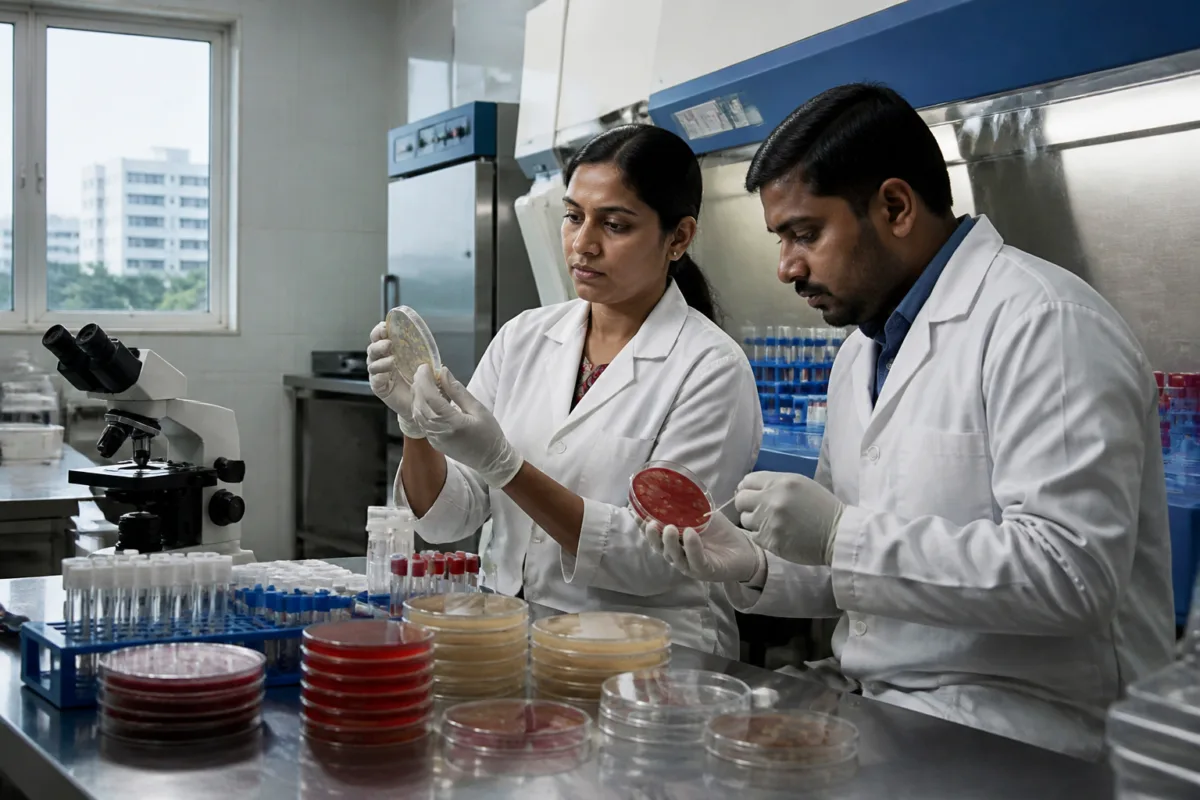
Antimicrobial resistance is reducing the effectiveness of important antibiotics against infections reported across Telangana hospitals, according to the Telangana Antimicrobial Resistance Surveillance Network report prepared by Osmania Medical College.
The report analysed 14,616 unique bacterial isolates collected from 13 surveillance centres across 10 districts. Escherichia coli was the most frequently detected bacterium, accounting for 5,716 isolates. Nearly 78% of E. coli found in blood samples were resistant to ceftriaxone, while the resistance rate was 74% among E. coli isolates from urine samples.
The findings are significant for hospitals because they involve infections that can require urgent treatment, including urinary tract infections and bloodstream infections. They also indicate that resistance is affecting drugs used in serious cases rather than only commonly prescribed antibiotics.
Acinetobacter, which is frequently associated with hospital-acquired infections and critically ill patients, showed particularly high resistance in intensive-care settings. Nearly 81% of Acinetobacter isolates from ICU blood samples were resistant to ceftazidime. The report found that 47% were resistant to meropenem, a powerful antibiotic used for severe bacterial infections.
Meropenem resistance among Acinetobacter isolates from ICU blood samples increased from 22% in 2024 to 47% in 2025, according to the report. It also noted rising resistance to carbapenems among some gram-negative bacteria, including E. coli and Acinetobacter.
The trend places greater pressure on hospital infection-control systems, diagnostic services and antibiotic-prescribing practices. When resistance affects medicines reserved for serious infections, doctors may have fewer treatment options, while patients may face more complex, costly or prolonged care. The report itself does not quantify the effect on treatment costs, hospital stays or patient outcomes.
Public health expert Dr Rangareddy Burri described the findings as a warning for Telangana and said resistant bacteria were being detected even among people with no history of antibiotic use. He called for implementation of the Telangana Action Plan for Containment of AMR through a coordinated One Health approach covering human health, animals, agriculture and the environment.
That approach is important because the report and expert comments place antimicrobial resistance beyond the boundaries of individual hospitals. The recommended response includes stronger infection prevention, environmental monitoring and reduced misuse of antibiotics in agriculture and industry. The source report does not provide details on the current implementation status, funding or institutional responsibilities under the state action plan.
Dr Burri also urged Telangana to use its life-sciences and pharmaceutical base to support new antibiotics, alternative treatments and faster, affordable diagnostic tests. Wider access to antimicrobial susceptibility testing would help clinicians identify which medicines are likely to work rather than relying only on broad empirical treatment, according to his comments.
Dr Sagarika Nanda, a consultant in infectious diseases at Apollo Hospitals, attributed the worsening problem in part to misuse, including taking antibiotics for viral illnesses, buying them without prescriptions and stopping treatment prematurely. Antibiotics do not treat viral infections, she said.
The report’s findings underline the need for hospitals to combine surveillance with practical safeguards: timely testing, appropriate prescribing, infection-control measures and monitoring of resistant organisms. They also point to a wider governance challenge, since controlling antimicrobial resistance requires coordination between health institutions, environmental agencies, agriculture and industry. Telangana’s next steps will determine whether the surveillance evidence leads to measurable changes in prevention, diagnosis and antibiotic use.

