


The Delhi-NCR roadmap outlined by Lieutenant Governor T.S. Sandhu places integrated transport, coordinated urban development and technology-led governance at the centre of the region’s long-term planning agenda.
Sandhu presented the four-point roadmap at ‘Delhi Connects 2026: Building a Global, Sustainable and Future-Ready Delhi NCR’, an event organised by the Associated Chambers of Commerce and Industry of India (ASSOCHAM). The other priorities identified were economic competitiveness and stronger collaboration between industry and government.
According to Sandhu, Delhi’s Gross State Domestic Product is estimated at Rs 13.3 lakh crore, with a projected growth rate of 9.4%. He said more than 86% of the economy is driven by the services sector, creating a base for investment, innovation and employment.
The Lieutenant Governor said Delhi’s future development could not be planned within the capital’s administrative boundaries. Millions of people live, work and commute across the National Capital Region, he noted, making transport, housing, water management and economic development areas requiring coordinated regional planning.
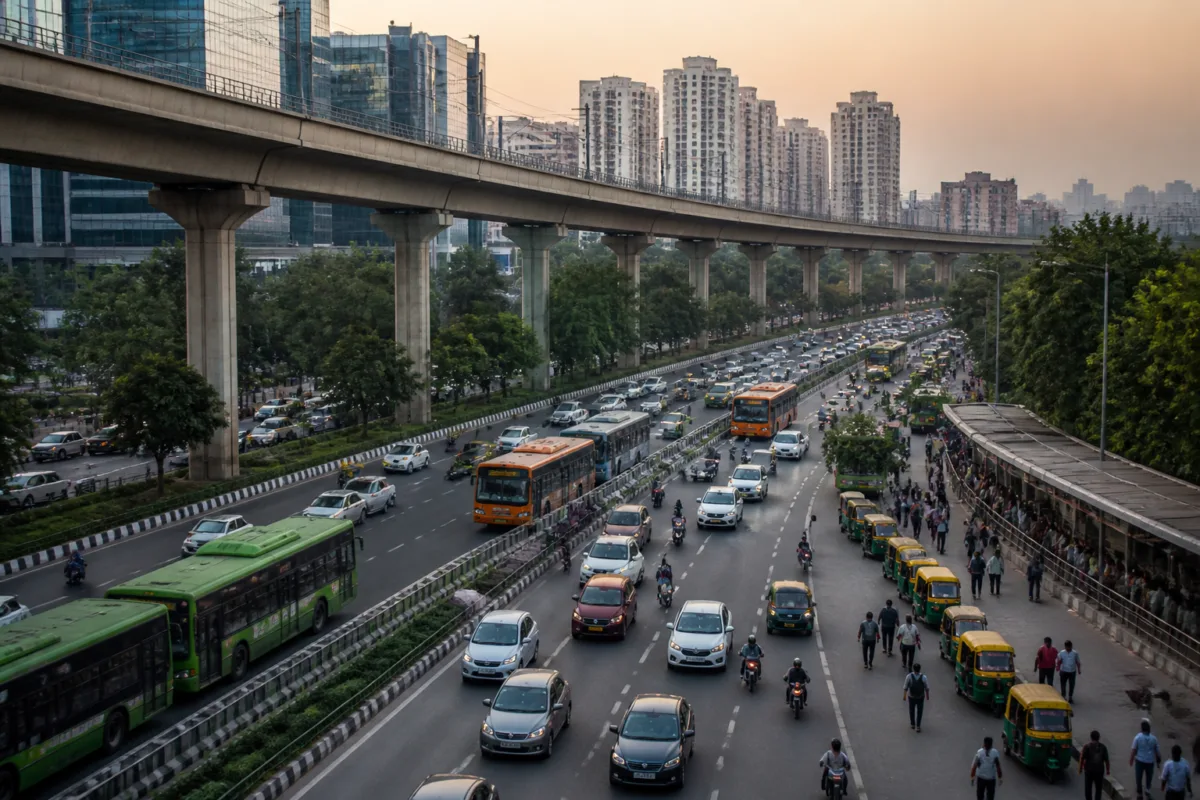
The transport component of the roadmap includes better last-mile connectivity, improved roads and intelligent traffic management. These priorities are intended to address congestion and improve productivity, although the address did not specify individual projects, implementation agencies, funding arrangements or delivery timelines.
Sandhu also called for planned urban development in which housing, civic amenities, public spaces and social infrastructure grow together. This framing links housing supply with the supporting facilities needed by residents, but the report does not identify specific housing programmes, locations or planning instruments that would deliver the proposed coordination.
Technology-led governance was another part of the roadmap. Sandhu said artificial intelligence and data-driven governance could make public services more efficient. The address did not provide details on the proposed applications, data systems, institutional safeguards or departments that would be responsible for implementation.
The fourth priority, economic competitiveness, involves collaboration between government and industry in innovation, research, public-private partnerships and skill development. Sandhu said these measures could help Delhi attract investment, create opportunities and strengthen infrastructure while preserving its heritage.
The roadmap therefore sets out a broad regional direction rather than a detailed delivery plan. Its emphasis on cross-boundary coordination reflects the way daily commuting, housing demand and infrastructure networks operate across Delhi-NCR. Turning the priorities into public outcomes would require the responsibilities, financing, timelines and performance measures for each area to be specified by the relevant institutions.
Sandhu described Delhi’s progress towards 2047 as important to India’s wider development vision and called for collective action to create a globally competitive, inclusive and liveable capital region.

