


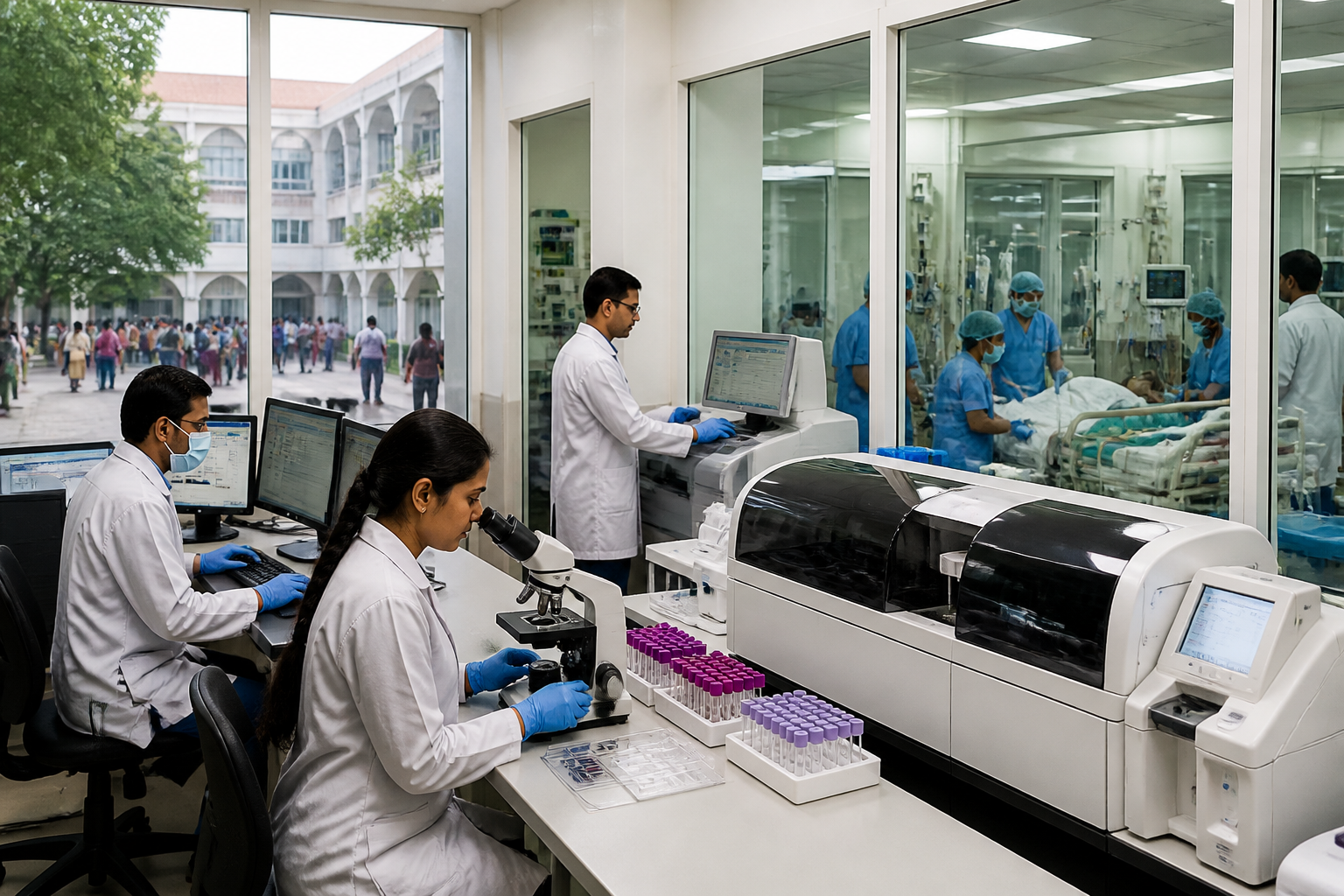
King George’s Medical University has been designated Uttar Pradesh’s first centre of excellence in acute care precision medicine, a move expected to expand faster, more personalised and more affordable diagnostic and treatment services for critically ill patients.
The Lucknow-based university will strengthen advanced diagnostic and therapeutic care through precision medicine, which uses a patient’s genetic profile, medical condition, test findings and response to drugs to guide treatment rather than applying a uniform approach.
A key service highlighted by doctors is multiplex polymerase chain reaction testing, which can provide important infection-related results in about eight hours. Conventional testing can take nearly 72 hours, according to the report. The shorter turnaround time is intended to help intensive-care clinicians identify infections and make treatment decisions earlier.
KGMU’s reported pricing also places the service below comparable private-sector testing costs. Multiplex molecular screening at the university costs about Rs 2,000, while similar testing can cost around Rs 15,000 at private hospitals. The difference could make advanced molecular diagnostics more accessible to patients who cannot afford private hospital rates.
The centre has also introduced pharmacogenomic testing, which examines how a patient’s genes may influence the response to particular medicines. The university is using the approach alongside efforts to address antimicrobial resistance by identifying infections and resistance markers more rapidly, allowing doctors to select antibiotics more selectively.
Prof Avinash Agrawal of KGMU’s department of critical care medicine said the centre had conducted more than 80,000 tests since 2023, including molecular diagnostics and pharmacogenomic investigations. He said the new designation would further strengthen the university’s capabilities.
KGMU vice-chancellor Prof Soniya Nityanand said the institution’s objective was to translate scientific advances into routine patient care and extend precision medicine to ordinary citizens. The designation therefore links an advanced clinical model with the public role of a state medical university, where affordability and access remain central to the delivery of specialised treatment.
The report does not specify a new statewide referral network, additional facilities or an implementation timeline associated with the designation. KGMU’s next steps will determine how widely the centre’s testing and treatment capabilities can be used by hospitals and patients across Uttar Pradesh.

