


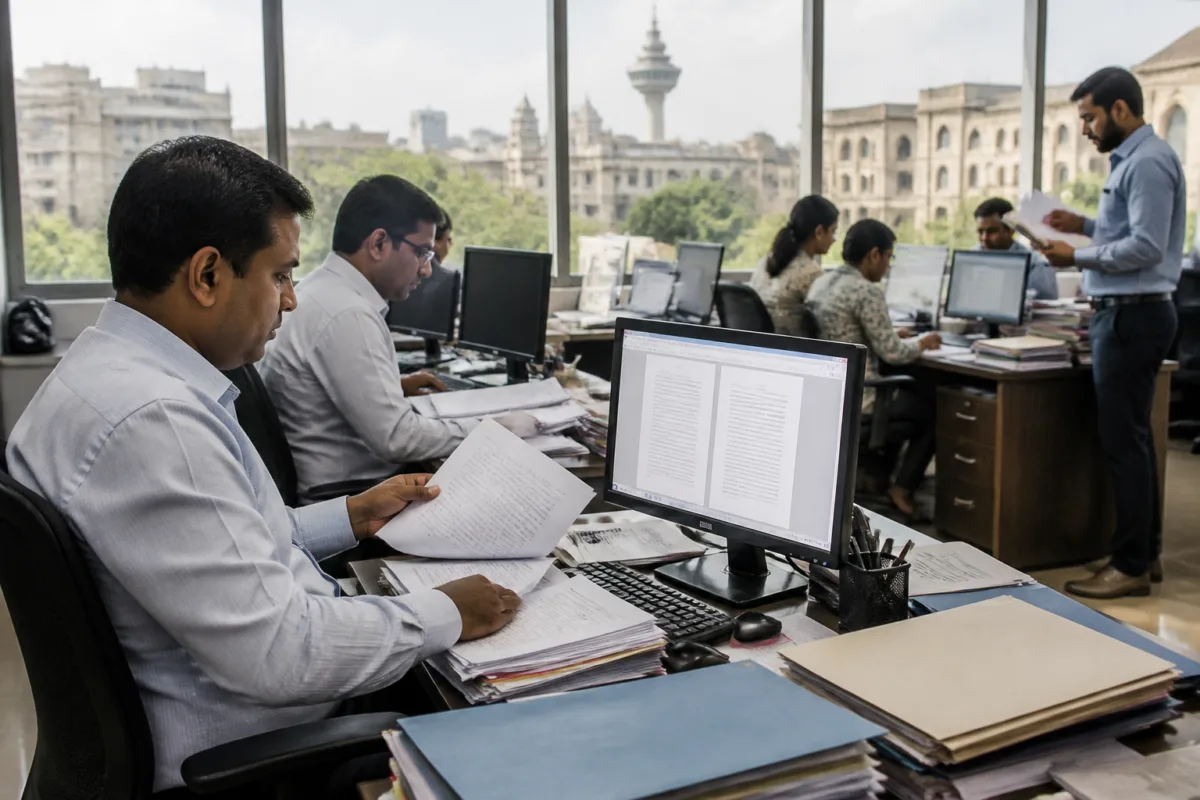
The Ahmedabad Municipal Corporation has amended its procedural manual to allow General Board meeting agendas to be sent to councillors online, replacing the earlier requirement that physical copies be delivered manually or by post.
The AMC secretary’s office issued a circular on November 3 announcing the change under Chapter 2(A) of AMC Manual 1, which governs proceedings of the civic body. The amended provision permits agendas to be sent to members through online or other digital platforms before a General Board meeting.
The existing publication requirement has not been removed. Details of the meeting date, venue and agenda will continue to be published in a newspaper, while digital transmission has been added as an alternative to physical delivery of agenda copies.
The amendment follows resolutions passed by the Gujarat government’s urban development department in January and August, according to the report. It has also been published in the official gazette, giving the procedural change formal legal effect within the civic body’s operating framework.
Under the earlier rule, the AMC was required to publish the meeting details in a newspaper and ensure that printed agenda documents reached every councillor either through manual delivery or by post. The revised procedure changes the method of circulation while retaining the public notice requirement.
AMC sources said the move aligns the civic body’s procedures with the central government’s Digital India initiative, launched in 2015 to promote online publication and the digital use of government documents. For the municipal administration, the change is expected to reduce dependence on paper copies and physical delivery for routine council business.
The amendment also establishes a formal digital channel for distributing documents linked to General Board proceedings. Its practical effect will depend on how the AMC implements the provision, including the digital platforms used, the timing of circulation and the preservation of accessible records for councillors and the public. The circular and gazette publication provide the formal basis for the new arrangement.

