


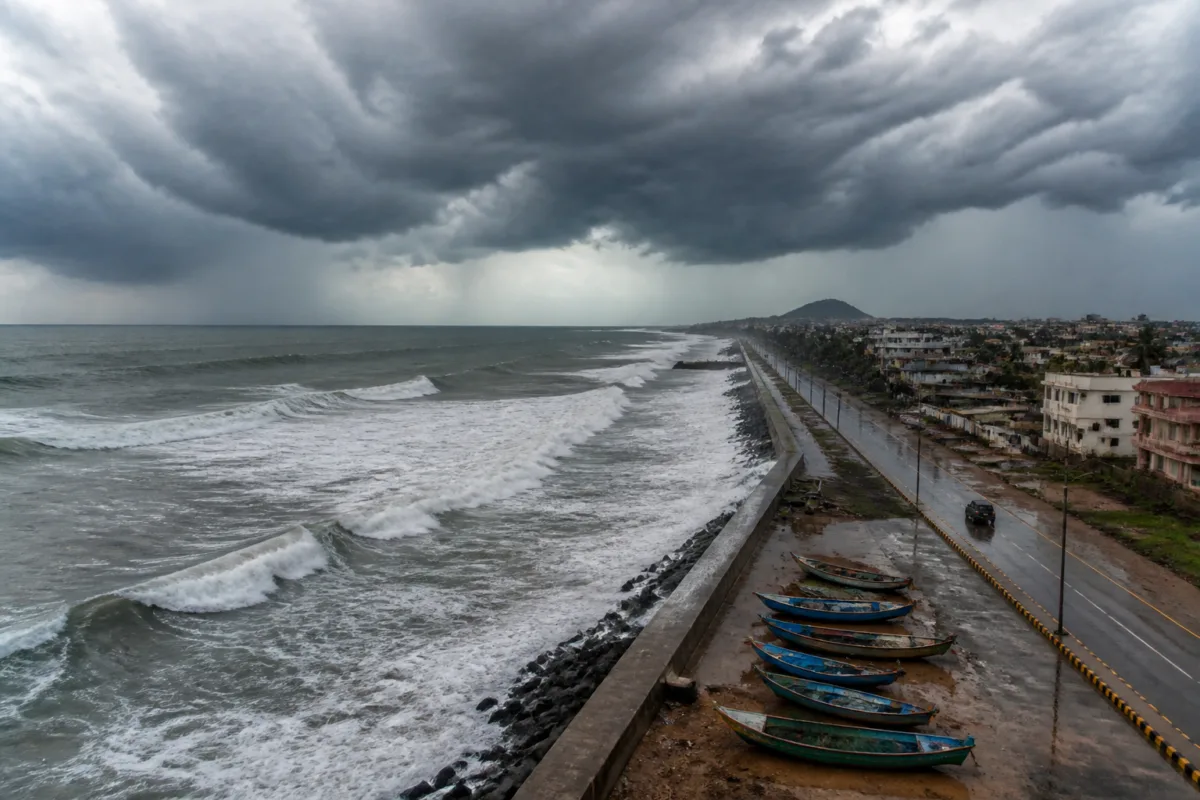
Cyclone Murasu remains an unconfirmed weather system, even as a report published by Pudhari says a possible cyclone may form over the Bay of Bengal on November 1 and bring heavy to extremely heavy rain to coastal Andhra Pradesh on November 2.
The report said the system could move towards the Andhra Pradesh coast after developing over the Bay of Bengal. It also forecast light rain across Maharashtra until November 5. However, Pudhari clarified that the India Meteorological Department has not yet confirmed the formation or naming of the system.
According to the report, “Murasu” is a possible name drawn from Sri Lanka’s list of cyclone names. The name should therefore not be treated as an official designation unless and until the competent meteorological authority confirms the system and issues a corresponding bulletin.
The report described the potential system as the second cyclone to develop over the Bay of Bengal within a week. It also referred to a cyclone named Arnab as having recently passed through the region, adding that the Bay of Bengal system had not fully settled before the possibility of another storm emerged.
For coastal Andhra Pradesh, the immediate concern identified in the report is the possibility of heavy to extremely heavy rain on November 2. Such rainfall forecasts are operationally relevant for coastal settlements, transport networks, drainage systems and exposed infrastructure, but the supplied report does not provide district-wise warnings, rainfall quantities, wind speeds, landfall coordinates or evacuation instructions.
The report also gives a broader rainfall outlook for Maharashtra through November 5, describing the expected rain as light and widespread. It does not specify whether the forecast is linked directly to the possible Bay of Bengal system or provide separate forecasts for individual cities and districts in the state.
The distinction between a potential cyclone and an officially monitored or named cyclone is significant for public communication. Cyclone naming, track forecasts, warning levels and local advisories are issued through official meteorological channels. Until those details are confirmed, the information available in the supplied report should be treated as an attributed forecast rather than an established cyclone event.
Further clarity would depend on an official India Meteorological Department update confirming whether a low-pressure area or depression has formed, whether it is likely to intensify, and what areas may face heavy rain, strong winds or coastal impacts.

