


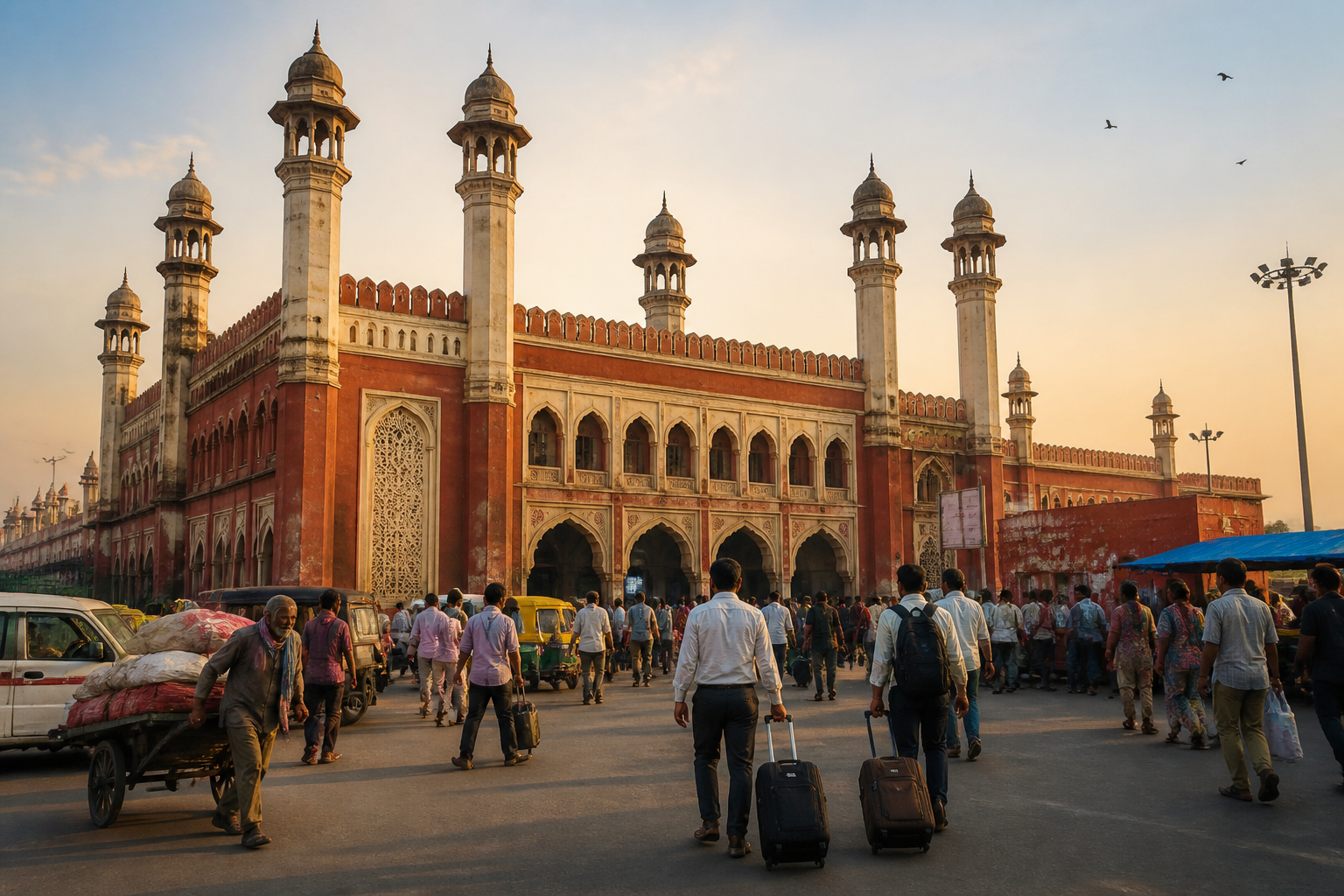
Old Delhi Railway Station’s 160-year history is being marked with a station festival on September 25, but the institution’s significance extends well beyond a heritage celebration. From a small railway building established in 1864 to a 16-platform station handling nearly three lakh passengers and more than 250 trains a day, it shows how transport infrastructure can become part of a city’s physical identity, administrative history and everyday movement system.
According to a report by Jagran – New Delhi, the festival will present the station’s development through a photo exhibition, the unveiling of a heritage souvenir and the recognition of railway employees who contributed to its growth. The Railway Ministry has decided to organise similar station festivals at 103 historically significant railway stations across the country by December.
The programme places Old Delhi Railway Station within a wider effort to present railway infrastructure as heritage. Yet the station’s story is not simply about preserving an old building. It is also about how Delhi’s transport network expanded around an existing historic city, how railway operations were repeatedly adapted to rising demand, and how a structure designed in the early twentieth century continues to serve a much larger metropolitan population.
The station began in 1864 with a small building. The first train reached the site on the final day of 1866 after the construction of the iron bridge over the Yamuna. It was operated on the East Indian Railway Company’s Kolkata-Delhi line and connected Delhi by rail with other parts of the country. For approximately four decades, railway operations continued from the smaller building.
A new station building was commissioned in 1893 and completed in 1903. It opened to passengers with two platforms and was designed in a style based on Mughal-era architecture. Its appearance was planned to correspond with nearby historic structures, including the Red Fort and Jama Masjid. The building has six minarets, making it visually distinct from many other railway stations and tying it directly to the architectural language of Old Delhi.
That architectural choice is important because railway stations are rarely neutral pieces of infrastructure. They determine how people enter and leave a city, but they also become part of the city’s image. In Old Delhi, the station was inserted into an urban area already shaped by Mughal landmarks, dense commercial activity and established neighbourhoods. Its design therefore did more than provide shelter for passengers and railway operations; it connected a new industrial transport system with an older historic landscape.
The station’s location was also shaped by strategic considerations. The report states that after the failure of the 1857 uprising, the British selected the site near Seelampur and the Red Fort rather than moving the railway station away from the populated core. An earlier proposal had considered a location near Ghaziabad. The decision to retain the station close to the city’s inhabited area reflected the administration’s desire to maintain control over movement during any future unrest.
This history reveals a recurring feature of urban infrastructure: transport facilities are built not only to move people and goods but also to serve administrative and political priorities. The same station that was once planned within a colonial system of control later became a crucial public gateway for a growing capital. Its meaning changed as Delhi changed around it.
The station’s importance increased after Delhi became the national capital in 1931. Expansion work followed in 1934-35, when additional platforms were created and electric signalling was introduced. Over time, the station continued to be modified. It now has 16 platforms, a scale that reflects the cumulative process through which older infrastructure is expanded rather than replaced.
The figures reported for the station illustrate the pressure placed on that inherited structure. More than 250 trains operate from the station daily, while passenger footfall is close to three lakh people a day. These numbers make the station a major urban interchange, not merely a heritage building. They also explain why the challenge is not limited to conserving its façade. Any intervention must balance the protection of historic character with the operational requirements of a high-volume railway facility.
The station has already undergone visible change. Renovation work began in 2016, after which several passenger facilities were added and the building’s colour was changed from red to ochre. The change demonstrates how heritage infrastructure is continually reinterpreted through modernisation. Facilities, access arrangements and operating systems can evolve even when the external structure remains recognisable.
The report also records the disappearance of an earlier railway function. A steam locomotive shed once stood on the Zorawar Singh Marg side of the station. It ceased to operate after steam engines were discontinued in Northern Railway on May 15, 1994. A second entrance to the station was built at the site in 1995. In this instance, the end of one technological era created space for a new passenger-access function.
That transition is a useful way to understand the station’s physical history. Its development has not followed a single master plan described in the supplied report. Instead, the station has been altered in response to changes in railway technology, national administration, passenger demand and operational requirements. Platforms were added, signalling systems changed, locomotive facilities disappeared and entrances were reconfigured.
The station festival can therefore be read as an account of layered infrastructure. The 1864 beginning, the 1866 arrival of the first train, the 1903 opening of the present historic building, the 1930s expansion, the 1990s post-steam changes and the renovation that began in 2016 all remain part of the same operating site. The festival’s proposed photo exhibition and heritage souvenir may help present these stages to passengers who otherwise experience the station only as a point of departure or arrival.
There is also a practical institutional question behind the celebration. The Railway Ministry’s decision to hold festivals at 103 historically important stations by December suggests an effort to make railway heritage visible within functioning transport facilities. Such an approach differs from preserving a structure as a museum isolated from everyday use. Old Delhi Railway Station remains active, crowded and operational, which means its heritage value exists alongside the demands of crowd management, passenger circulation, maintenance and service delivery.
The supplied report does not establish how the station festival will affect regular operations, what conservation standards will apply to the building, or whether further infrastructure upgrades are planned. It also does not provide a detailed assessment of passenger facilities, congestion, accessibility or the condition of the historic structure. Those questions remain outside the evidence currently available.
What is clear is that Old Delhi Railway Station has survived by absorbing successive layers of change. Its historic architecture gives it a distinctive relationship with the Red Fort and Jama Masjid, while its present-day role is defined by the movement of nearly three lakh passengers each day. The station is simultaneously a heritage site, a railway operating centre and a piece of everyday metropolitan infrastructure.
The September 25 festival will officially commemorate that long journey. Its larger significance lies in making visible the institutional and physical history behind a facility that many passengers use without considering how it came to occupy its current role. The next important development will be the station festival itself and the presentation of the station’s history, employees and evolution to the public.
