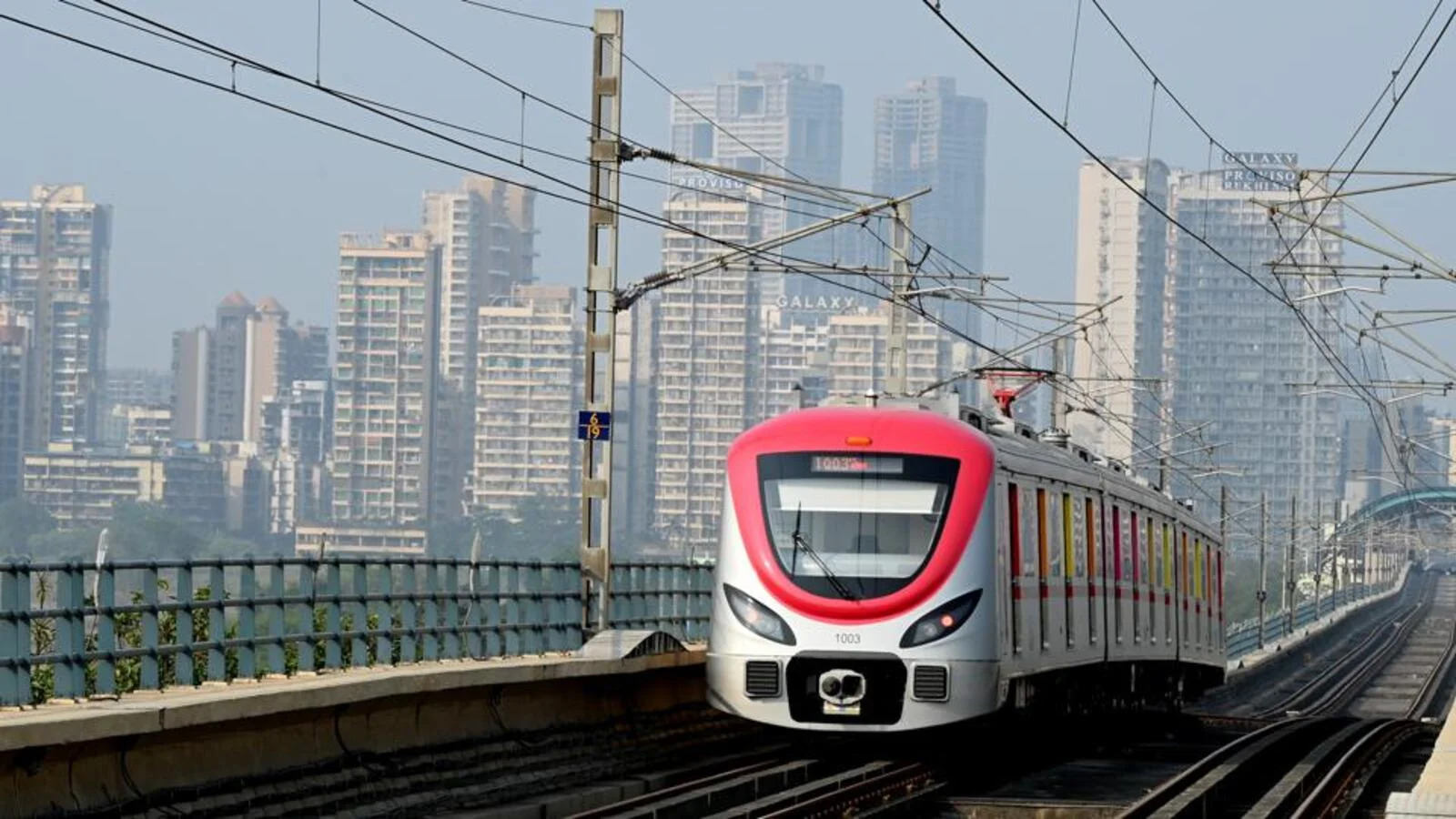
Maharashtra has cleared the financing and implementation framework for Metro Line 13, a ₹17,724.99-crore corridor planned between Mira-Bhayandar and Vasai-Virar. The 25.03-km project is designed to bridge a major transport gap across the northern Mumbai Metropolitan Region, where road connectivity between the two urban clusters remains indirect. Its significance extends beyond faster journeys, as the corridor could reshape access to jobs, housing and public transport across Thane and Palghar districts. The Mumbai Metropolitan Region Development Authority (MMRDA) will implement the project, with the state authorising it to raise up to ₹13,293.74 crore through bilateral and multilateral lenders and other financial institutions. The borrowing is expected to benefit from concessional rates. Maharashtra will provide ₹2,810.36 crore as interest-free subordinate debt, while MMRDA will contribute another ₹593.63 crore. Government land valued at ₹1,027.26 crore will also be made available at nominal rates.
The corridor will comprise 21.78 km of elevated alignment and 3.25 km underground, with 16 stations. A central engineering feature is a 4.92-km integrated six-lane road-and-metro bridge across Vasai Creek, connecting through Panju Island. The link is intended to cut a substantial road detour between Mira-Bhayandar and Vasai-Virar and create a more direct cross-creek connection. For commuters, the value of Metro Line 13 will depend heavily on how well it connects with transport systems already in use. The planned corridor is expected to interface with suburban railway stations at Naigaon, Nalasopara and Virar, while a connection with Metro Line 9 is proposed near Netaji Subhash Chandra Bose Stadium. Bus connectivity at stations is also planned, creating the potential for a more integrated journey rather than a standalone metro service.
The financial structure, however, shows that the project is also a bet on future urban growth. The approved cost includes ₹1,382.57 crore in construction-period interest and ₹1,884.49 crore for escalation. To support repayment and future operations, the government plans to use additional development charges, a proposed stamp-duty surcharge, commercial use of project land and income from advertising, parking and station facilities. These revenues are to flow into a Dedicated Urban Transport Fund. The land and development model will require close scrutiny. Additional floor space rights within 500 metres of the corridor could generate revenue, but higher development intensity can also increase pressure on water, drainage, roads and open spaces if surrounding infrastructure does not keep pace.
The state has set 2026–2031 as the implementation period and directed MMRDA to prepare a time-bound programme. For Metro Line 13, timely delivery will matter as much as the approval itself: the corridor must translate large-scale borrowing and land development into dependable, accessible public transport while limiting the environmental costs of rapid urban expansion.