


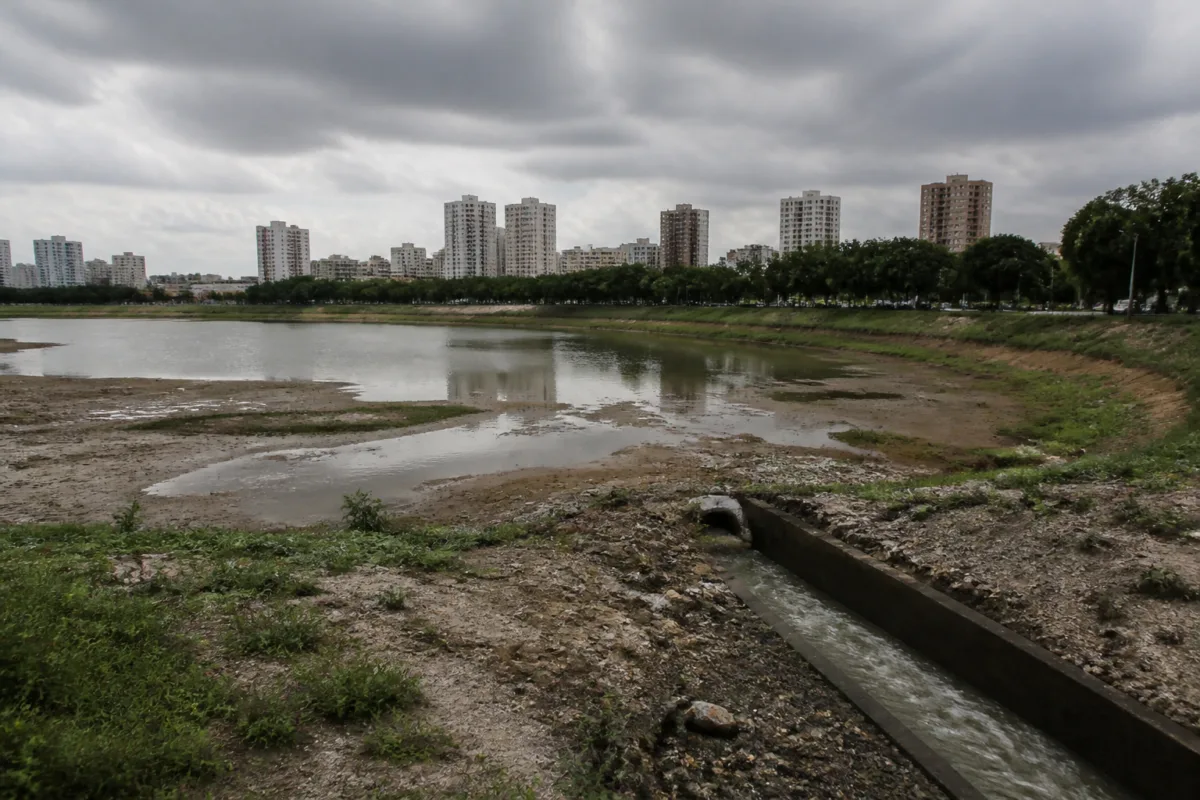
Bengaluru’s lakes are showing the combined effects of a weak monsoon, incomplete restoration works and a broken urban water-management chain. According to a report published by Prajavani on October 25, only 30 of the 183 lakes currently tracked by the Greater Bengaluru Authority are full, while seven have no water. The figures expose not only a rainfall deficit but also the limits of treating lake development as an isolated beautification exercise.
The report says Bengaluru received 43% less monsoon rainfall than usual. That shortfall has directly reduced inflows into the city’s lakes. But rainfall alone does not explain the condition of the lake network. The water that does fall on the city is often not reaching lakes because stormwater channels are obstructed, encroached upon or poorly connected. The result is a city where roads can carry water like rivers during intense rain while its designated storage systems remain underfilled.
That contradiction is central to Bengaluru’s water problem. A lake is not merely a visible waterbody within a park boundary. It is part of a larger drainage and storage network connected by stormwater drains, rajakaluves, feeder channels and downstream lakes. When those connections are blocked or altered, rainwater may accumulate temporarily on roads and low-lying land but fail to replenish the lakes that are meant to receive it.
The report attributes this failure partly to encroachment along rajakaluves, or major stormwater channels. With these channels obstructed, rainwater is flowing irregularly instead of being directed into lake systems. The implication is that even a normal or above-normal rainfall season would not automatically guarantee effective lake recharge. The city’s infrastructure determines whether rainfall becomes stored water, urban flooding or polluted runoff.
The problem is further complicated by the changing administrative framework. In 2023, the Bruhat Bengaluru Mahanagara Palike maintained data on 190 lakes. After the creation of the Greater Bengaluru Authority, the number being tracked was reduced to 183. The report says the authority has recorded the storage capacity and current water levels of these 183 lakes, but seven lakes have been excluded from the calculation.
That change matters because urban water planning depends on a stable and transparent inventory. If the number of lakes under active measurement changes, comparisons across years become more difficult. A lower count may reflect an administrative reclassification rather than the physical disappearance of waterbodies, but the supplied report does not explain the status of the seven excluded lakes. That gap makes it harder for residents to assess whether the city’s overall storage capacity is improving or declining.
The data nevertheless shows a sharp imbalance. Thirty lakes are reported to be full, meaning that about one-sixth of the 183 lakes in the authority’s count have reached that condition. Seven are empty. The remaining lakes are neither full nor empty, but the report does not provide their individual water levels or the total volume of water stored across the network. This distinction is important: the number of full lakes alone cannot establish whether Bengaluru has adequate storage for its water needs.
The full lakes are distributed across several parts of the city. The list includes Kengadasapura and Kalyanibyrasandra lakes in the central civic zone; several lakes in the eastern zone, including Nagareeshwara-Nagenahalli, Horamavu Kalkere, Jinkethimmanahalli-Varanasi, Ramapura, Vengayya, Chikkabasavanapura, Seegehalli, Bhattarahalli, Seetharampalya, Hoodi, Sadaramangala, Doddanekkundi, Devarabisanahalli, Garudachar Palya-1 and Garudachar Palya-2; and lakes such as Agrahara, Yelahanka, Attur, Jakkur, Palanahalli and Rachenahalli in the northern zone. Halagevaderahalli and Bheemanakuppe are listed in the western zone.
The list indicates that full lakes are not confined to one administrative area. However, it does not by itself show whether their water is clean, whether they are connected to functioning feeder channels or whether their storage is reliable across seasons. The report specifically notes that pollution remains a problem even in lakes that have received hundreds of crores of rupees in development expenditure.
The pollution issue exposes a second weakness in the city’s lake strategy. The report says sewage is flowing directly into Gandhinagar Lake in the western civic zone and Halagevaderahalli Lake. It attributes the continuing inflow of dirty water to inaction by the Bengaluru Water Supply and Sewerage Board, while some lake-development works have been undertaken by the Bangalore Development Authority. When residents complain, the agencies are described as passing responsibility to one another.
This division of responsibility is significant because lake restoration and sewage management are separate functions that must work together. A lake can be desilted, landscaped and provided with public amenities, but if untreated sewage continues to enter it, the expenditure does not resolve the underlying water-quality problem. The report says the creation of the Greater Bengaluru Authority has not removed the lack of coordination between departments.
The institutional question is therefore not simply who owns a lake. It is who is responsible for the complete water cycle around it: protecting the catchment, maintaining feeder channels, preventing sewage inflows, monitoring water quality, completing civil works and publishing reliable data. The report describes a system in which these responsibilities remain distributed across civic bodies, the water utility and development agencies, without adequate coordination.
Nine lakes are recorded by the authority as not having been developed. These include Srinivasapura, Banaswadi, Vasanthapura, Hosakerehalli, Pattanagere-Kenchenahalli, Chikkagowdanapalya, Boosegowda, Mylasandra and Narasappanahalli. The report says work orders for some of these lakes were issued four or five years ago, but construction has not begun.
The Pattanagere-Kenchenahalli lake case illustrates the gap between administrative approval and physical delivery. According to resident T.E. Srinivas, the tender had been finalised and a work order issued, but work had not started. He said residents had repeatedly complained to officials under the earlier municipal corporation structure and to officials in the current Greater Bengaluru Authority and western civic zone. The statement is a resident’s allegation as reported by Prajavani; the supplied material does not include a response from the authorities.
Seven lakes are listed as having zero water: Pattandur Agrahara Lake-2 and Gunjur Mauji Lake in the eastern zone; Srinivasapura and Banaswadi lakes in the northern zone; and Baiyappanapalya Kunte, Vasanthapura and Ambalipura Upper Lake in the southern zone. The presence of empty lakes alongside full ones underlines the importance of local catchments and connections. City-wide rainfall averages do not determine how much water reaches each lake.
The report also refers to the effect of El Niño on the weaker monsoon. That explanation describes the rainfall context, but the urban infrastructure response remains a separate question. Bengaluru’s roads may flood during short, intense rainfall because runoff is not being safely conveyed, while lakes remain empty because channels are blocked or sewage and stormwater networks are poorly integrated. These are not contradictory outcomes when the city’s drainage and storage systems are disconnected.
For policymakers, the immediate challenge is to link lake records to the infrastructure that feeds them. A useful public account would need to show the storage capacity, current level, inflow channels, sewage-entry points, restoration status and responsible agency for each lake. The supplied report confirms that storage capacity and water levels are being recorded for 183 lakes, but it does not provide a lake-by-lake assessment of water quality, inflows or project expenditure.
That missing information limits what can be concluded from the current numbers. The evidence clearly establishes a weak monsoon, low filling levels in much of the lake network, seven empty lakes, unfinished development works and continuing pollution in at least some restored or developed lakes. It does not establish the total volume of water available, the exact share of sewage-affected lakes or whether the 30 full lakes can retain water through the dry season.
Bengaluru’s lake question is therefore becoming an administrative test as much as a hydrological one. The city needs functioning connections between rainfall, drains, lakes and wastewater systems, but it also needs a consistent institutional record showing who is responsible for each link. Without that, development spending can produce visible lakefront improvements without restoring the network’s storage and cleansing functions.
The current figures confirm that Bengaluru’s lakes are under pressure, but they also show why a single measure of lake filling is insufficient. The next significant indicators will be whether the Greater Bengaluru Authority clarifies the status of the seven excluded lakes, starts delayed works, prevents sewage inflows and publishes more complete data on lake capacity, water quality and connectivity. Until those systems are addressed together, rainwater shortage and urban flooding will remain connected symptoms of the same planning failure.

