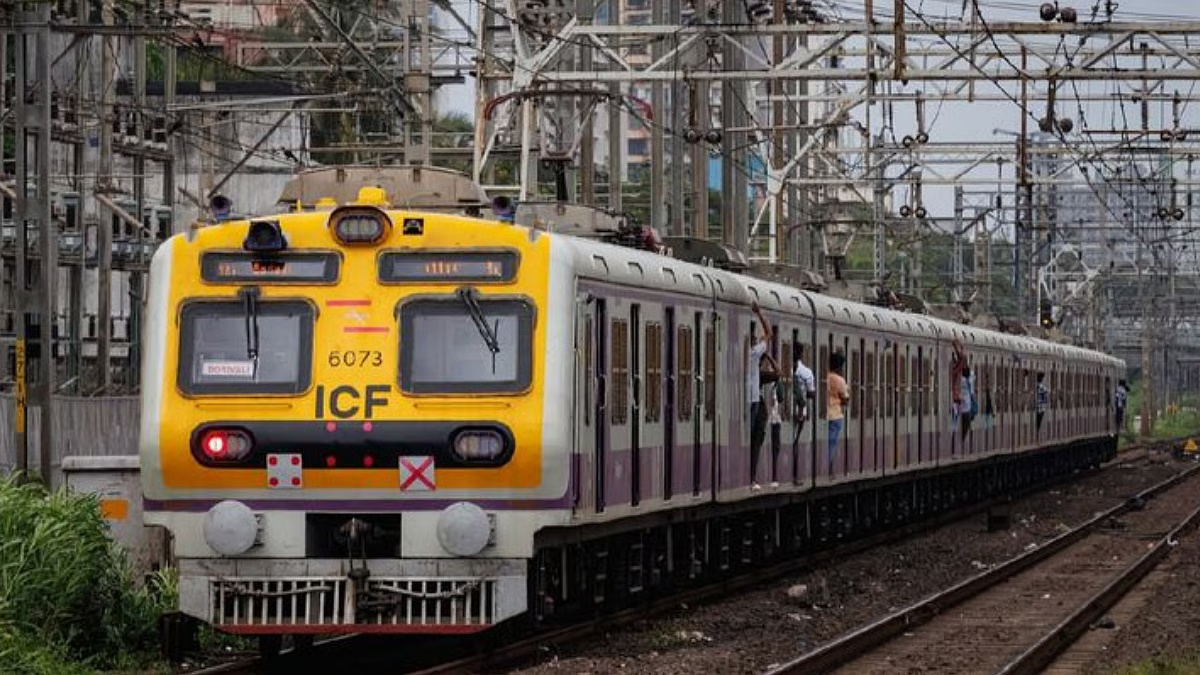
Mumbai is preparing for a significant expansion of its suburban rail system, with daily local services targeted to rise from about 3,200 to 3,500 by 2030. The plan is backed by roughly ₹18,000 crore in ongoing capacity works, including station upgrades, longer platforms, new train-handling facilities and signalling improvements. For a city where rail remains central to everyday commuting, the challenge will be turning additional infrastructure into safer, more reliable and less crowded journeys. The expansion is being designed around both infrastructure and rolling stock. Railway authorities are extending platforms to accommodate 15-coach trains while adding facilities that can increase the number of trains stations and yards can handle. The Mumbai suburban railway system currently operates more than 3,200 services a day across Central and Western Railway, according to recent Railway Ministry data.
Several station-level works are intended to remove operational bottlenecks. Jogeshwari is planned to receive additional platforms and pit lines, while Dadar is getting another platform. Vasai Road is being expanded with six platforms, three pit lines and five stabling lines. Lokmanya Tilak Terminus is also part of the programme, with new platforms and pit facilities planned. Such investments matter because train frequency depends not only on tracks but also on how quickly rakes can be serviced, turned around and stored. The railway network is also moving towards newer rolling stock. A total of 238 air-conditioned suburban rakes have been sanctioned under MUTP-III and MUTP-IIIA. Production has been divided among three existing railway factories, with supplies scheduled to begin in 2027 and the full quantity planned by 2030. The programme is intended to ensure that new trains become available alongside upgraded infrastructure rather than leaving completed capacity underused.
Safety is another important part of the transition. Indian Railways has been developing suburban trains with automatic door systems, while modern signalling is being introduced to improve operational capacity. These measures could be particularly significant on heavily loaded corridors, where small disruptions can quickly spread across the timetable. For Mumbai, however, adding 300 services is not simply a question of running more trains. Station access, interchange facilities, pedestrian movement, last-mile connectivity and crowd management will determine how much of the extra capacity commuters actually experience. A senior transport planner noted that rail investment delivers greater urban value when it is integrated with buses, metro services and walkable station areas.
The Mumbai suburban railway expansion therefore represents more than a numerical increase in daily services. Its success will depend on whether new capacity improves reliability and safety while supporting a more efficient, lower-emission alternative to road travel as the metropolitan region continues to grow.