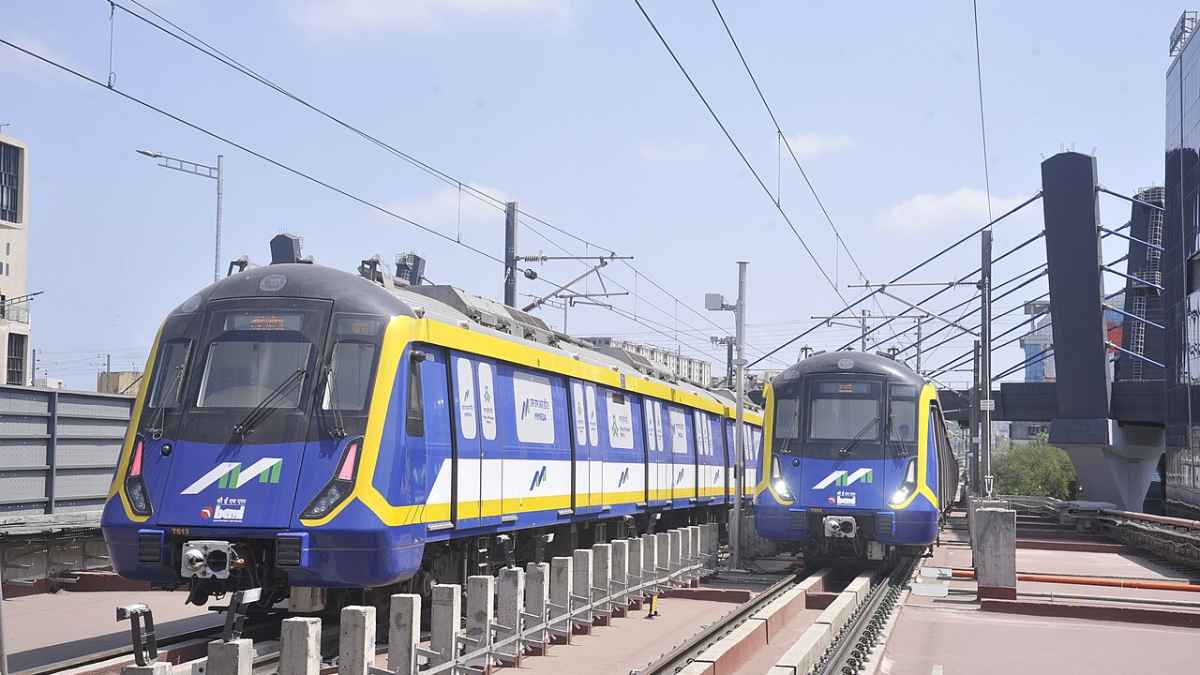
The Mumbai Metropolitan Region Development Authority (MMRDA) has brought forward its target for completing ongoing infrastructure works to December 2028, a year ahead of the previously stated December 2029 deadline. The programme spans roads, tunnels, sea links and metro infrastructure across the Mumbai Metropolitan Region (MMR), with the broader objective of improving connections between established urban districts and emerging growth centres. The accelerated timeline places execution at the centre of Mumbai’s next infrastructure cycle. MMRDA is pursuing a network rather than relying on individual corridors, linking Mumbai with Thane, Navi Mumbai, airport areas and other expanding parts of the region. The authority’s current project portfolio includes transport integration works, metro-related infrastructure and strategic road connectivity projects.
Among the major road interventions is the Thane-Borivali Twin Tunnel, designed to provide a direct connection between the eastern and western sides of the metropolitan region. The project is expected to reduce dependence on longer surface routes once completed. MMRDA is also advancing other major links intended to distribute traffic across multiple corridors instead of concentrating movement on a limited number of roads. Metro expansion remains another major component. MMRDA is working across a large metropolitan transit network, while its transport division is also handling multimodal integration around existing and planned metro stations. Such integration is important because faster trains alone do not eliminate the first- and last-mile barriers faced by commuters. The financial scale is substantial. MMRDA’s approved 2026-27 budget stands at ₹48,072.57 crore, with ₹48,072.40 crore proposed as expenditure. About 87% of that expenditure is allocated to development projects and schemes. The authority has described financial discipline and project-linked revenues as important to sustaining its infrastructure programme.
For the property market, faster connectivity can reshape where housing, offices, logistics facilities and commercial activity become viable. But the relationship works both ways: new transport capacity can stimulate development in areas that may already face pressure on water, drainage, public services and open space. Infrastructure-led growth therefore needs to be matched by land-use planning and adequate civic capacity. The environmental implications are similarly mixed. Better public transport and shorter journeys can reduce dependence on private vehicles, but new road and tunnel capacity can also encourage additional traffic if travel demand grows faster than alternatives. A balanced metropolitan strategy will need to measure mobility gains alongside emissions, land consumption and neighbourhood liveability.
The December 2028 target is therefore more than a construction deadline. It is a test of whether Mumbai can coordinate large infrastructure investments without allowing speed of delivery to outweigh safety, financial discipline and long-term urban resilience. The decisive measure will be whether completed projects work as one connected system and improve everyday mobility across the region.