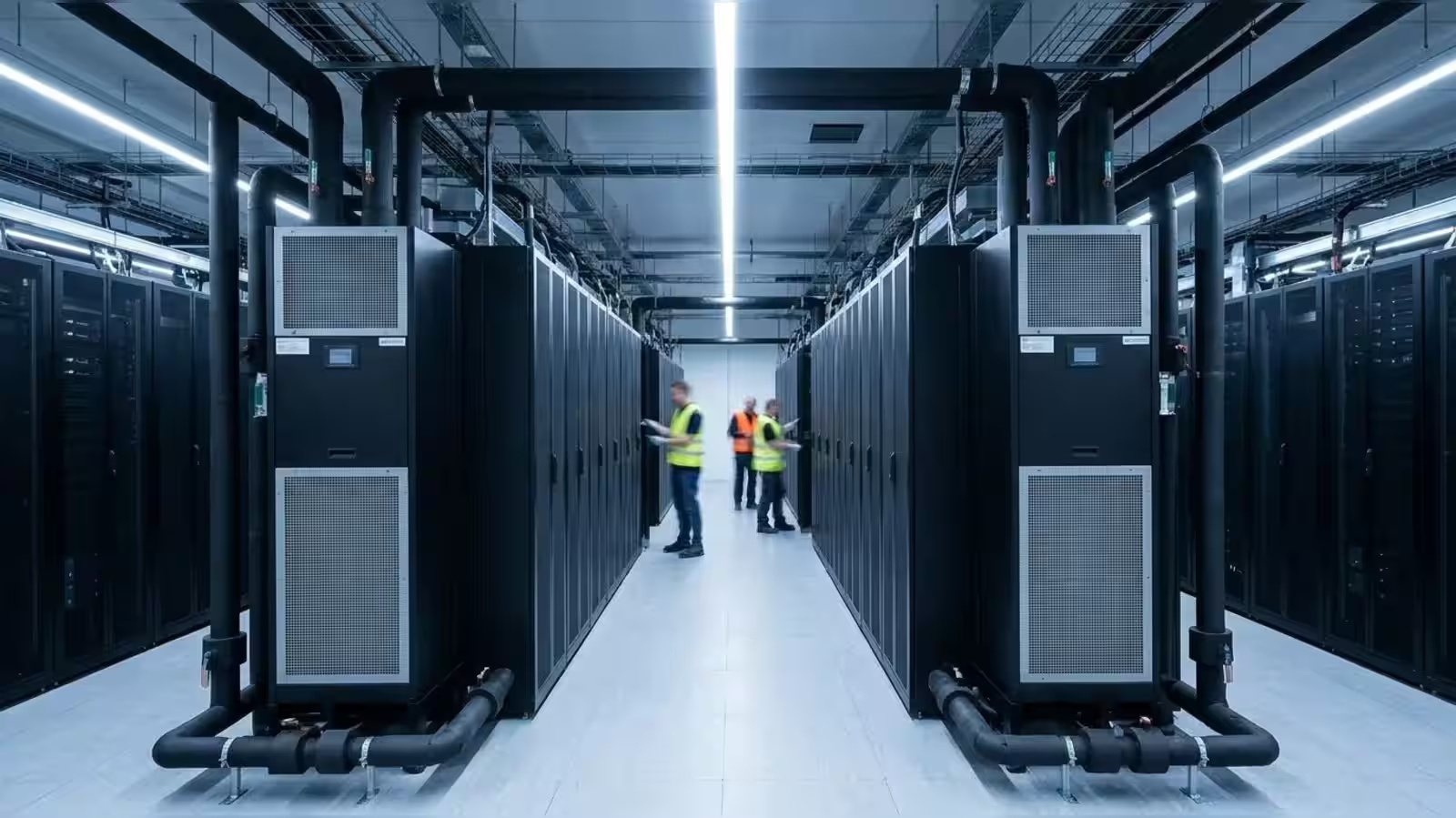
Maharashtra has emerged as India’s dominant data-centre market, with the state reporting more than $300 billion in investment interest and a target of 5.7 GW of capacity by 2032. The numbers underline the growing demand for infrastructure supporting cloud services and artificial intelligence. But they also raise a less visible urban question: whether power, water, land and transmission systems can expand fast enough without adding new pressure to already stressed metropolitan resources. The investment figure needs careful reading. It represents interest and proposed commitments rather than money already spent. The distinction is important because data-centre projects can take years to secure land, power connections, financing and approvals before construction begins. The real economic impact will therefore depend on how much of the announced pipeline becomes operational capacity.
Maharashtra currently accounts for about 66% of India’s data-centre capacity, according to a senior state investment official. The concentration reflects Mumbai’s international digital connectivity, established financial sector and access to submarine cable networks. The state’s policy framework also provides incentives for eligible data-centre developments, helping strengthen its position as a preferred location. The proposed Maharashtra data centre build-out is significant when placed against the national market. India had around 1,500 MW of installed data-centre capacity in 2025, up from roughly 375 MW in 2020. The industry is also adopting newer cooling systems to reduce water consumption, as electricity and water availability become central constraints for high-density computing facilities.
Artificial intelligence is changing the economics further. AI workloads require dense computing hardware that can operate continuously, increasing both electricity demand and cooling requirements. A 5.7 GW target represents 5,700 MW of capacity, making reliable energy supply a major planning requirement rather than simply a private-sector concern. The implications extend beyond technology. Large campuses require substantial land and supporting infrastructure, while their permanent employment footprint can be smaller than that of similarly sized manufacturing investments. For Maharashtra, the question is therefore whether data centres can generate wider economic value through construction, engineering, digital services and associated industries while avoiding excessive competition with housing, industry and essential urban services.
This is particularly relevant as Mumbai and Navi Mumbai continue to attract major infrastructure and real-estate investment. The state is also pursuing new urban development areas where digital infrastructure could become an economic anchor. For policymakers, the next phase will require more than securing investment commitments. Renewable power procurement, grid expansion, efficient cooling, water recycling, land-use planning and transparent project tracking will determine whether the Maharashtra data centre boom strengthens the wider economy without creating hidden environmental costs.