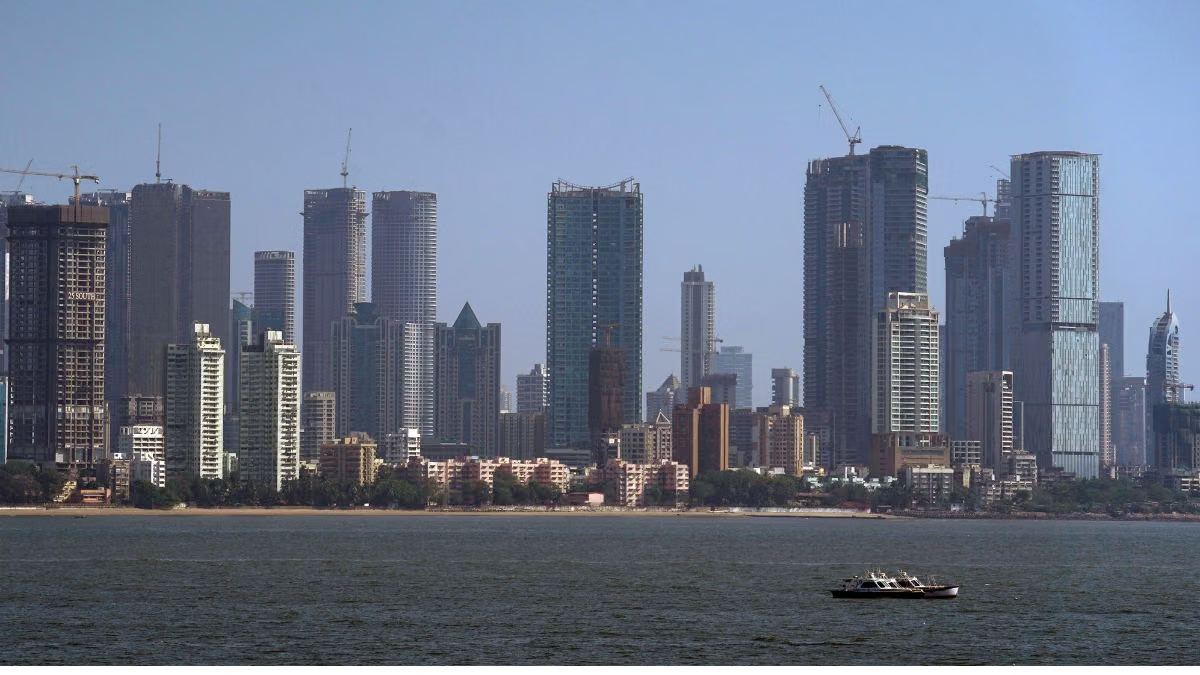
Mumbai Redevelopment Reshapes The City Housing Market
Mumbai’s redevelopment market is becoming a larger part of the city’s housing system, with more than 1,000 projects launched since 2020 and redevelopment accounting for about 13% of residential supply, according to a JLL-NAREDCO report released this week. Its share of housing sales reached 15% in 2025 and the first half of 2026, up from roughly 6% during 2016-2021. The shift reflects a structural constraint facing Mumbai: limited developable land and a large stock of ageing buildings. Around 13,500 cessed buildings are identified as requiring urgent replacement. The Western Suburbs account for 22.4% of the ageing stock, while South Mumbai represents another 14.2%, creating a substantial pipeline for reconstruction within existing neighbourhoods.
The geography of new activity is already concentrated. Borivali, Malad, Andheri, Vikhroli and Goregaon together account for around 36% of projects launched since 2020. The Western Suburbs also represented roughly 35-45% of redevelopment launches and sales during 2025 and the first half of 2026. For the housing market, the more significant signal is demand. Redevelopment homes are now taking a larger share of sales, suggesting that buyers are increasingly accepting reconstructed housing as a mainstream source of supply rather than a niche segment. The trend can also allow households to remain in established locations with access to existing transport, schools, employment centres and civic infrastructure. Mumbai’s redevelopment story, however, extends well beyond private housing. Slum rehabilitation has become a major component of the pipeline, with 1,202 active projects covering 321,858 hutments across 2,156 acres. That land area is nearly four times the acreage completed during the first three decades of the Slum Rehabilitation Authority’s existence.
Policy and infrastructure are reinforcing the change. DCPR 2034 provides a framework for cluster and slum redevelopment, while major transport investments are expected to influence land values and redevelopment activity along emerging corridors. More than 1,600 self-redevelopment proposals also indicate that housing societies are increasingly exploring models in which residents retain greater control over project decisions. Yet faster redevelopment does not automatically mean better urban renewal. Large projects can affect existing communities, rents, local businesses, traffic and public infrastructure during construction. The quality of rehabilitation, delivery timelines, open space, drainage and access to public services will determine whether additional floor space translates into better neighbourhoods.
The rise of Mumbai redevelopment therefore marks more than a real estate trend. It is becoming one of the principal ways the city replaces ageing buildings and adds housing without relying entirely on undeveloped land. The next challenge will be ensuring that this expansion remains financially viable while delivering safer, more resilient and liveable neighbourhoods for existing as well as new residents.