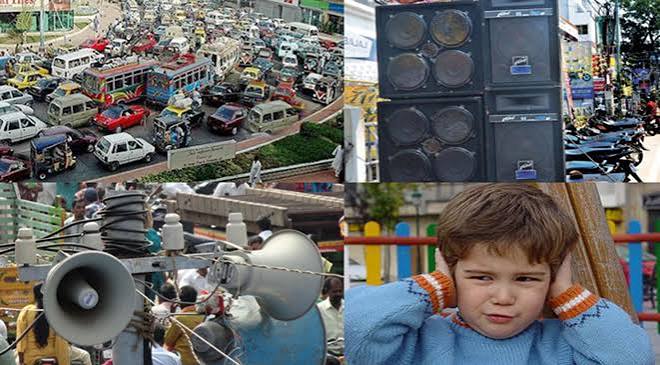
Pune’s long-running dispute over high-volume sound during Ganeshotsav has moved into a new regulatory phase, with the National Human Rights Commission seeking an action-taken report from the Maharashtra Pollution Control Board. The intervention comes after a city resident complained about alleged violations involving DJs, loudspeakers and other high-powered sound systems. The case puts enforcement, public health and the use of shared urban space under renewed scrutiny.
The Pune noise pollution complaint was filed in August and was taken up by the NHRC on September 1. The commission has asked the MPCB to explain the regulatory framework governing sound systems during the festival and provide details of enforcement carried out over the previous year. The board has been given two weeks to submit its report. The commission is also seeking clarity on whether specific permissions or licences are required for DJ and Dolby sound systems, how many such permissions were issued, and which authority is responsible for granting them. It has asked for information on challans, notices, preventive orders and other action taken against noise violations. The move is significant because Pune noise pollution has repeatedly surfaced as an urban governance issue rather than a dispute limited to festival organisers and residents. During Ganeshotsav, roads and public spaces become temporary gathering areas, increasing the intensity of activity around residential neighbourhoods, hospitals, educational institutions and commercial districts.
Official monitoring demonstrates why the issue attracts concern. The MPCB’s 2024 Ganesh festival assessment recorded elevated noise levels at several Pune locations. Laxmi Road recorded a Leq of 96.9 dB on September 17, while Shaniwar Peth recorded 96.3 dB. Leq, or equivalent continuous sound level, is a measure used to represent average sound exposure over a defined period. The health dimension extends beyond personal comfort. Prolonged exposure to excessive environmental noise can affect sleep, concentration and wellbeing, making enforcement particularly relevant for older people, children, patients and residents living close to celebration routes. Recent citizen protests in Pune have also highlighted concerns over the impact of loud DJ systems during festival periods.
For the city, the immediate question is whether existing rules are being applied consistently. A sustainable urban environment is not only about cleaner air and better transport; it also requires public spaces that remain liveable for different groups of residents. The NHRC’s intervention now gives authorities an opportunity to establish clearer accountability around permissions, monitoring and enforcement. As Ganeshotsav approaches, the test will be whether Pune can protect its cultural traditions while ensuring that celebration does not impose disproportionate environmental and health costs on surrounding communities.