Hyderabad Faces Rising Pressure From Road Transport
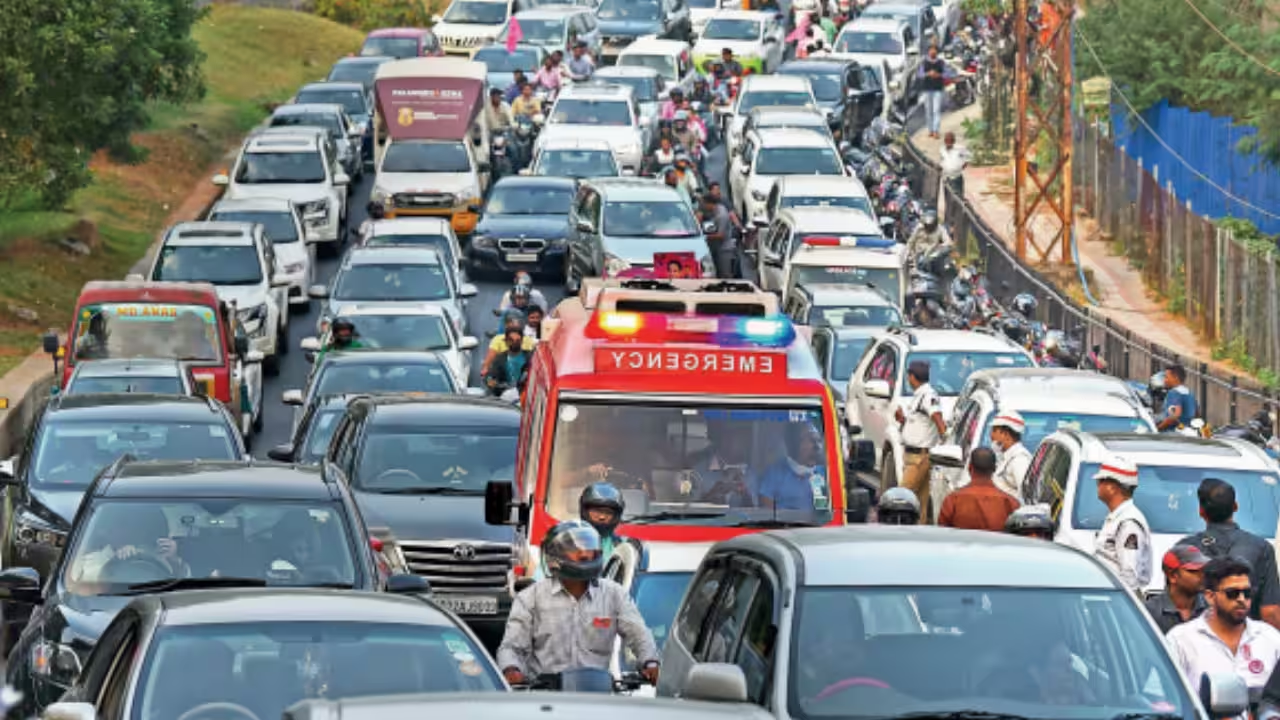
HYDERABAD: Hyderabad’s expanding dependence on road-based mobility is putting greater pressure on its climate and transport systems. Mobility data compiled through the SHIFT Transport initiative puts the city’s vehicle count at about 2.1 million and estimates daily carbon dioxide emissions from road transport at 10,640 tonnes. The figures highlight the challenge of supporting economic growth without allowing private vehicle dependence to deepen.
The city has an estimated population of 11.3 million and a road network extending about 9,013 km, according to mobility data available through the SHIFT Transport platform. Average travel speed is reported at 26.2 kmph, while a typical journey takes around 23 minutes. These figures point to a transport system under pressure as Hyderabad expands outward and travel demand increases. The issue is not limited to congestion. A growing road-transport footprint also affects air quality, household travel costs and the city’s climate resilience. Transport emissions are closely linked to dependence on private motorised travel, making mobility planning an important part of Hyderabad’s broader sustainability agenda.
At the same time, Hyderabad already has a substantial public transport base. The mobility assessment indicates around 3.5 million daily public transport users. This suggests that mass transit remains central to the city’s ability to move large numbers of people efficiently. The challenge is therefore less about creating public transport demand and more about making sustainable modes convenient enough for more daily trips. Better connections between buses, metro services, walking routes and last-mile options could reduce the need for private vehicles. Electric mobility is another part of the transition. The data identifies around 53,375 electric vehicles, equivalent to about 4.7 EVs per 1,000 people. While adoption is increasing, conventional vehicles still account for most of the vehicle base. That means electrification alone may not resolve Hyderabad’s mobility pressures. International transport research points towards a broader shift involving public transport, walking, cycling and cleaner vehicles. WRI has similarly emphasised integrated transport systems that improve access while reducing emissions.
For Hyderabad, this has direct implications for future infrastructure and real estate development. New residential and commercial growth will generate additional travel unless jobs, services and public transport are planned together. Hyderabad mobility planning will therefore need to look beyond road capacity. Safer pedestrian infrastructure, stronger last-mile connectivity and reliable mass transit can help ensure that urban expansion does not automatically translate into more private vehicle trips. The next phase of Hyderabad’s growth will depend on how effectively the city links mobility, land use and climate objectives. The priority will be creating a transport network that supports economic opportunity while making everyday travel cleaner, safer and more accessible.