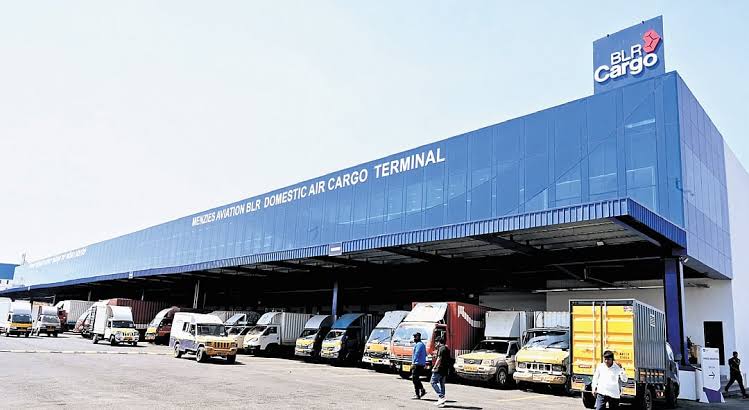
Bengaluru has strengthened its position as a major logistics gateway after Kempegowda International Airport moved ahead of Mumbai in domestic air cargo volumes in July 2026. The shift reflects rising trade activity across southern India, expanding cargo infrastructure and stronger demand from sectors such as pharmaceuticals, electronics, perishables and e-commerce.
It also signals a broader change in how India’s domestic supply chains are being distributed across competing metropolitan hubs. The airport handled 19,268 tonnes of domestic cargo in July, compared with 18,311 tonnes at Mumbai, giving Bengaluru a lead of 957 tonnes. Bengaluru’s domestic cargo volume grew 9.8% year-on-year, while Mumbai recorded an 8.2% decline. The figures place Bengaluru behind only the country’s largest domestic cargo market. The development is significant because cargo growth increasingly depends on more than airport capacity. Bengaluru sits within a large manufacturing, technology and consumption ecosystem, giving air freight operators access to high-value and time-sensitive goods. Pharmaceuticals, electronics, automotive components, e-commerce shipments and agricultural perishables have become important contributors to the airport’s cargo mix.
Overall cargo activity has also accelerated. BLR Cargo handled about 147,000 tonnes between April and June 2026, representing 15% year-on-year growth, ahead of the 12% expansion recorded by the national air-cargo industry. In July, the airport registered its highest-ever monthly cargo volume of about 55,037 tonnes. This growth is being reinforced by investments in logistics infrastructure. The AISATS BLR Logistics Park, along with specialised temperature-controlled facilities, has expanded the airport’s ability to process and store goods requiring faster handling or controlled conditions. Such infrastructure is particularly important for perishables and pharmaceutical products, where delays can directly affect commercial value. Bengaluru’s cargo network is also becoming more closely connected with international trade. During FY2025-26, Kempegowda International Airport handled around 532,000 tonnes of total cargo, with 15 cargo airlines serving 38 destinations. The airport also remained a leading gateway for perishable exports, including flowers and agricultural produce. The latest Bengaluru domestic cargo numbers therefore point to more than a monthly ranking change.
For the city, sustained cargo expansion could strengthen demand for warehouses, cold-chain facilities, freight connectivity and logistics services around the airport. The next challenge will be ensuring that this growth is supported by efficient road access, multimodal connectivity and well-planned logistics infrastructure without adding unnecessary pressure to Bengaluru’s already congested transport network.