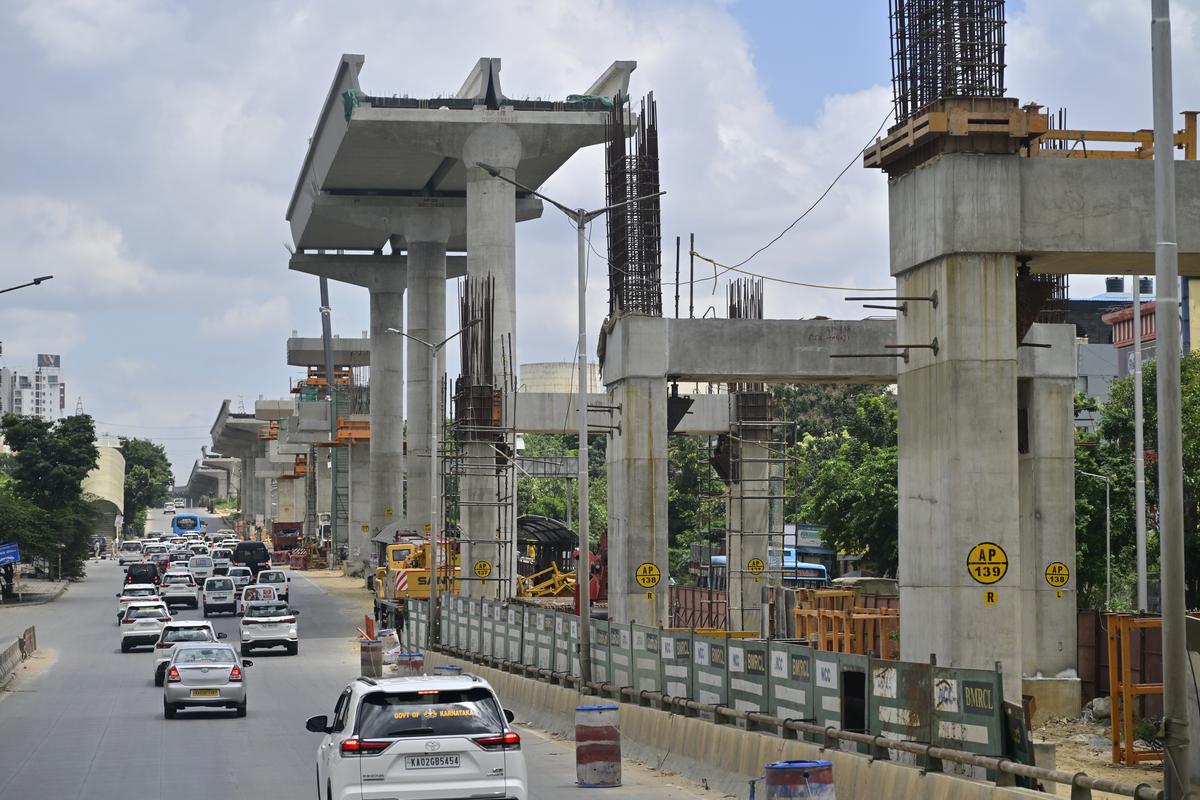
Bengaluru Infrastructure Push Faces Public Participation Test
Bengaluru’s expanding pipeline of large infrastructure projects is putting a renewed focus on how major urban decisions are assessed, funded and discussed with residents. With tunnel roads, elevated corridors and other high-value projects being considered alongside public transport expansion, the central challenge is no longer simply building faster but ensuring that investments address the city’s most pressing mobility and environmental needs.
The scale of the proposed infrastructure programme reflects the pressure created by Bengaluru’s rapid population and vehicle growth. Government plans have included a 40-km tunnel road estimated at about ₹40,000 crore, alongside road upgrades, Metro expansion and other mobility projects. Yet the experience of existing projects suggests that adding more announcements does not necessarily translate into faster improvements. More than 30 major infrastructure projects have faced significant delays, with land acquisition, funding, inter-agency coordination and implementation problems contributing to prolonged construction timelines. This creates a critical question around Bengaluru infrastructure planning: should the priority be a larger number of major projects, or better delivery of projects that already have a clear public need? Delayed flyovers, underpasses and road links can continue affecting commuters for years while new proposals compete for administrative and financial attention. The environmental dimension is equally important. Large transport projects can affect trees, drainage systems, groundwater and established neighbourhoods.
An Indian Institute of Science assessment has, for example, raised concerns that the proposed Hebbal tunnel could shift congestion rather than eliminate it and could introduce additional flood-related risks. Public participation becomes particularly relevant when projects have long-term consequences and substantial costs. Earlier debates around Bengaluru’s tunnel-road plans have drawn objections from citizens and experts over economic feasibility, environmental impacts and whether alternative investments in buses, Metro connectivity and other public transport could deliver wider benefits. That does not mean large infrastructure should automatically be rejected. Bengaluru’s growth requires significant investment in transport, water, drainage and other urban systems. But Bengaluru infrastructure planning can become more effective when major proposals are supported by transparent feasibility studies, clear cost-benefit assessments, measurable outcomes and meaningful public consultation before commitments are made. A stronger participatory process could also identify neighbourhood-level problems that large projects may overlook, from missing footpaths and poor bus connectivity to drainage bottlenecks and unsafe crossings. These relatively modest interventions can sometimes improve daily mobility faster than projects requiring years of construction.
For Bengaluru, the next phase of infrastructure development will therefore be judged not only by the size of its projects, but by whether public money produces measurable improvements in everyday urban life. Better consultation, transparent evidence and disciplined execution could help ensure that the city’s infrastructure expansion strengthens liveability rather than simply increasing its construction footprint.