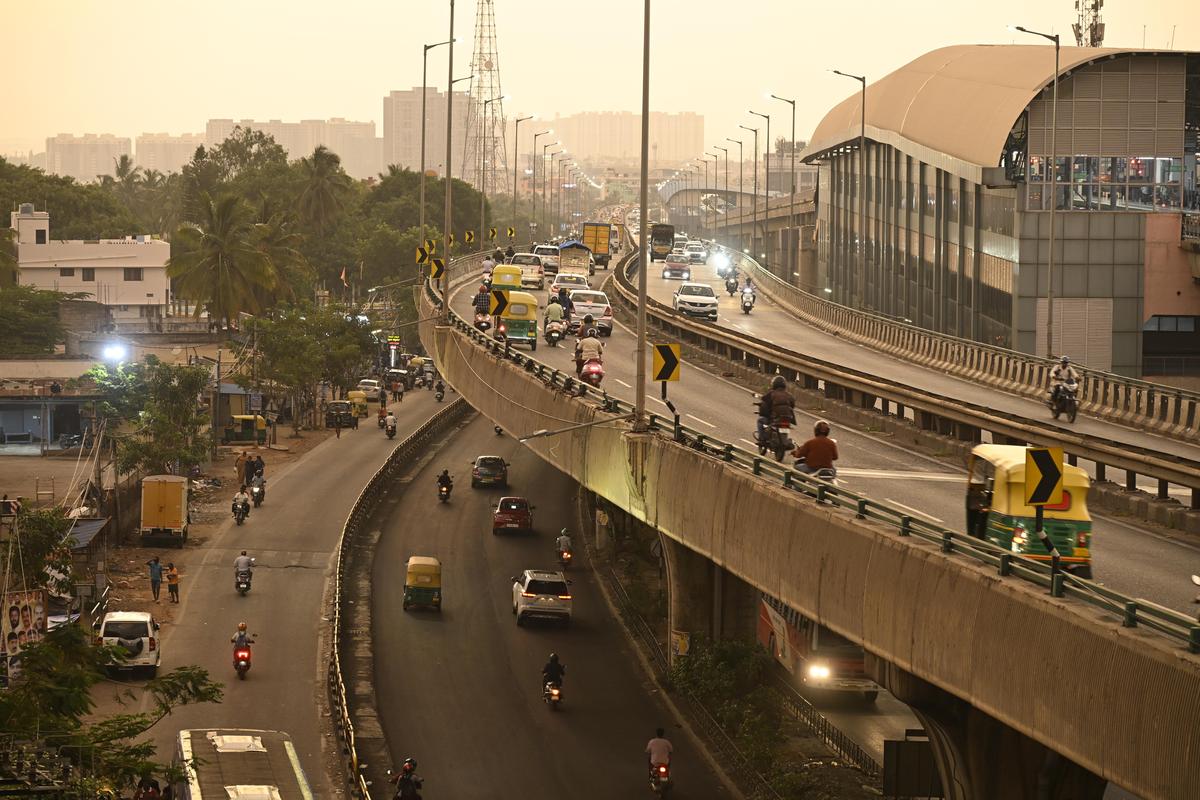
Bengaluru Flyovers Face New Rules To Ease Congestion
Bengaluru has introduced tighter traffic management measures on key flyovers as authorities seek to address slow-moving traffic and improve road capacity. The changes focus on vehicle behaviour and movement across elevated corridors, where congestion can quickly spill onto connecting roads and worsen delays across already crowded parts of the city.
The measures are aimed at preventing practices that reduce the effective capacity of flyovers, including unnecessary lane changes, slow driving and stopping in locations where vehicles need to maintain continuous movement. Traffic officials are also expected to strengthen enforcement on stretches where bottlenecks repeatedly develop. The issue is important because a flyover does not automatically eliminate congestion. When vehicles approach an elevated corridor in large numbers, even small disruptions can create queues that extend well beyond the structure itself. Poor lane discipline can further reduce throughput, meaning fewer vehicles can pass through the available road space in a given period. For Bengaluru commuters, this has become particularly relevant as traffic volumes continue to rise. Flyovers are often designed to remove specific junction conflicts, but their effectiveness depends on how well the surrounding road network operates.Congestion at entry and exit points can simply shift the bottleneck from an intersection to another section of the corridor.
The latest measures therefore highlight the need for a network-based approach to Bengaluru flyover traffic. Managing an individual structure without examining nearby junctions, pedestrian crossings, bus stops and feeder roads can provide only temporary relief. There is also a safety consideration. Excessively slow movement, abrupt lane changes and stopping on elevated roads can create unpredictable conditions for motorists, particularly two-wheeler riders. Clear lane markings, adequate signage and consistent enforcement are necessary if new restrictions are to change driving behaviour rather than simply add another set of rules. Urban mobility experts have increasingly argued that road expansion alone cannot keep pace with Bengaluru’s travel demand. Better public transport, coordinated traffic signalling and improved walking and cycling connections are needed alongside targeted road interventions. Reducing the number of short private-vehicle trips can ultimately do more for congestion than repeatedly increasing road capacity. The focus on Bengaluru flyover traffic also raises a broader planning question: whether the city should measure infrastructure success by the speed of vehicles or by the reliability of journeys.
A flyover that moves traffic quickly for one stretch but creates queues immediately afterwards offers limited citywide benefit. For now, enforcement will determine whether the new rules improve movement on the affected corridors. Longer term, Bengaluru will need coordinated transport planning that treats flyovers as components of a larger mobility network rather than standalone solutions to congestion.